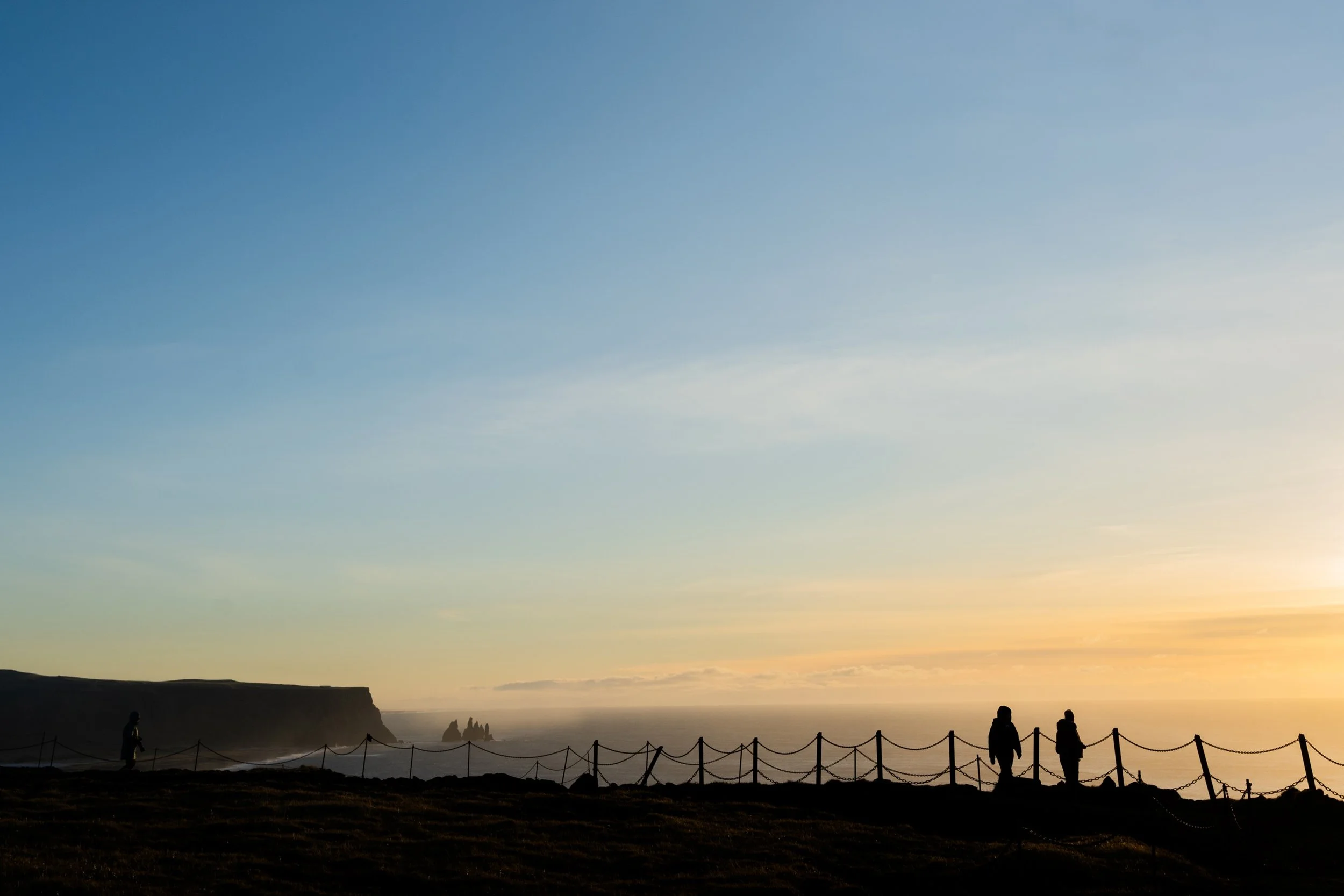
A photography journey through volcanic black beaches, blue glaciers, erupting geysers and the Northern Lights, in search of a little peace and quiet.
During my layover in Munich, I looked out of the airplane window at the landscape below. Everything was green, with a little snow on the higher mountains, exactly as I'd expected. Fields, trees, forests. The familiar European landscape.
A few hours later, we landed in Iceland.
Black.
The earth was black. The sand on the beaches was black. The rocks were black. Wherever anything managed to grow, it was mostly yellowish grass. Even the ocean was dark, almost grey. Where had all the green gone?
I'd been dreaming of visiting Iceland for years. When my husband, Ilan, decided to surprise me with a photography trip, I think he understood what I needed better than I did. After years of war, tension and an endless cycle of news, the idea of spending a week surrounded by nature, far from all the noise, sounded wonderful.
I usually photograph people, cultures and street life. I knew Iceland would be mostly about landscapes, but I didn't really know what to expect. Certainly not this extraordinary colour palette.
Where Is Everybody?
Route 1, the Ring Road that circles Iceland for roughly 1,300 kilometres, is the country's main artery. For most of its length, there's just one lane in each direction, and the drive takes you through endless stretches of open landscape.
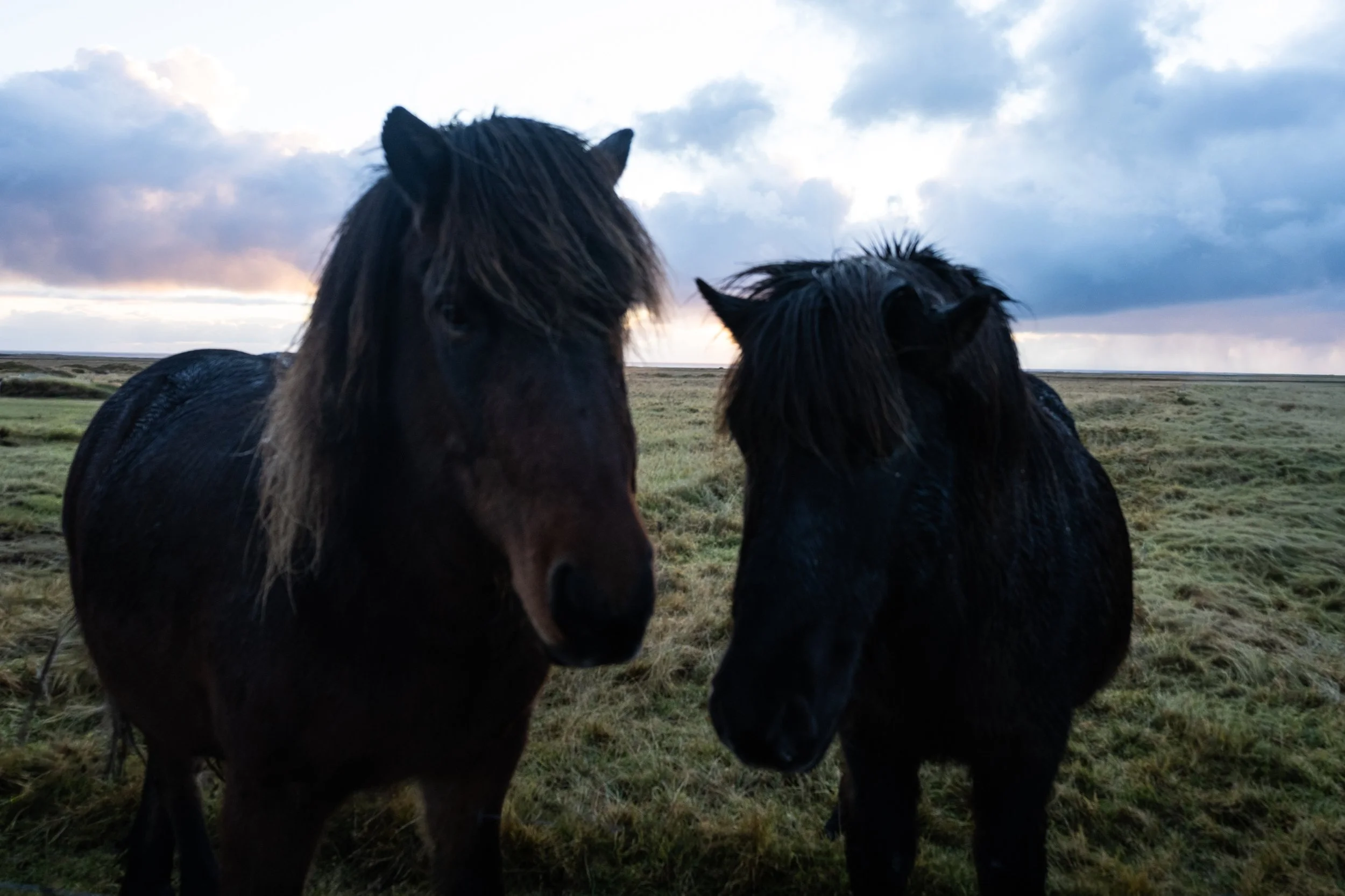
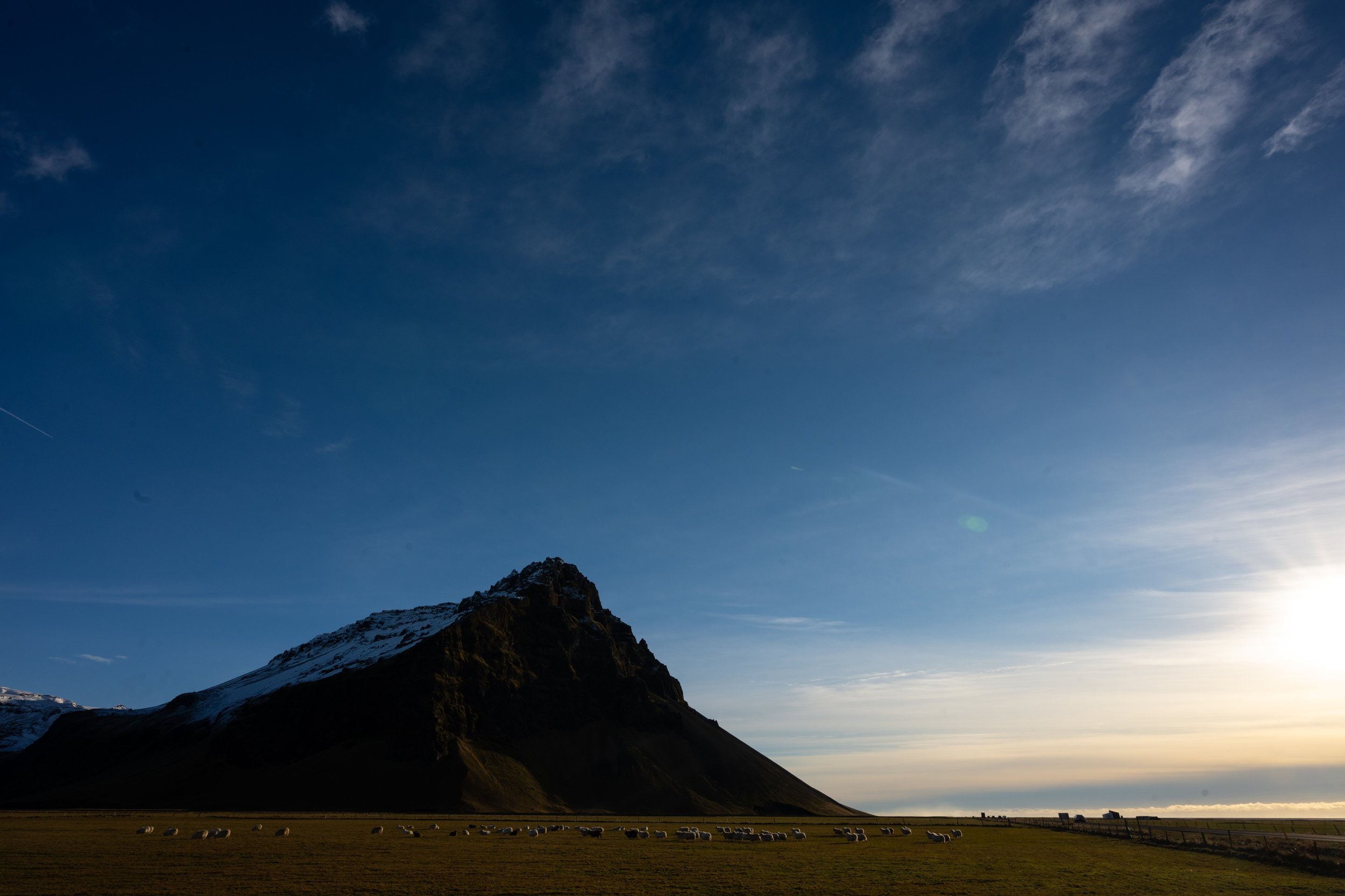
Every now and then, a white house with a red roof appears, perhaps a few sheep or some Icelandic horses. Those horses, relatively small with long, shaggy manes, turned out to be wonderfully friendly and curious. When we stopped beside one of the fields, they came straight over to investigate, as if they, too, were delighted to have something break up their routine.
But what surprised me most was the absence of people.
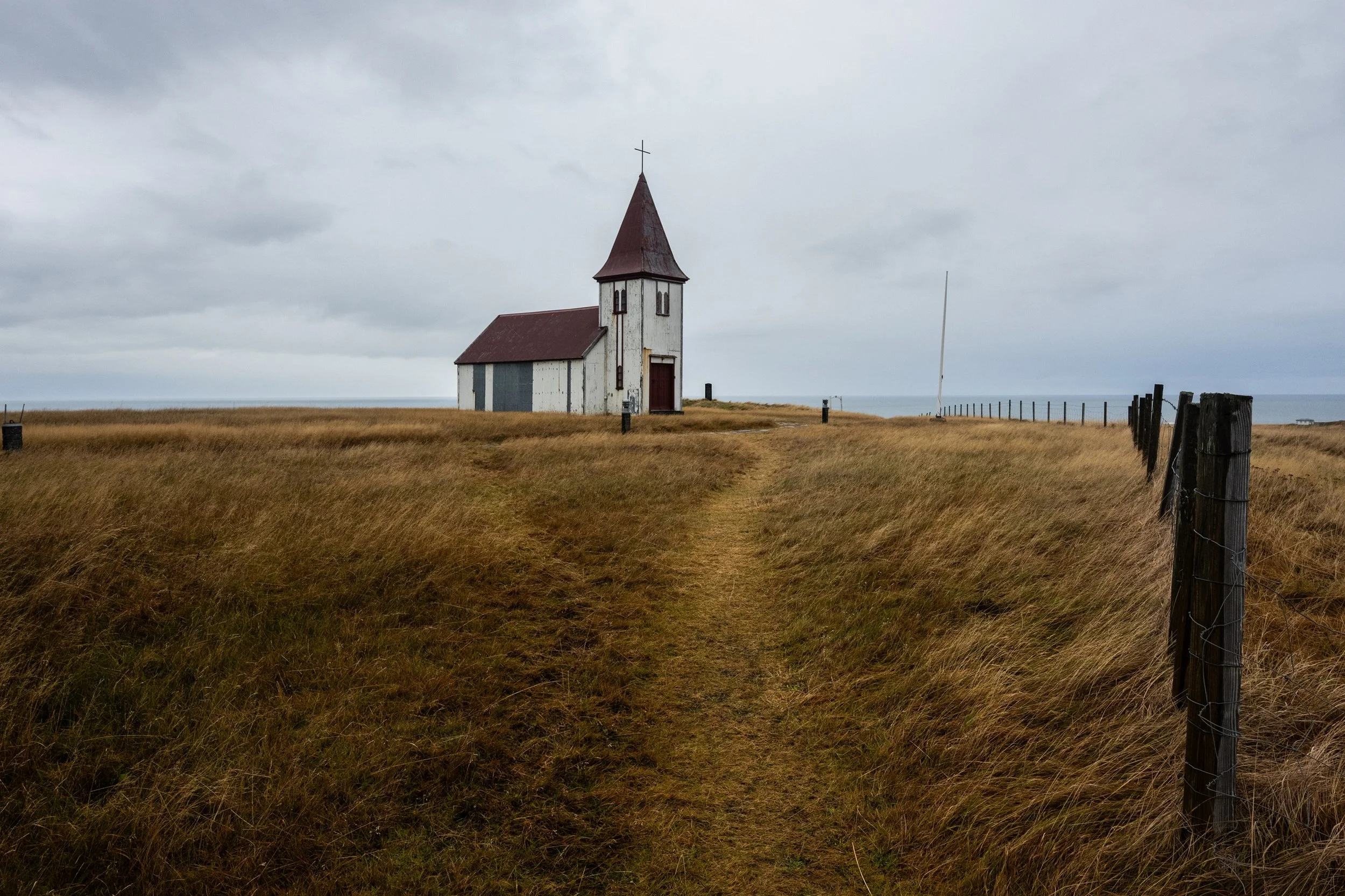
Iceland is a thoroughly modern, developed country. Yet outside Reykjavík and a handful of towns, you barely see the kind of civilisation we're used to. No endless suburbs, industrial estates, shopping centres or apartment buildings. Just an isolated house here and there, and occasionally a tiny church standing in the middle of nowhere.
And the air. It's hard to explain air that feels quite this clean, but you can actually feel the difference.
I remember long drives when I did nothing but look out of the window. I'm normally someone who needs to be doing something all the time, yet here I could watch the landscape for hours.
There was something liberating about it. For a few days, I stepped away from the news, the worries and the tension that follow us around back home. I discovered that you can feel peaceful even when the wind is howling and the ocean is crashing against the rocks.
A Hobbit Church and a Black Church
As we drove around the island, I started noticing the churches.
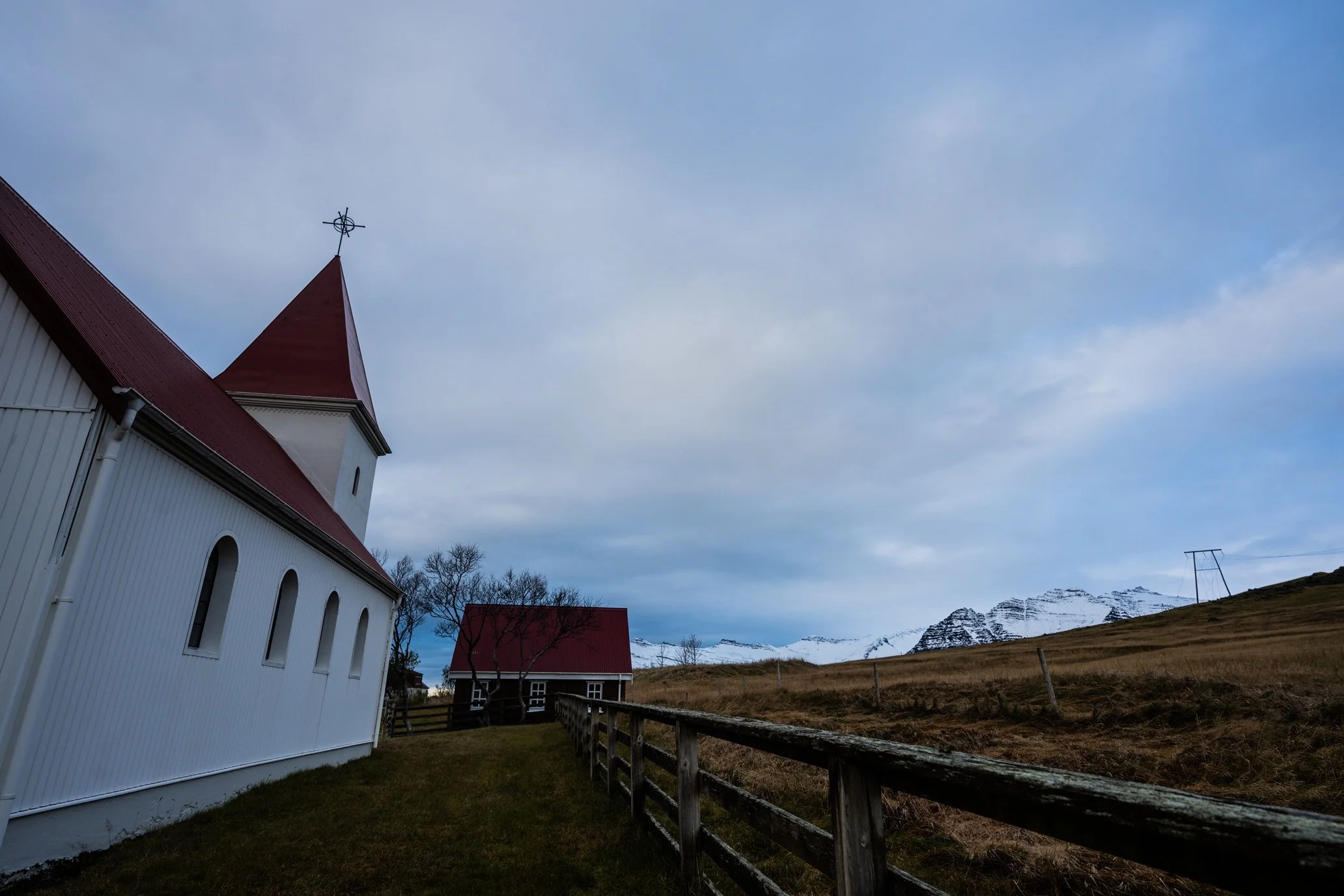
Many looked like something a child might draw: a small white building, a red roof, a simple steeple, sometimes with a modest cemetery beside it. They stand alone in vast open spaces, occasionally near a handful of houses, looking impossibly tiny against the surrounding mountains.
After a few days, I found myself actively looking for them.
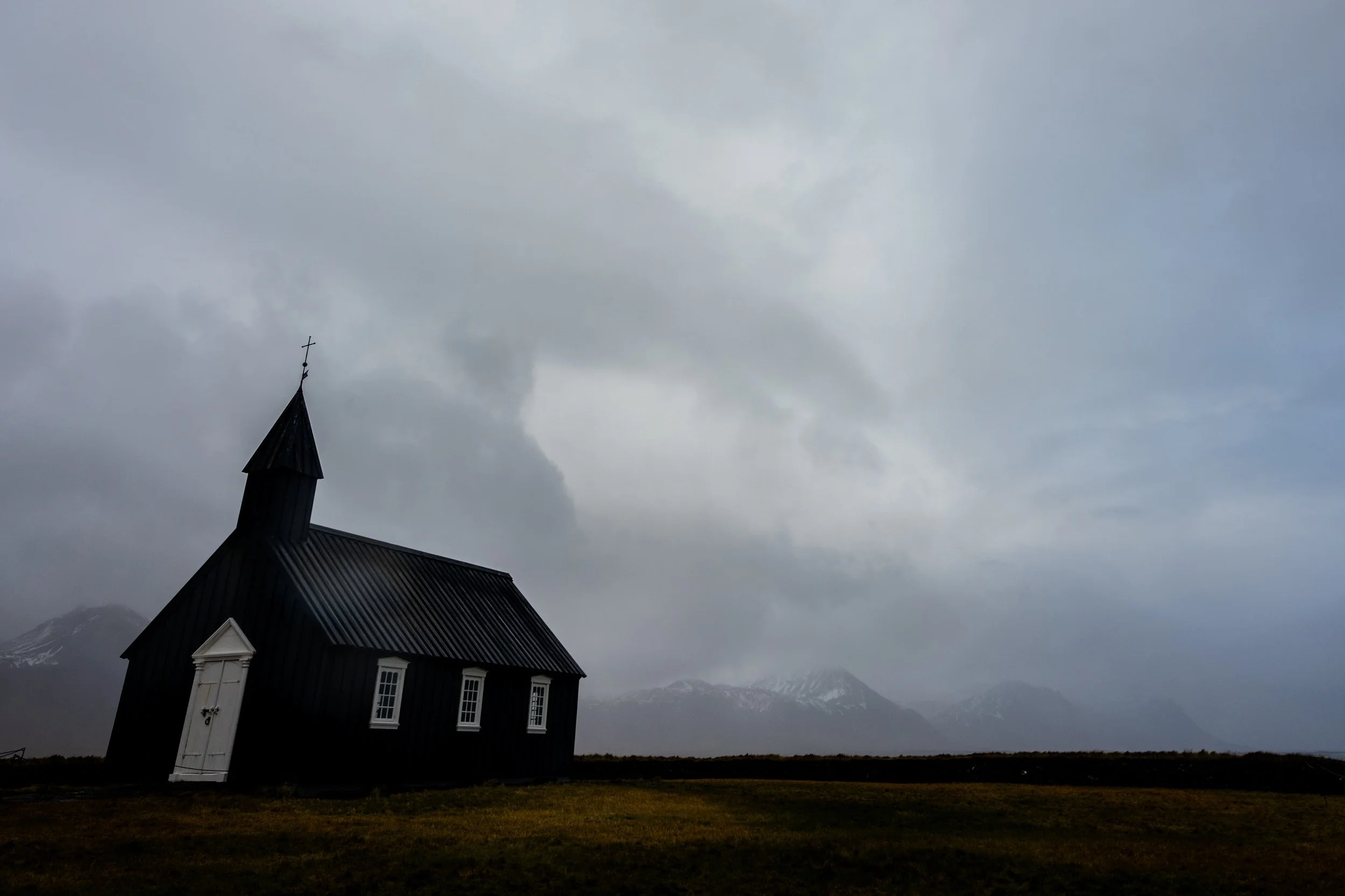
On the Snæfellsnes Peninsula in western Iceland stands Búðir Church, a black wooden church with white doors and windows, isolated on a lava field near the ocean. Its dark exterior blends into the landscape, while the white trim stands out from a distance. We set up our cameras and explored different angles of the little building.
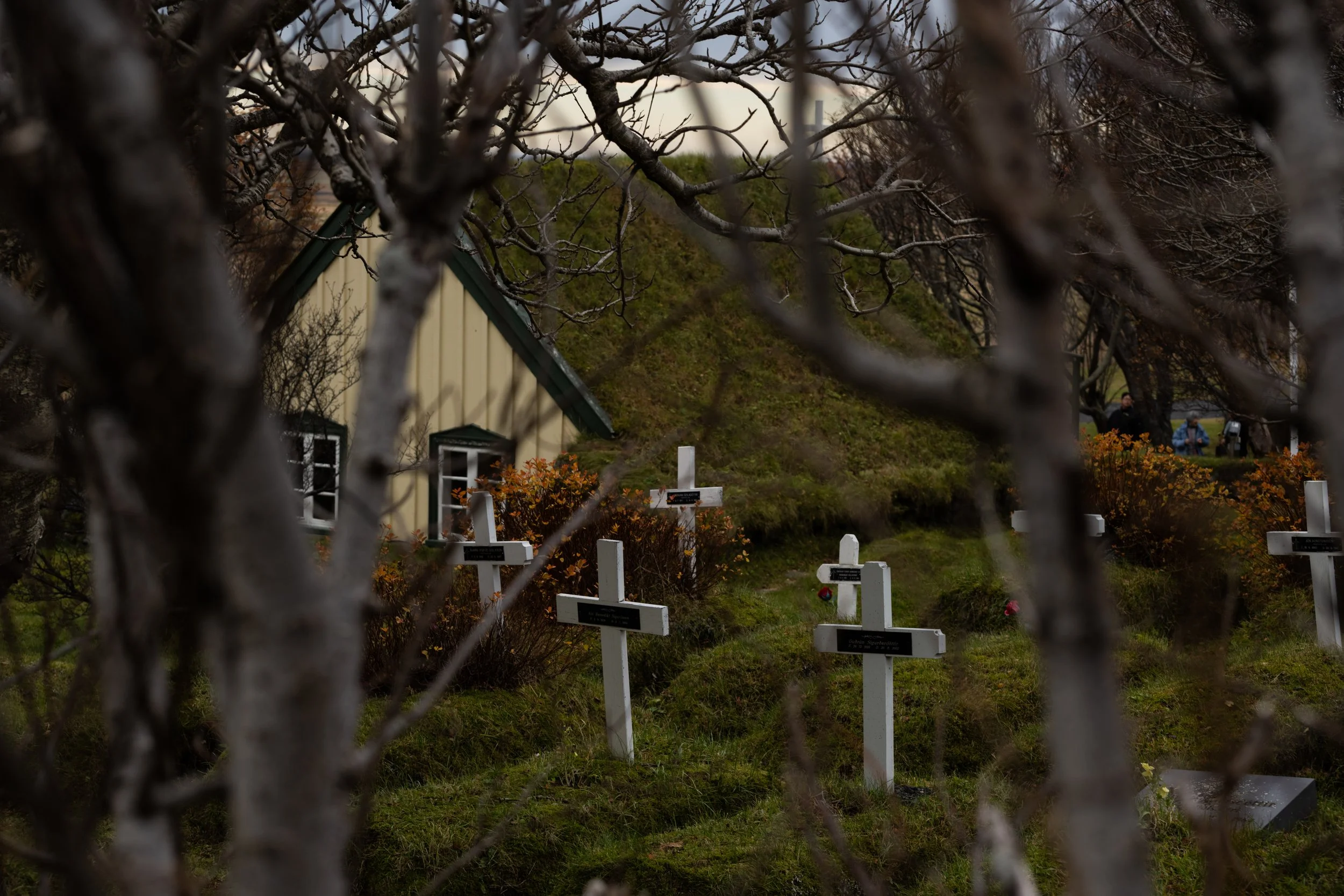
In southeastern Iceland, we visited Hofskirkja, one of the few surviving Icelandic churches with a turf-covered roof. With its low stone walls and grassy roof, it looked to me like a church built by hobbits.
The present church was built in the late nineteenth century using a traditional construction method that combines layers of earth, grass and roots to provide insulation against the cold.
I kept photographing these little buildings in their enormous surroundings. Even without a single person in the frame, they somehow told a story about life on the island.
A Thousand Little Hills and a Moss Trampoline
Iceland sits on the Mid-Atlantic Ridge, where the North American and Eurasian tectonic plates are slowly pulling apart. Extensive volcanic activity has shaped much of the island, and black basalt is almost everywhere. As volcanic rock erodes and breaks down, it also creates the black sand that characterises many of Iceland's beaches.
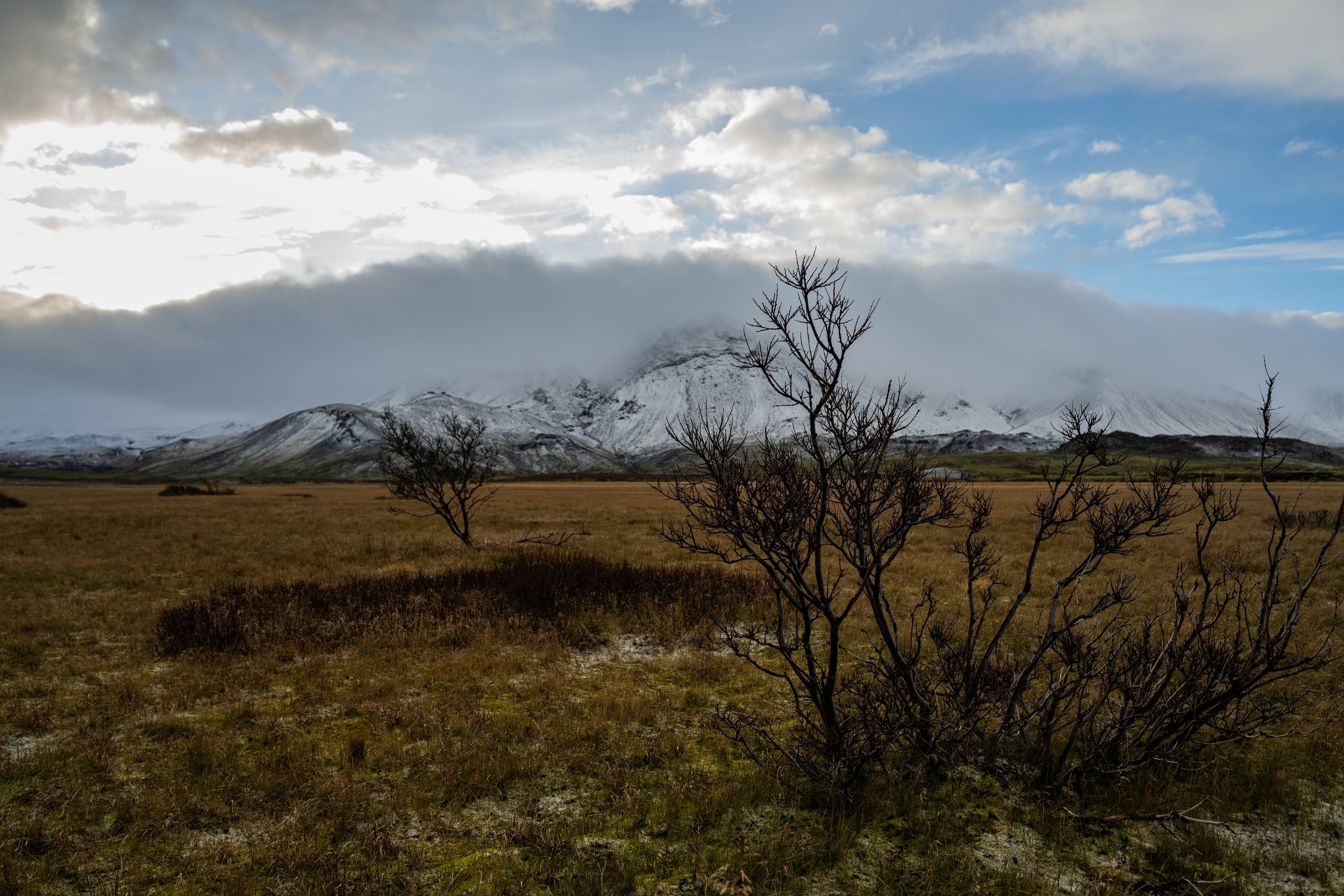
By late October, when we visited, much of the vegetation had already turned yellow. Here and there, soft green moss covered the rocks, while snow had begun to settle at higher elevations.
Even the snow looked different here. Volcanic terrain isn't always smooth and flat. It's full of small mounds and tiny hills. When snow covers it, it doesn't create the familiar, perfectly even white blanket I've seen in other cold countries. Instead, it looks like a cotton sheet thrown over a rumpled carpet, with every little bump still visible beneath it.
On one of our photography days, we came across a thick carpet of moss. At first, I worried my feet might sink into it, but I was surprised by how soft and springy it felt. Almost like a thick mattress. I immediately imagined small children bouncing around on it, delighted to have discovered a natural trampoline.
Only later did I understand just how fragile Icelandic moss is, and why it's so important to avoid stepping on it. It grows incredibly slowly, and damage can remain visible in the landscape for many years.
At first, I found Iceland's black landscape difficult to get used to. Something about it seemed almost unreal. But after a few days, I'd become so accustomed to it that a sudden patch of green was what caught my attention.
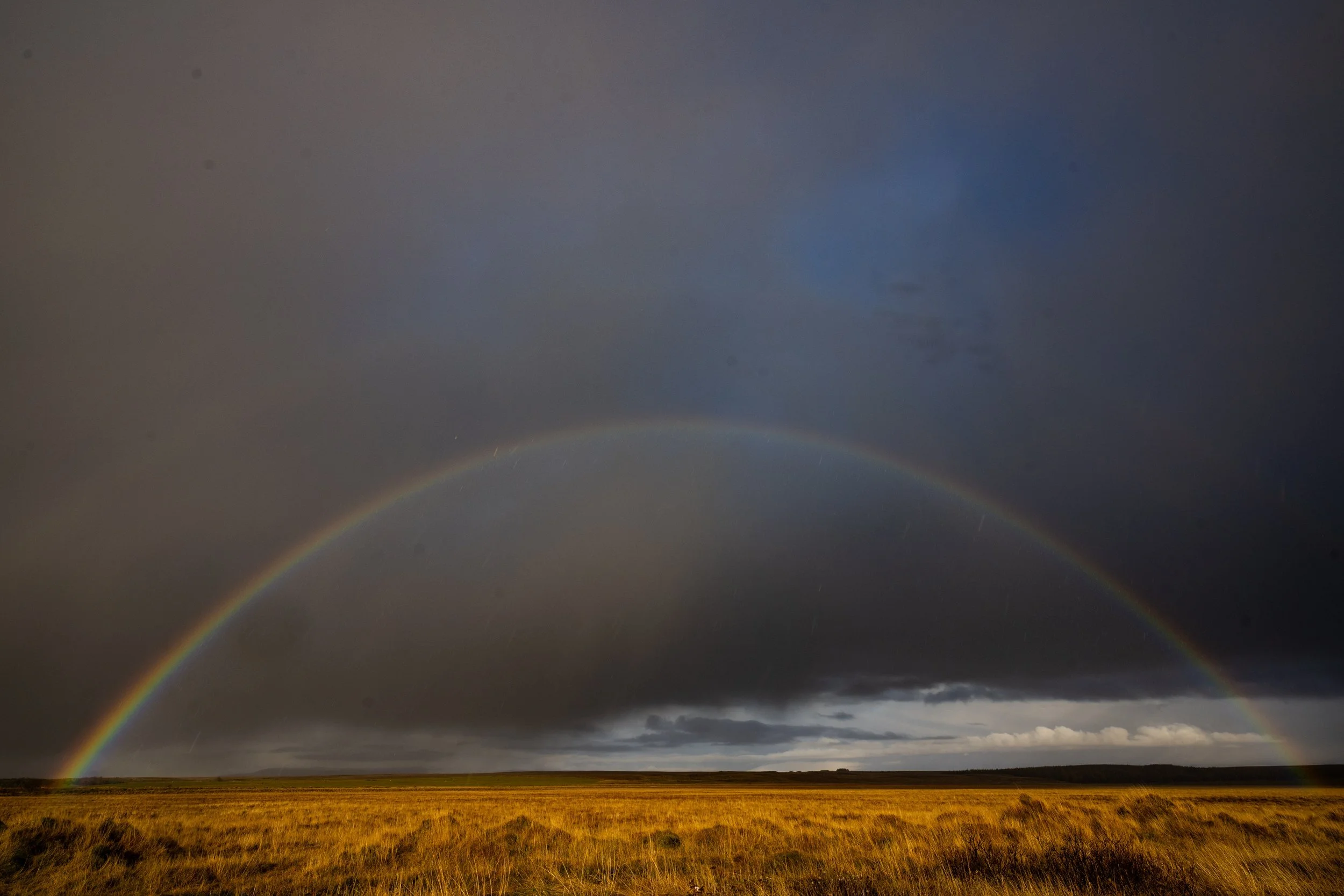
And the more I photographed, the more colours I discovered within all that black. Golden grass against a basalt mountain, blue chunks of ice scattered across black sand, a rainbow arching over a yellow field after a shower of rain and sleet. The light changes constantly, too. A cloud moves, the sun peeks through for a moment, and suddenly the mountain we photographed ten minutes earlier looks entirely different.
Footprints in the Black Sand
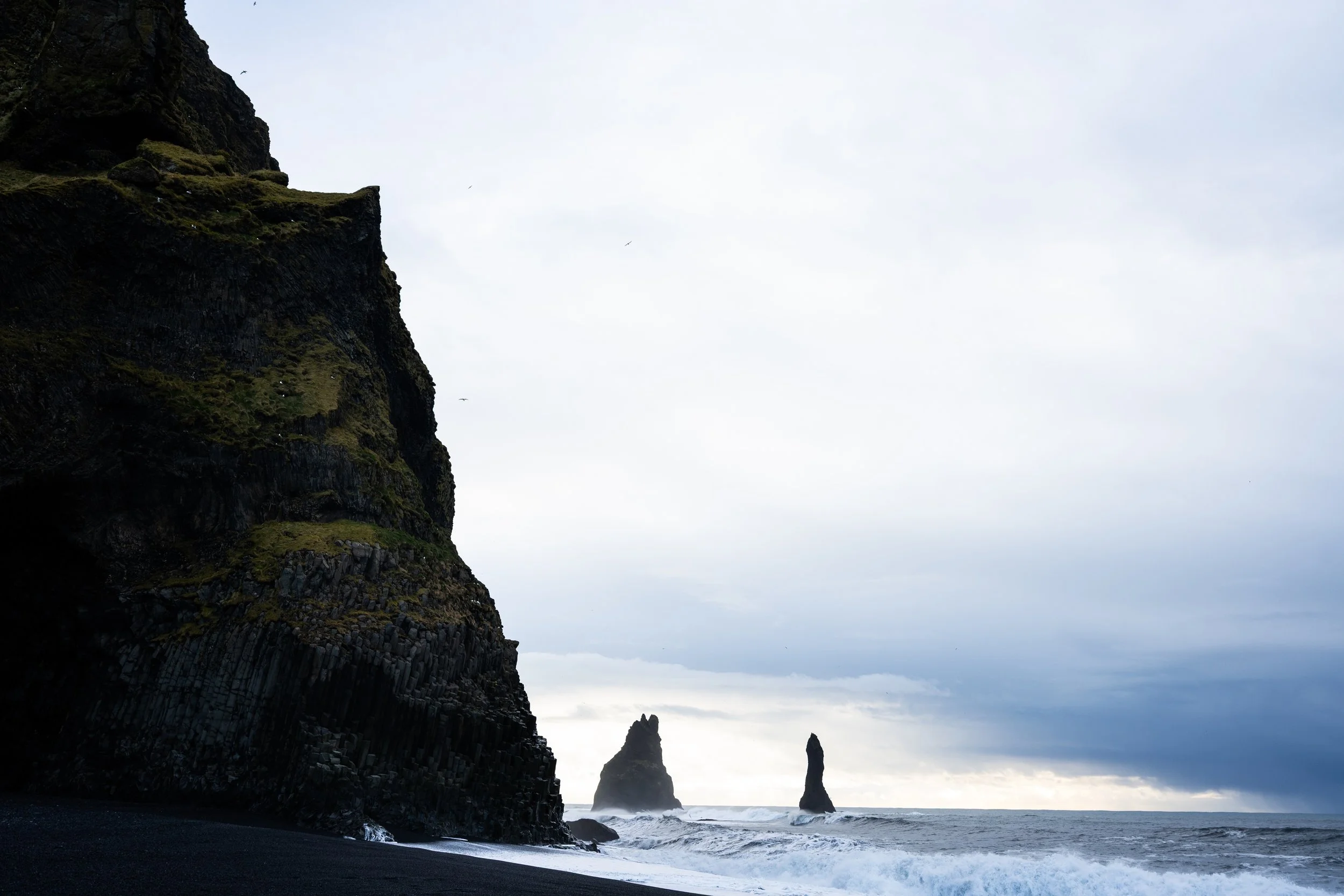
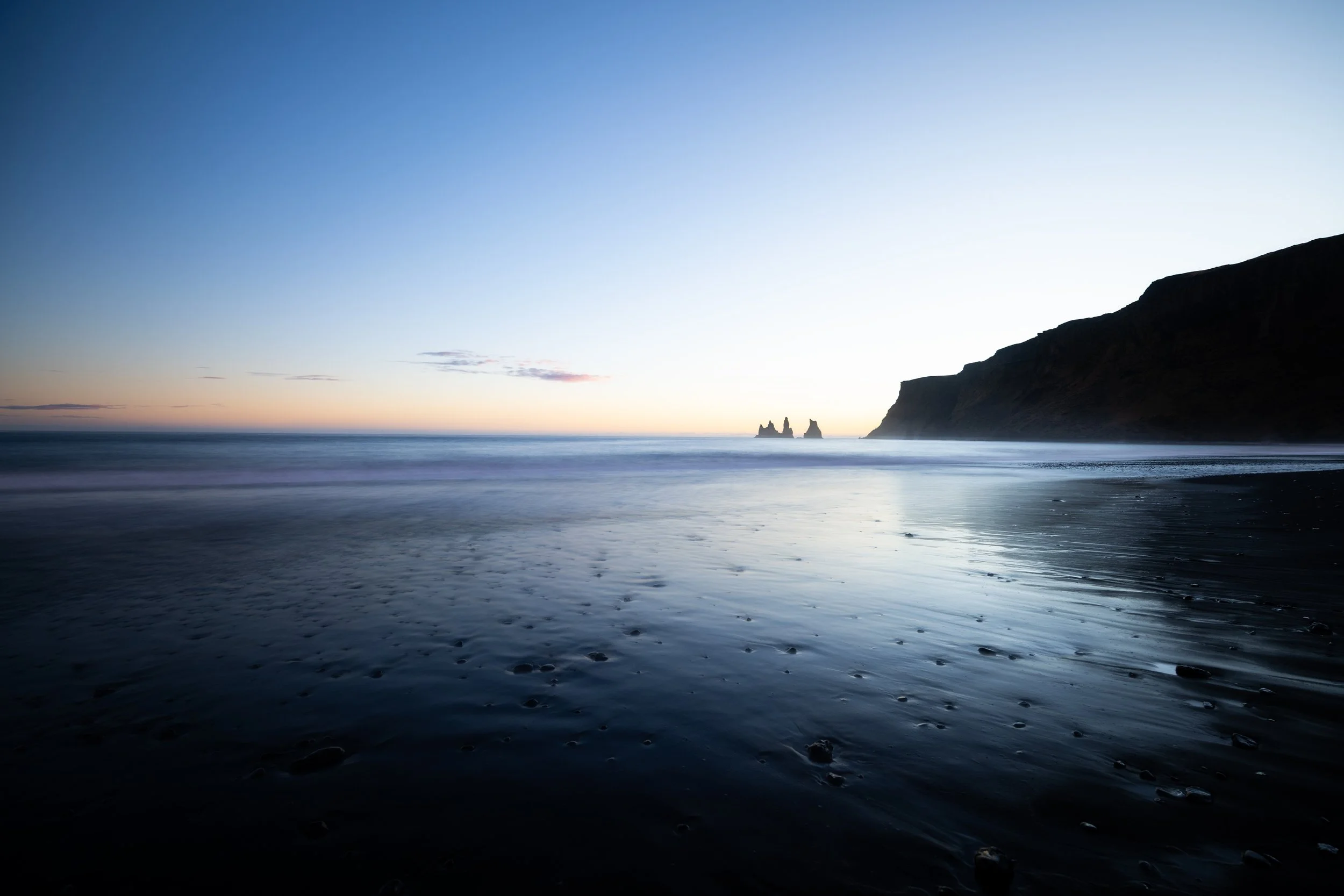
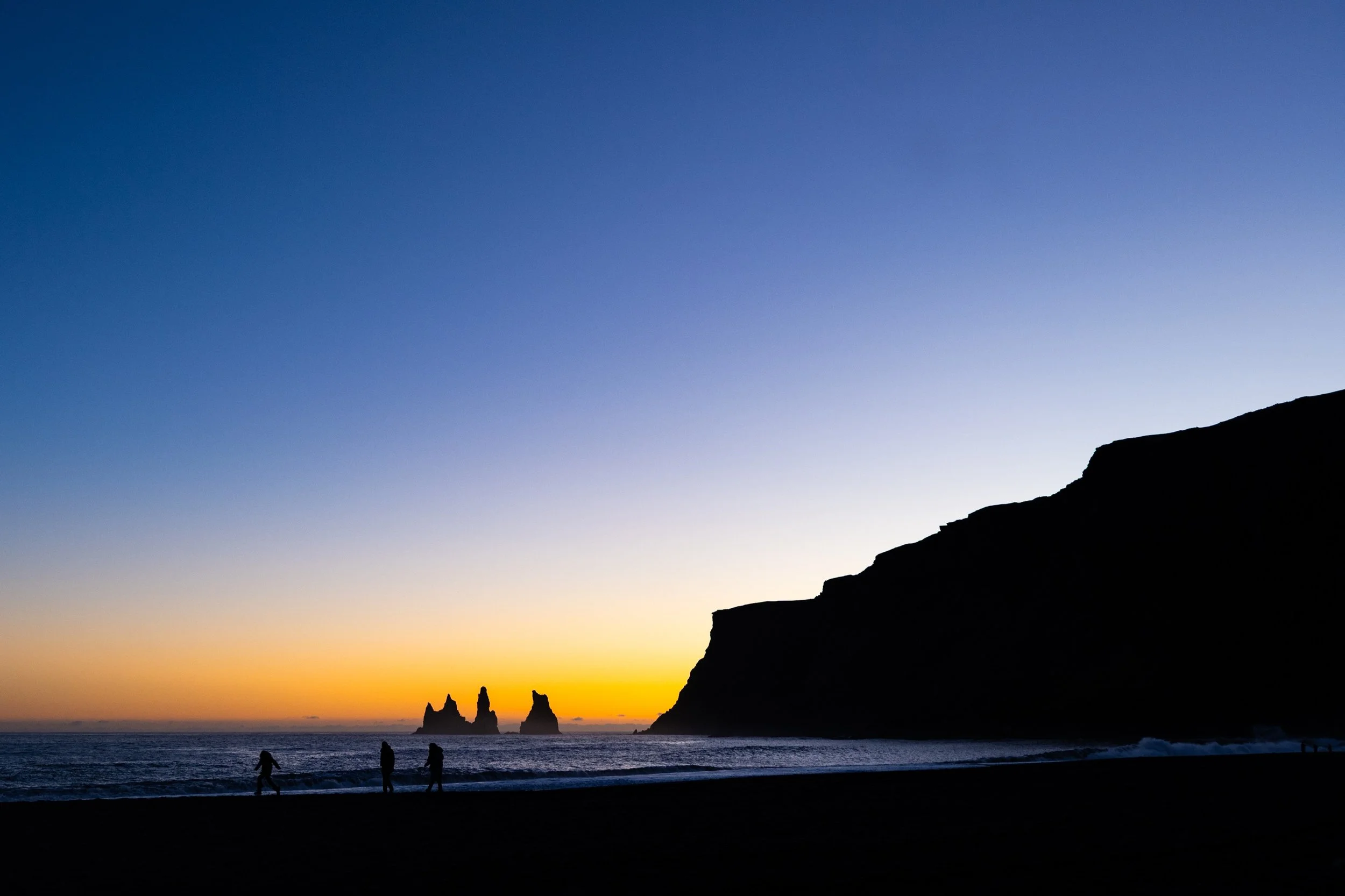
At Reynisfjara Beach, near the village of Vík in southern Iceland, the basalt takes on some particularly remarkable shapes.
Hexagonal basalt columns rise above the black sand, as though someone had carefully arranged them. Out in the ocean stand enormous rock formations known as Reynisdrangar. According to local legend, they were trolls caught by the rising sun and turned to stone.
But the first thing that catches your eye on this beach is actually the warning signs.
The waves here are particularly dangerous. Occasionally, an unexpectedly powerful wave surges much farther up the beach than the ones before it, potentially dragging people out to sea. They're known as sneaker waves, and they have claimed lives.
Despite the warnings, we watched people venture remarkably close to the water. As the waves rushed in, they ran back, laughing at the top of their lungs.
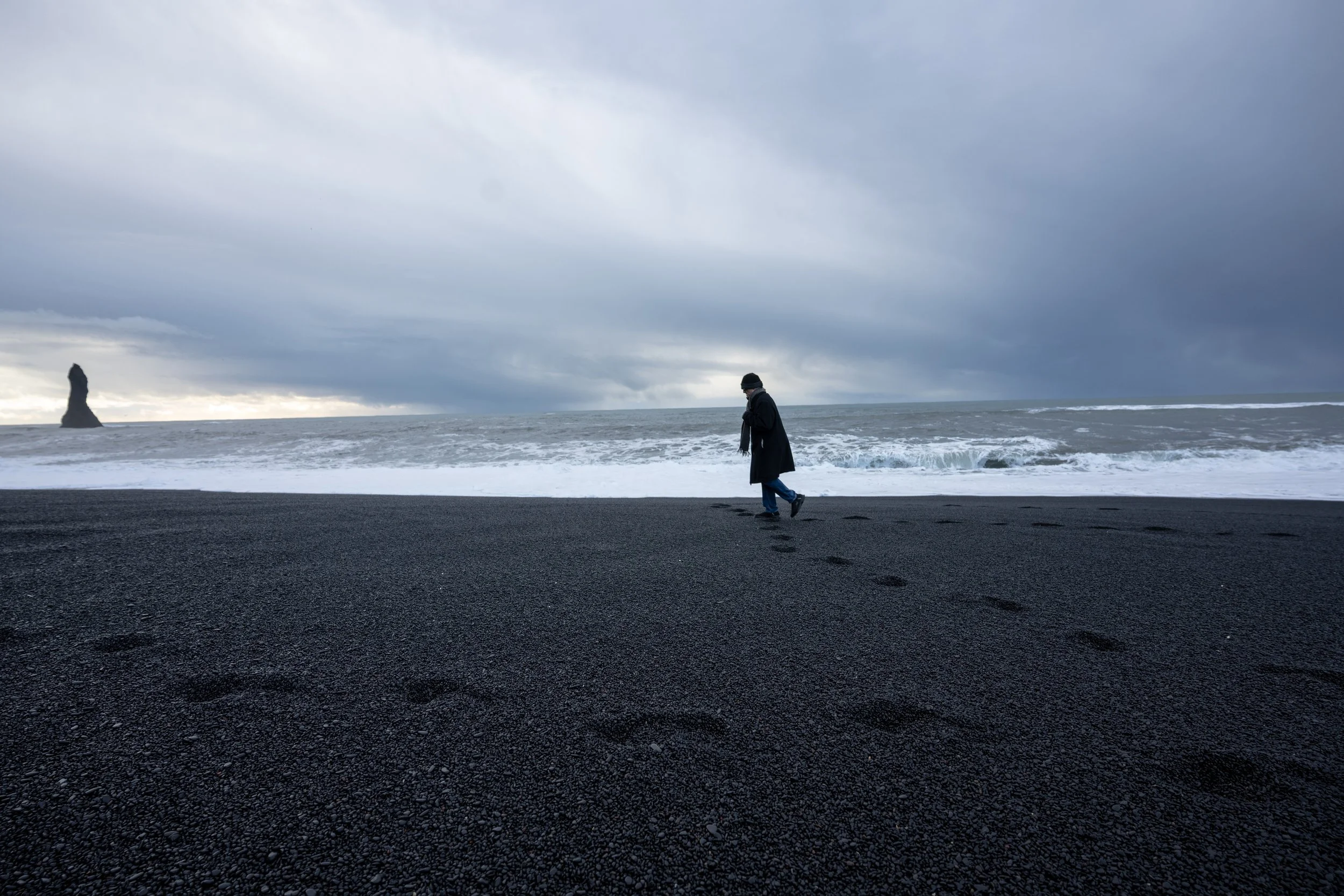
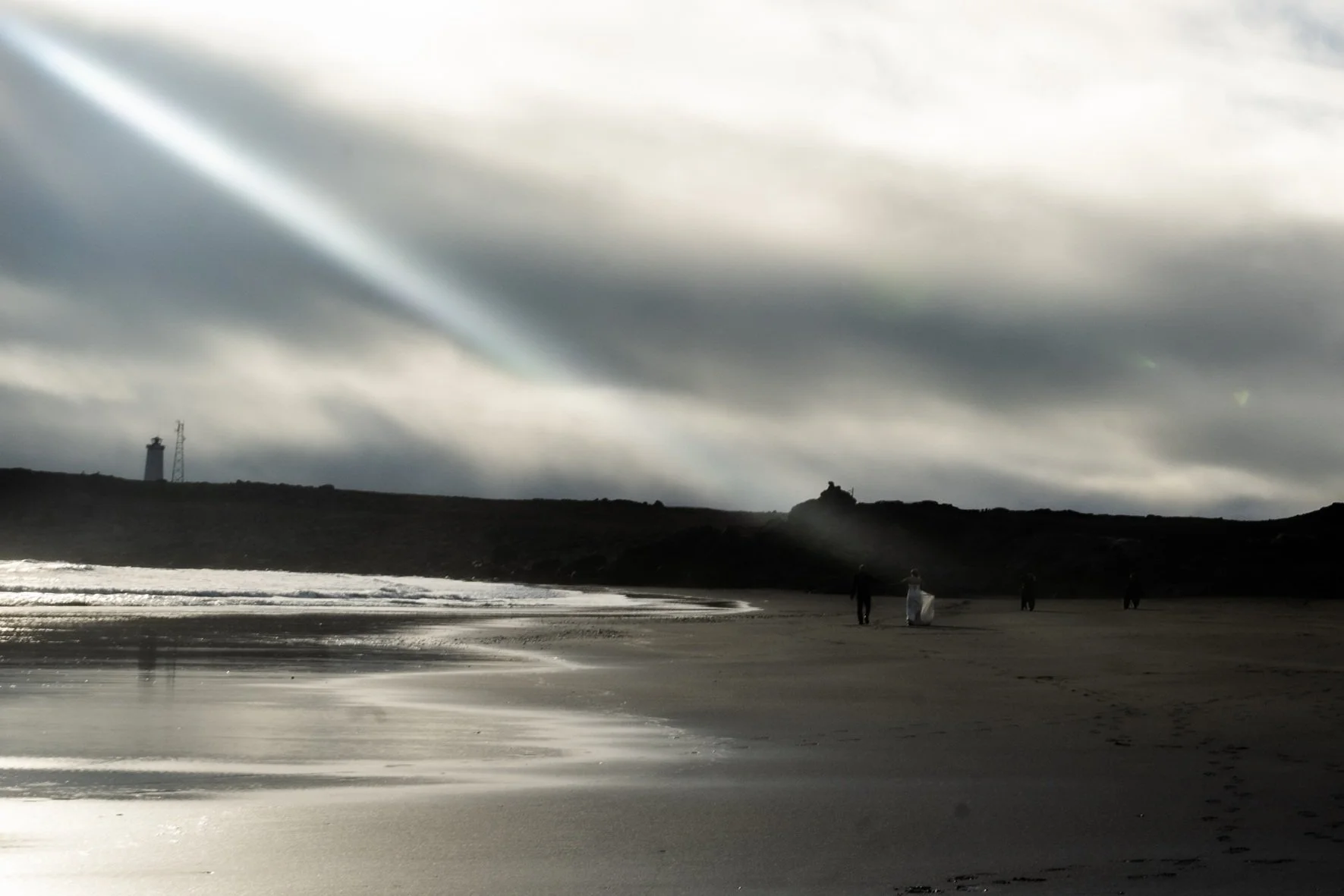
On one of the black beaches, I spotted a solitary figure walking along the shoreline. Behind him stretched a long trail of footprints in the sand. There was hardly another sign of human presence anywhere around him.
Naturally, I photographed him.
After all, I'm used to looking for people, even when I'm travelling somewhere the landscape is supposed to be the star.
At dusk, the wet black sand reflected the colours of the sky, and the few people wandering along the shore became tiny silhouettes against the ocean.
The Freezing Bride
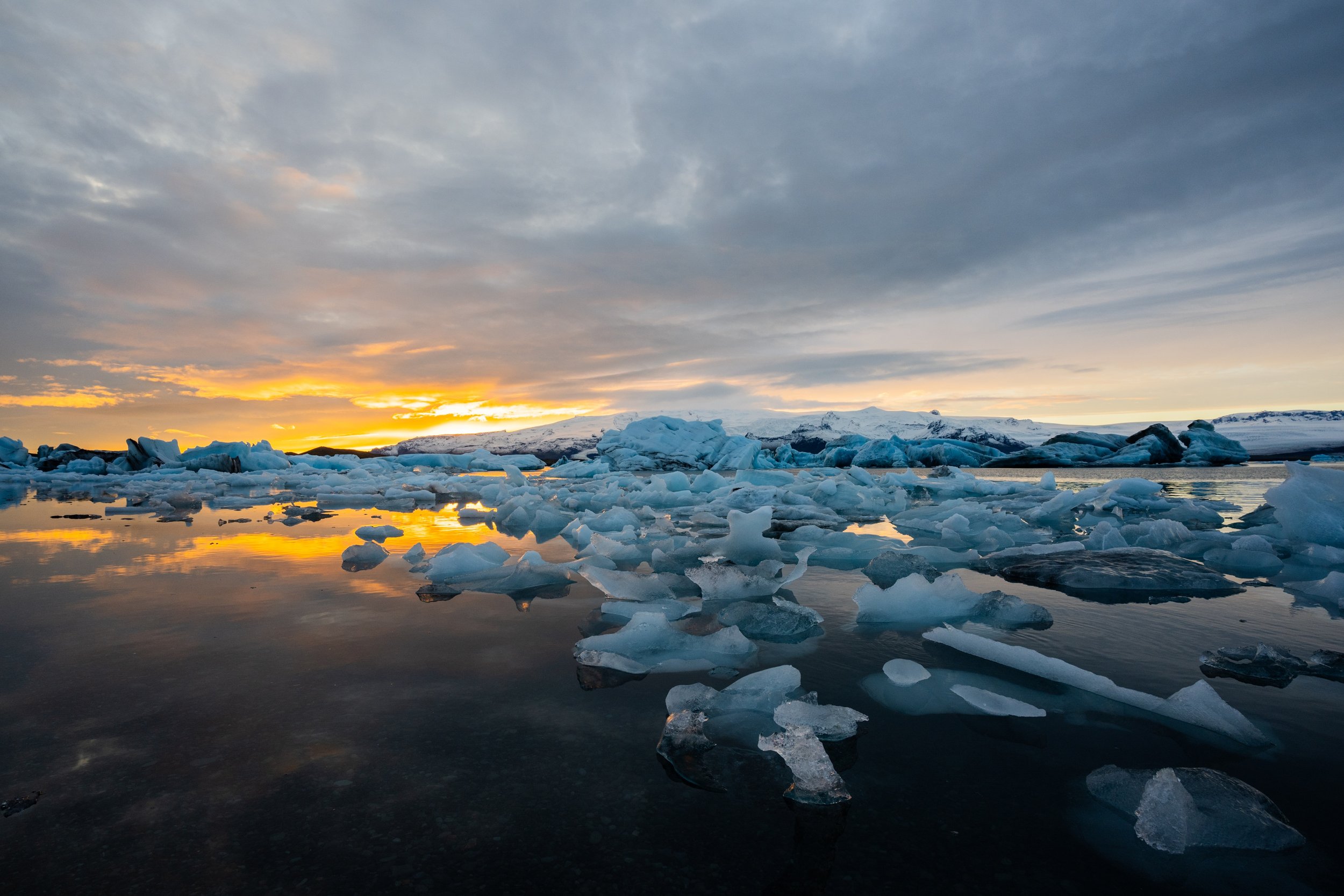
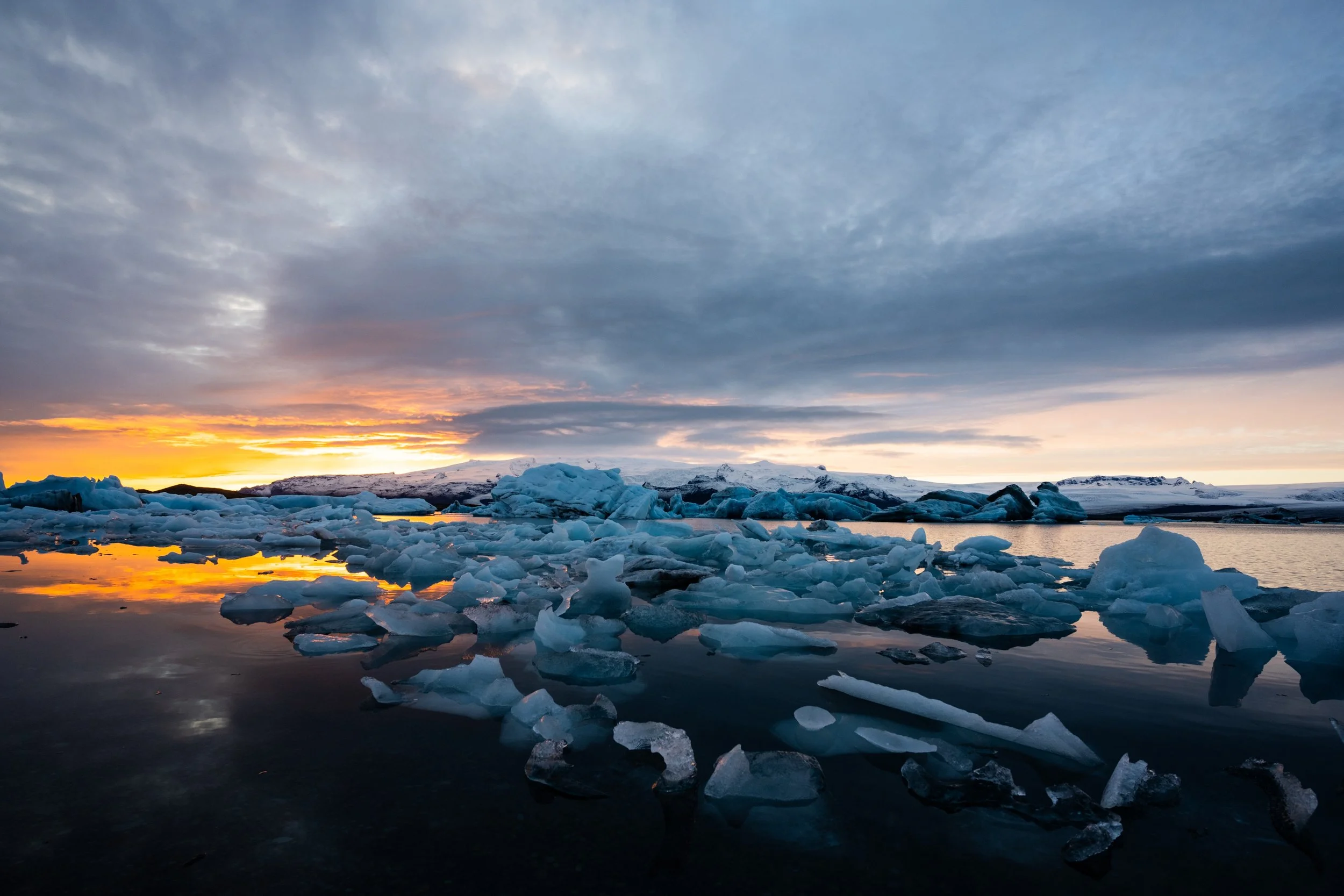
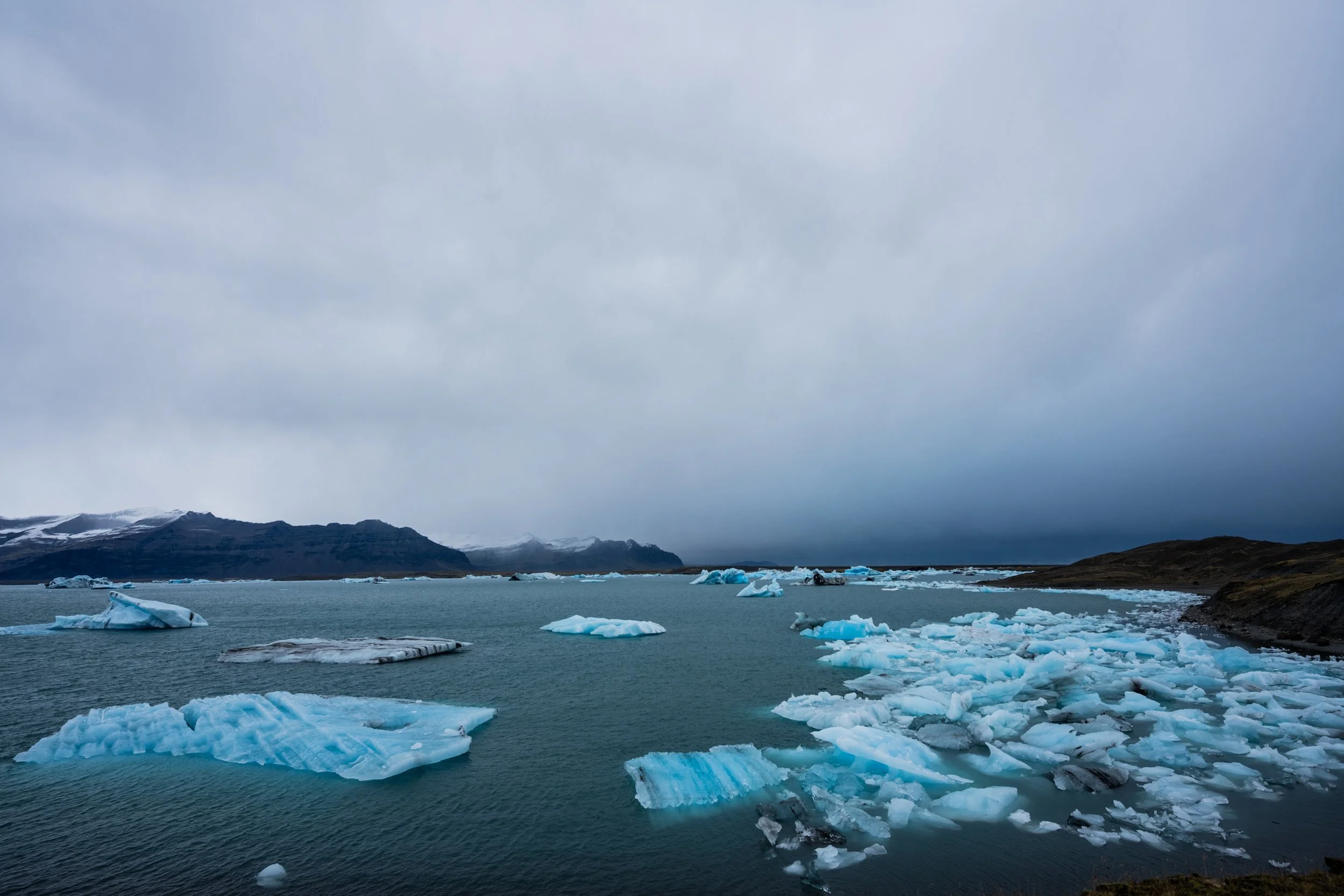
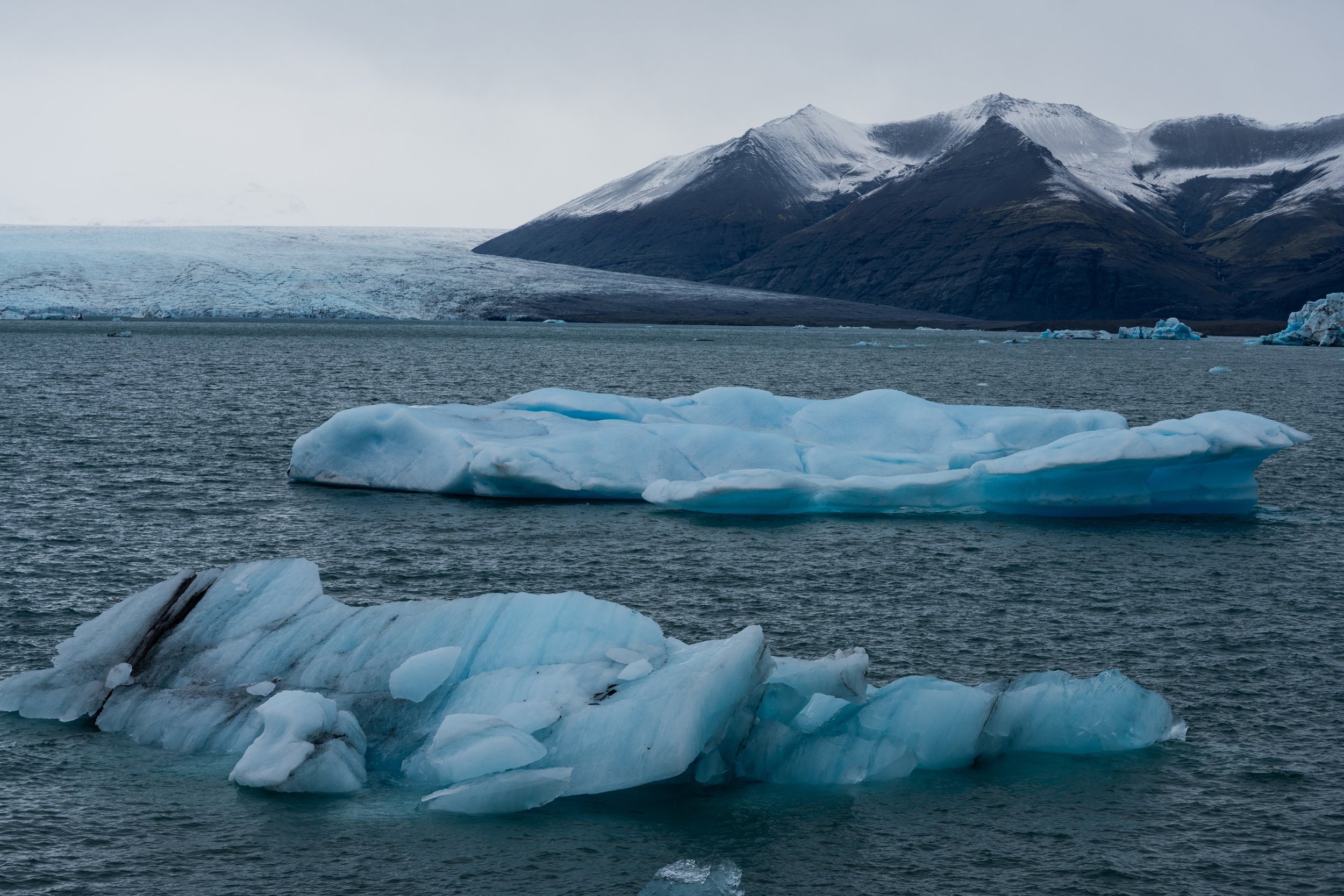
One of the places I'd been particularly looking forward to was Jökulsárlón Glacier Lagoon, in southeastern Iceland.
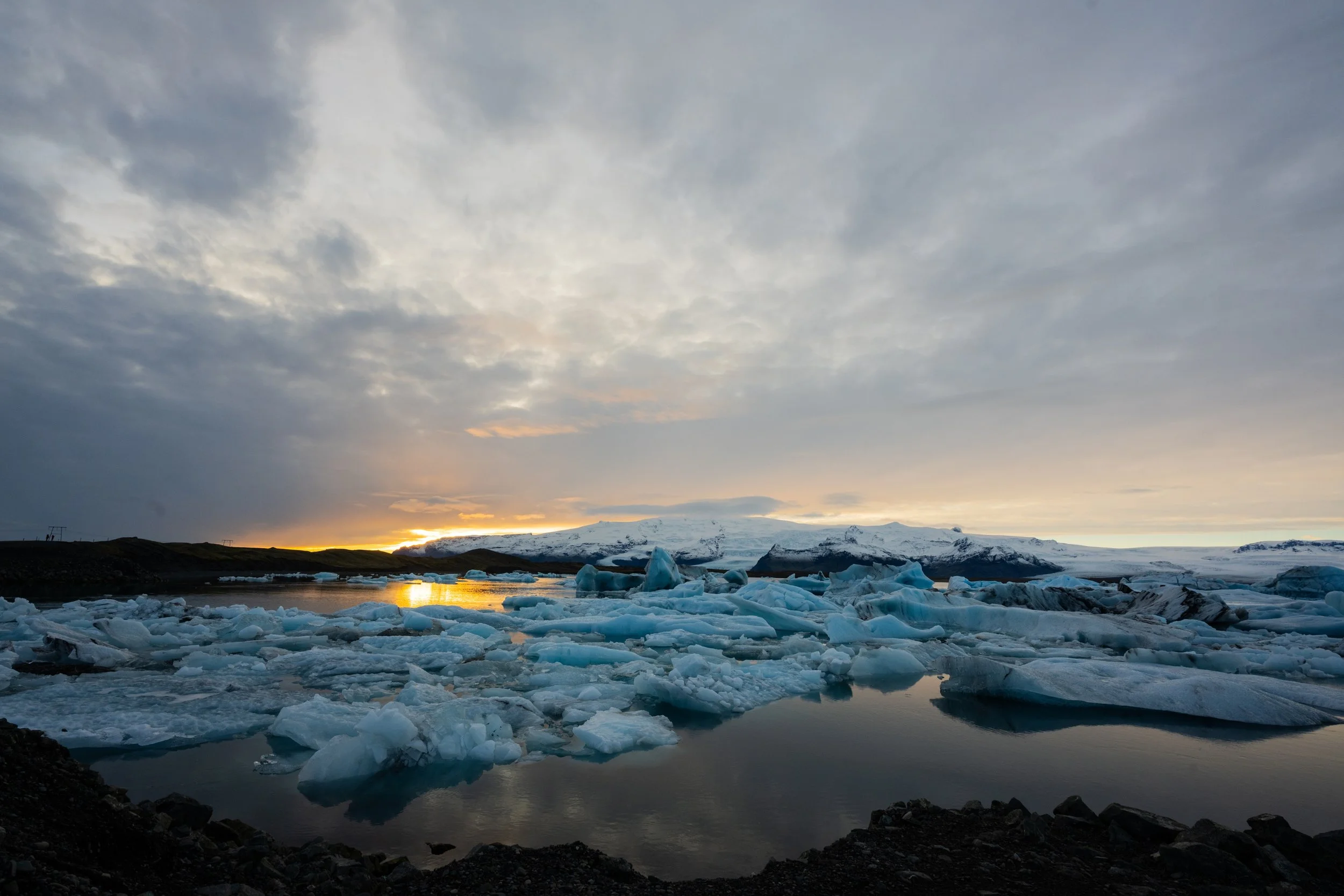
The lagoon formed as Breiðamerkurjökull, an outlet glacier of Vatnajökull, Iceland's largest ice cap, began to retreat. Enormous chunks of ice break away from the glacier, float across the lagoon and slowly make their way towards the ocean.
Some are white, some are shades of blue that are difficult to describe, and others are streaked with black from sediment trapped in the ice over the years.
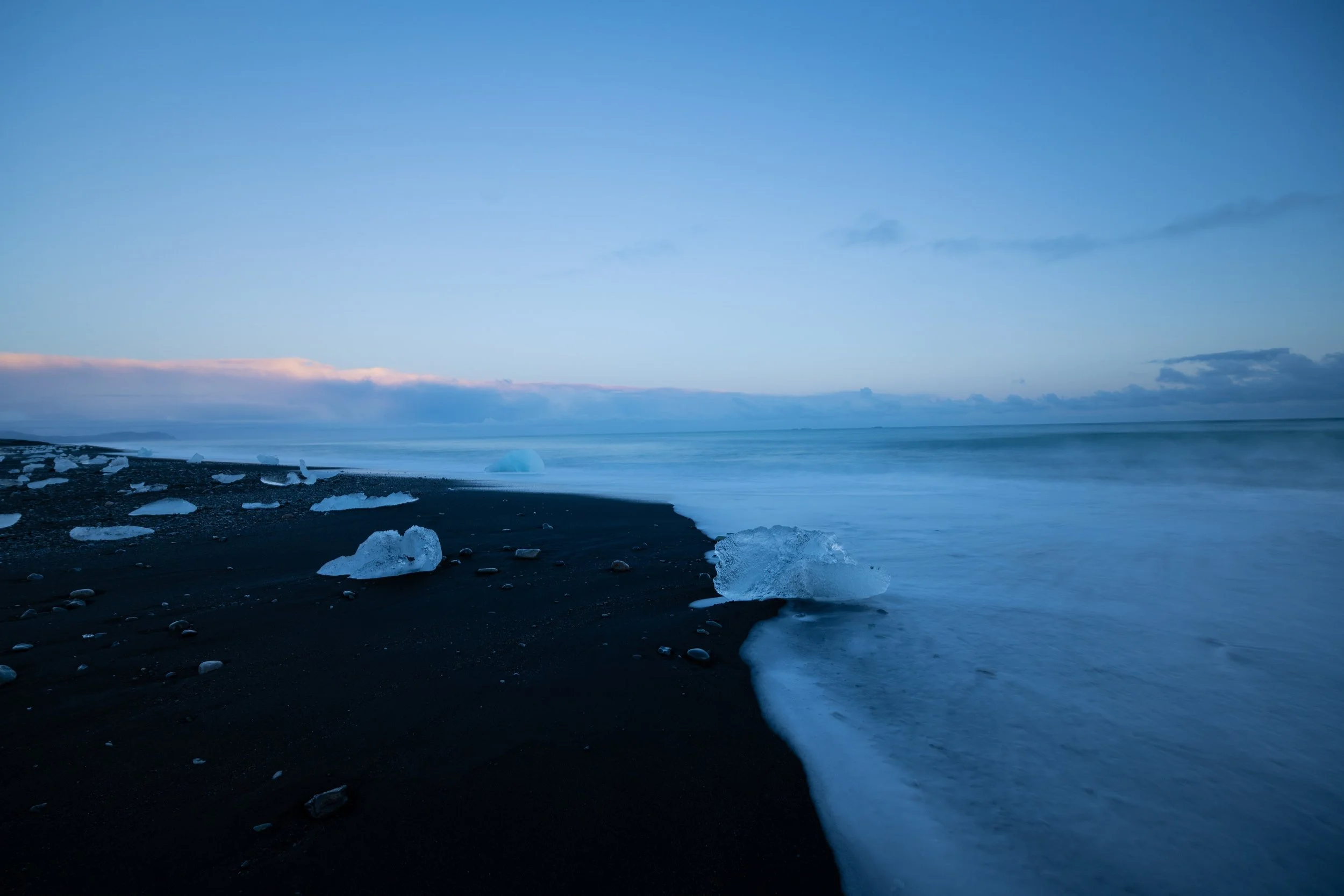
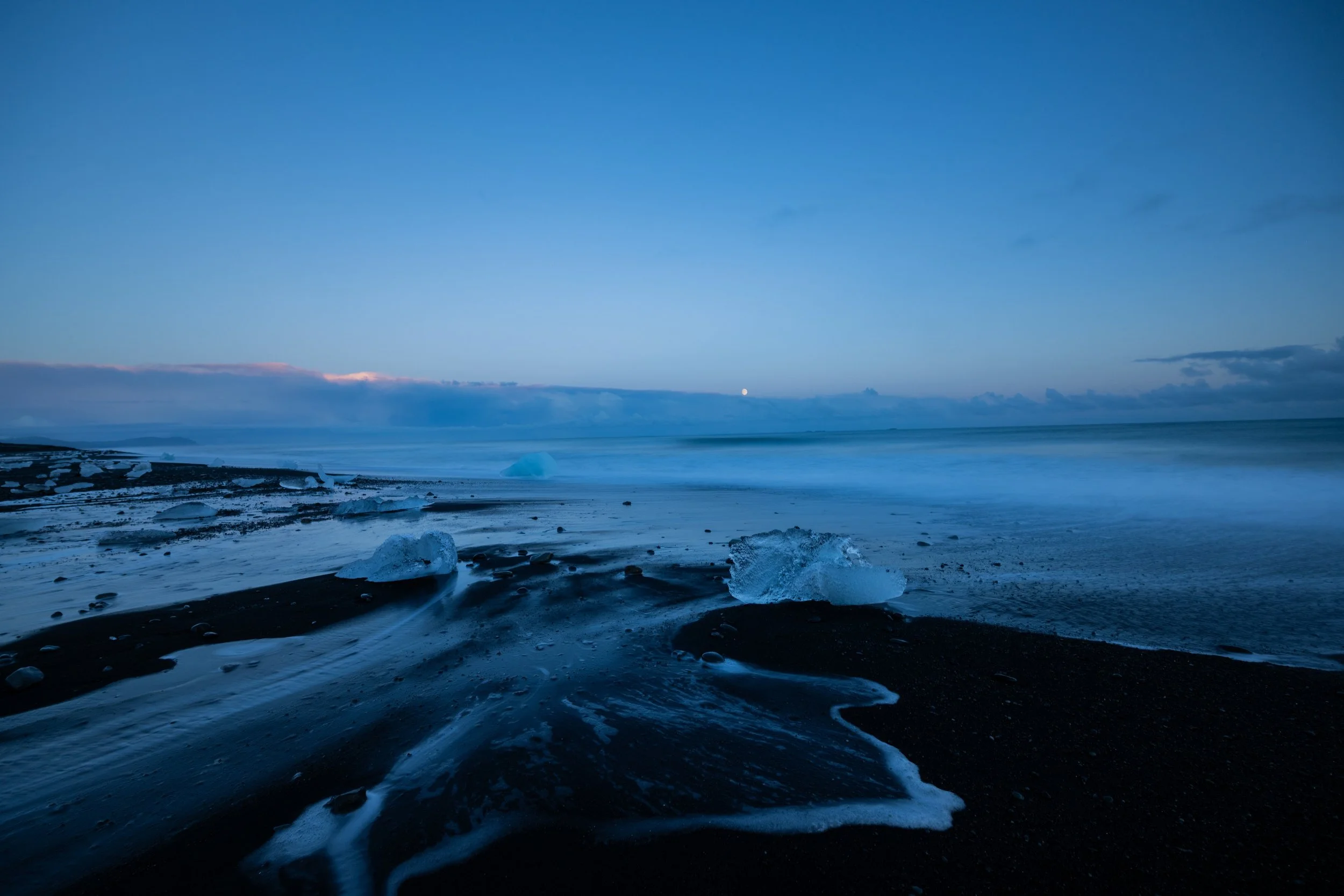
The ice travels through a short channel into the sea, and some pieces wash back onto the nearby shore, creating what is known as Diamond Beach.
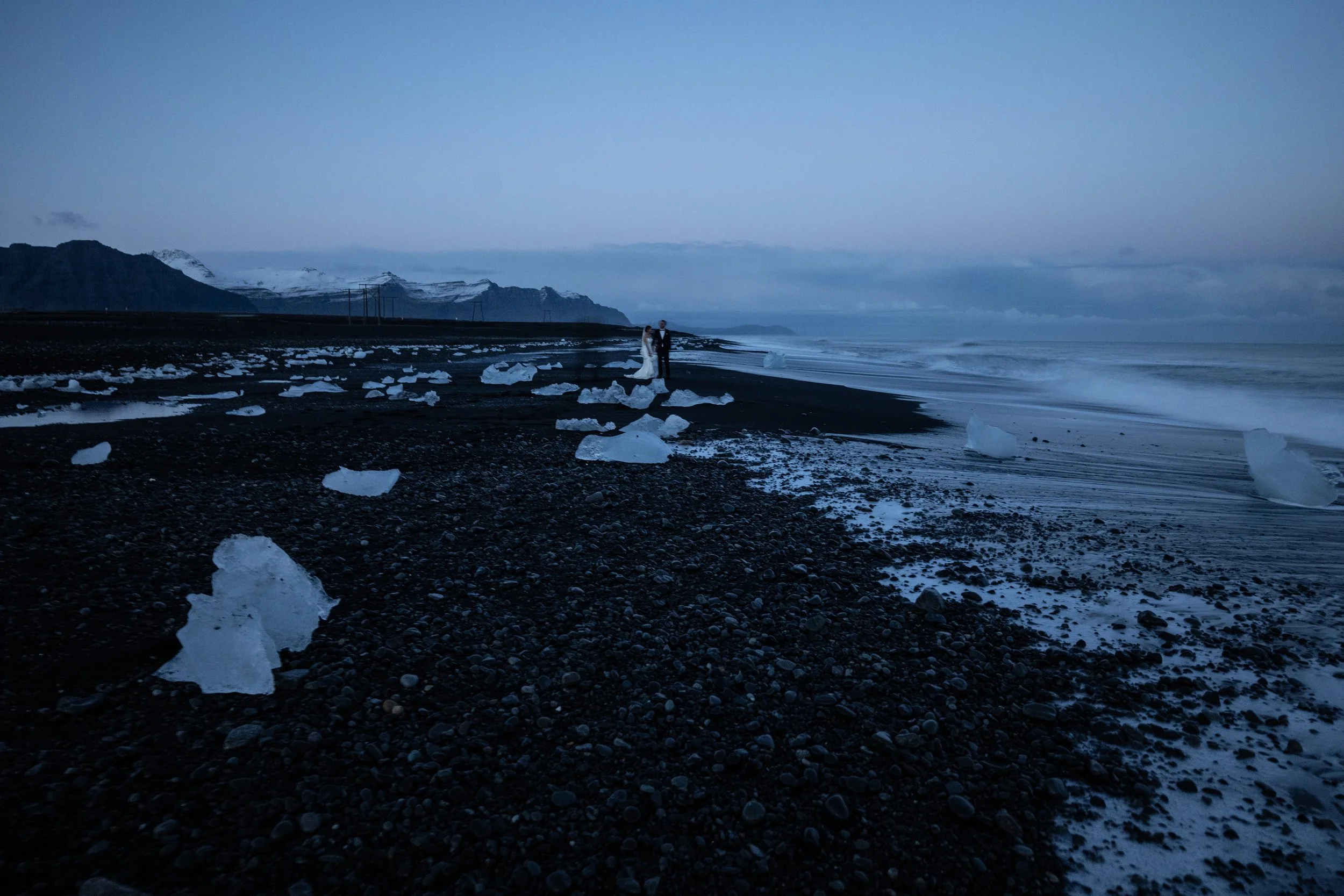
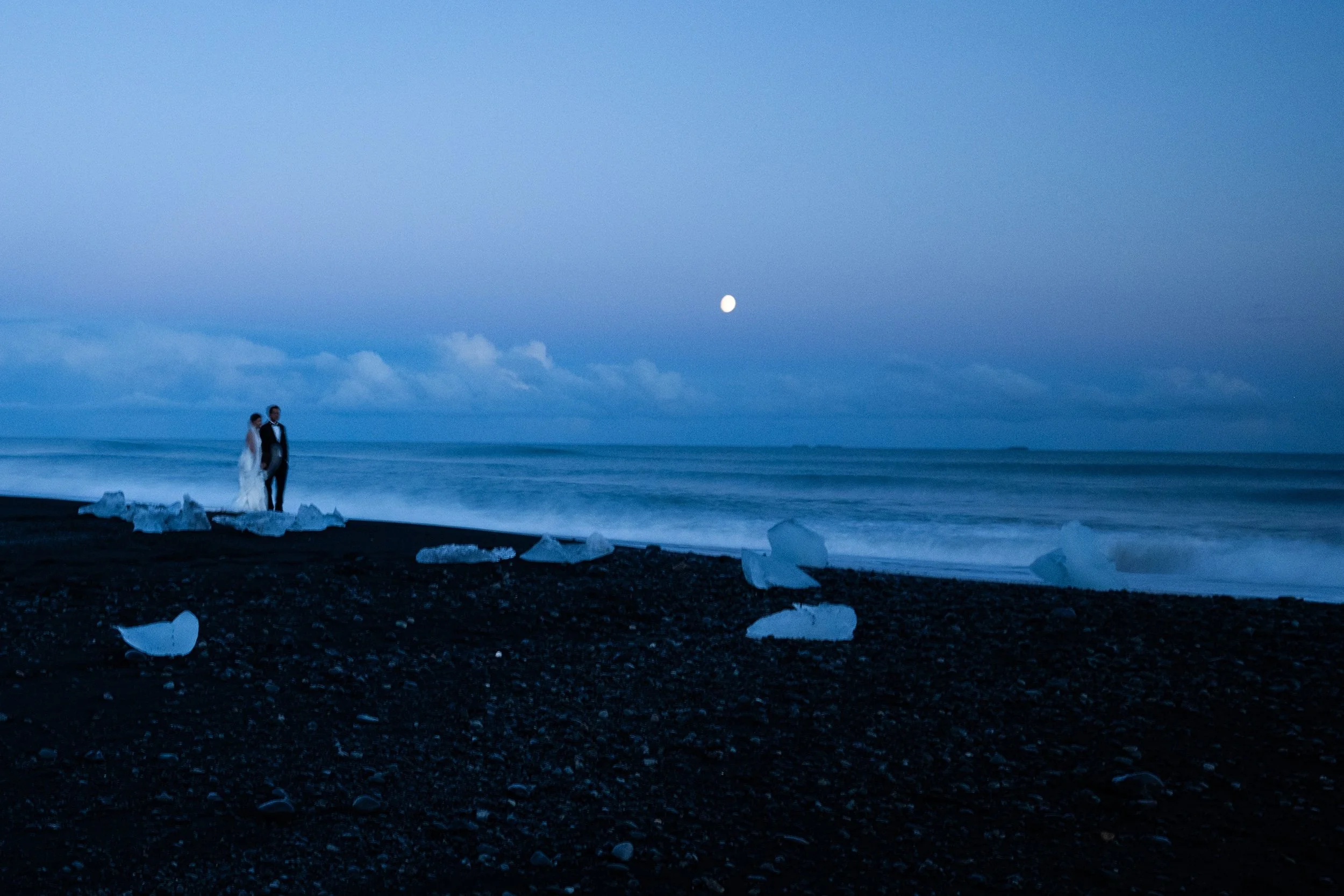
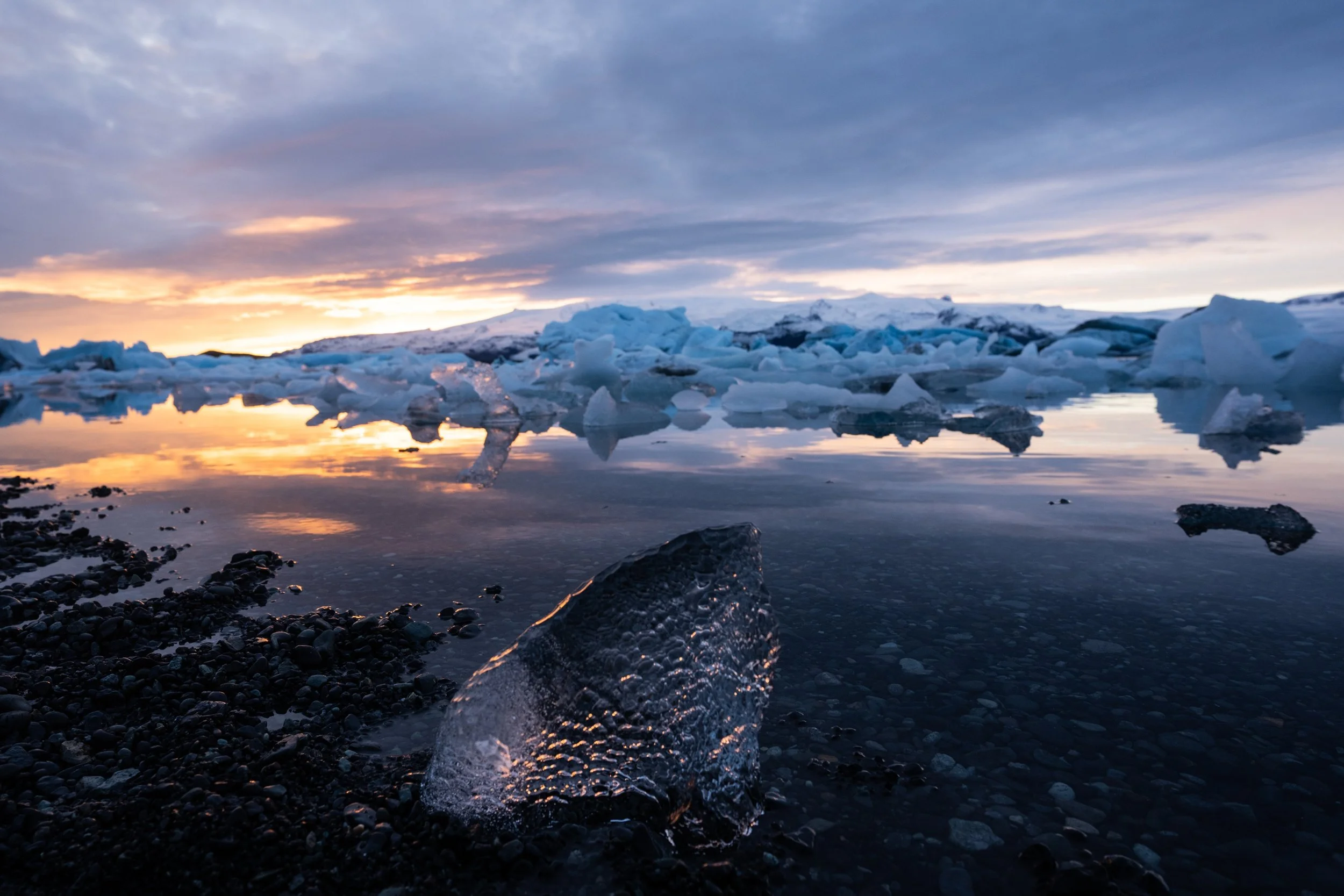
Picture a completely black beach scattered with hundreds of transparent chunks of ice. The waves wash over them, turn them and polish them, until they sparkle in the light like diamonds.
We arrived just before sunset. The sky turned delicate shades of pink and purple, and slowly, a full moon rose above the ocean.
We set up our tripods and began shooting long exposures, keeping the shutter open for several seconds to capture the movement of the water. The result is a soft, white veil of waves surrounding the chunks of ice.
We were completely absorbed in our photography when a wave suddenly came in much farther than expected.
We screamed, grabbed our tripods and scrambled to save our equipment. The cameras survived, but our shoes filled with water. Not exactly a pleasure when the temperature is hovering around freezing.
Fortunately, some Icelandic hotels have special drying rooms for clothes and shoes. At first, I'd wondered why anyone would need one. After a few days, I stopped asking.
And then a bride and groom appeared on the beach.
She was wearing a flimsy wedding dress and trainers, and her long white train was already wet and blackened by the sand. She was clearly freezing, but she kept posing for photographs.
We told her, "The things we do for love..."
Batman, Black Mountains and Another Bride and Groom
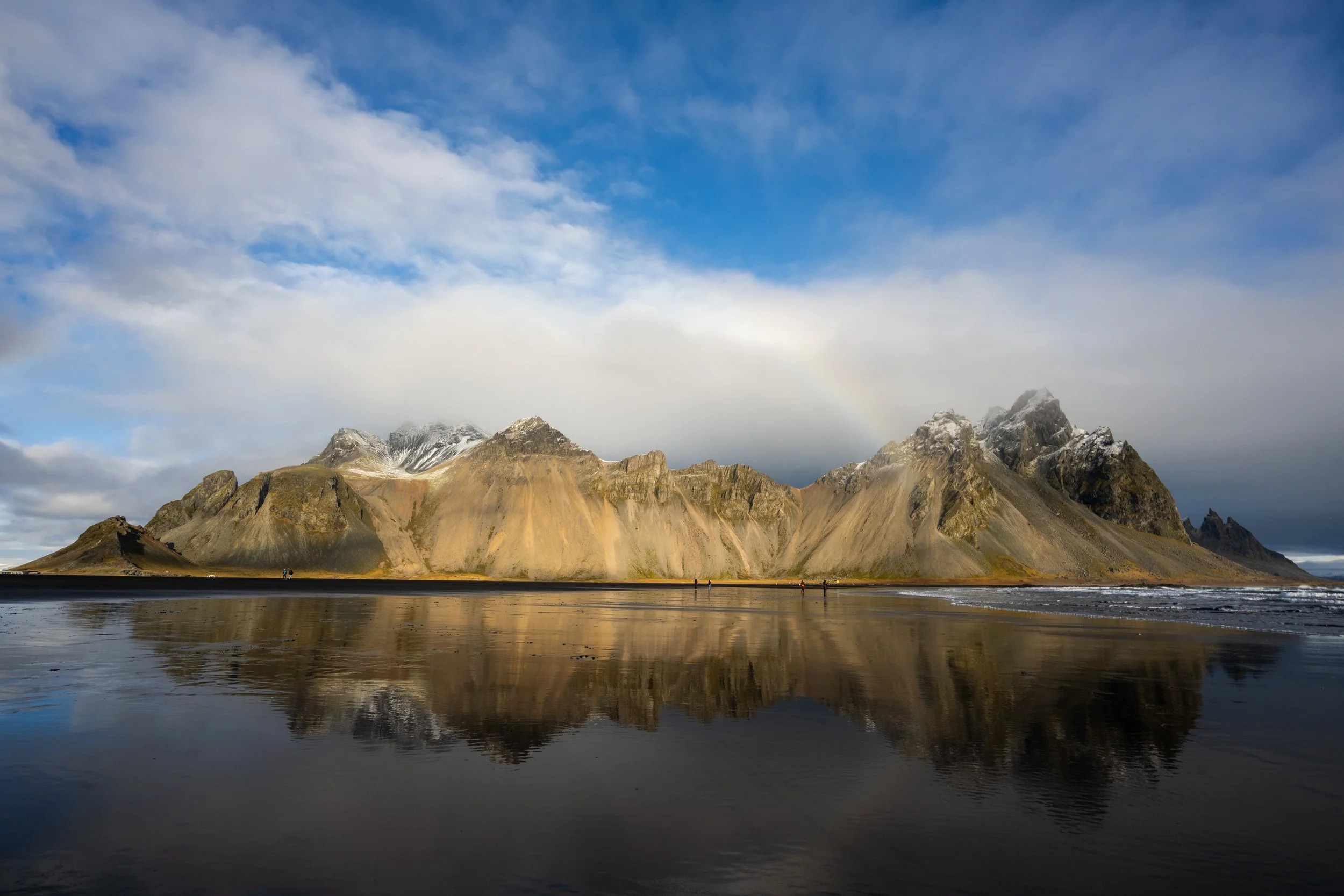
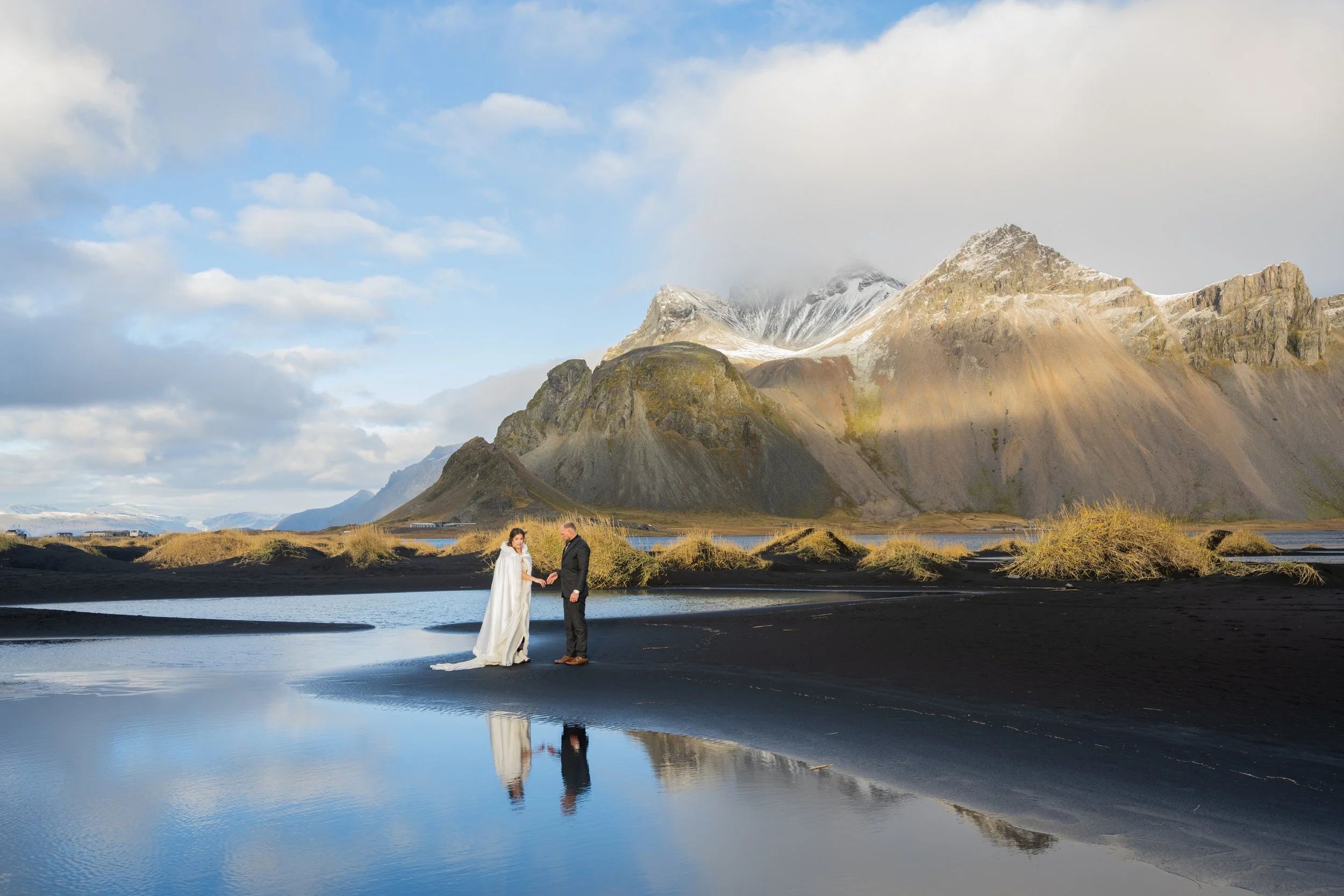
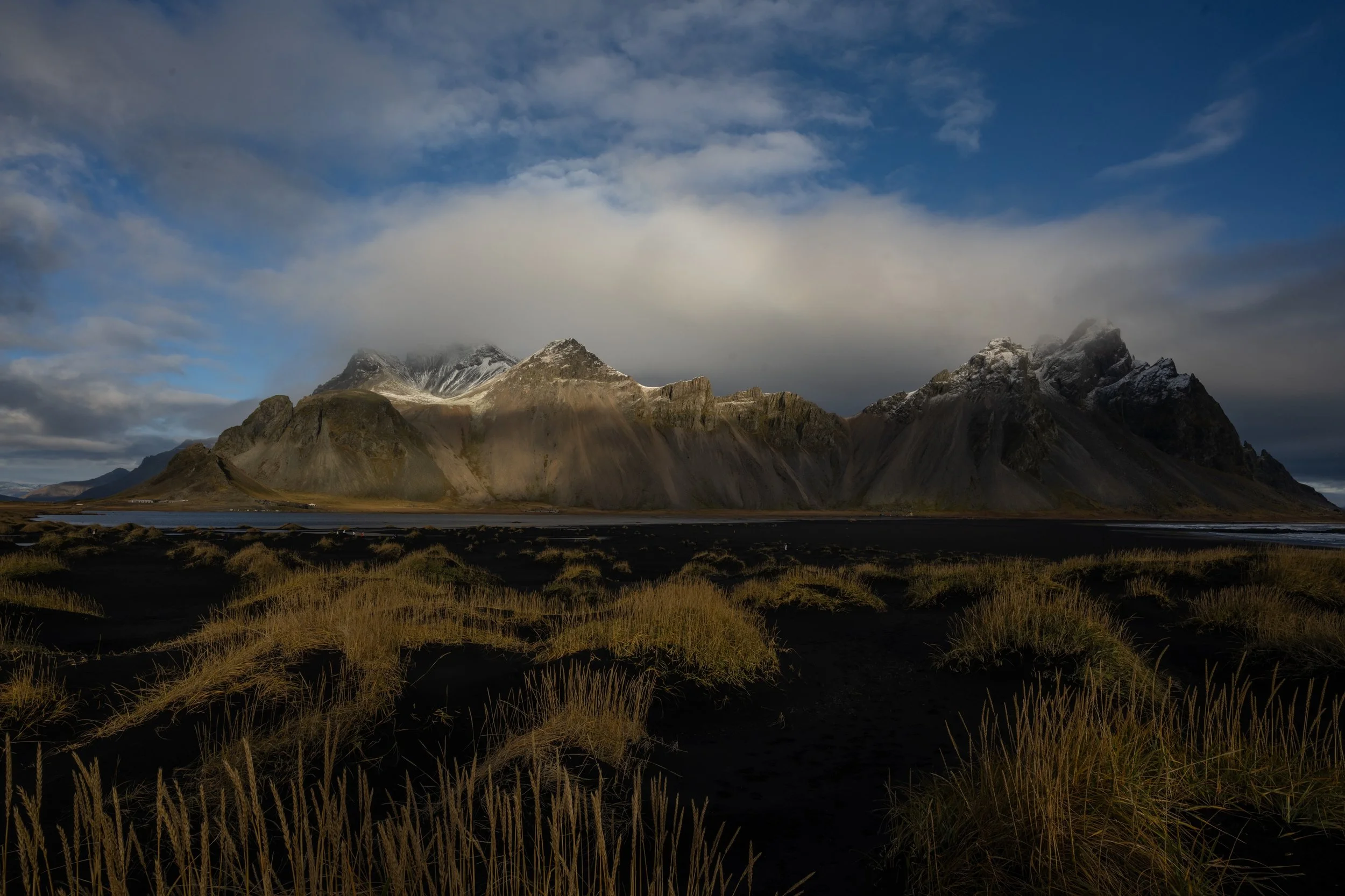
At Stokksnes Beach, near the town of Höfn, rises Vestrahorn, a mountain whose jagged peaks create a particularly dramatic silhouette.
At its feet lie sweeping dunes of black sand, dotted with tufts of yellowish grass. When a thin layer of water covers the sand, it creates an almost perfect reflection of the mountain.
Nearby is Brunnhorn, nicknamed "Batman Mountain" because its pointed peaks resemble the superhero's famous emblem.
We spent ages photographing the reflections and the subtle changes in the light.
And suddenly, another bride and groom!
This time it was an Icelandic couple who had come to have their photographs taken against the mountains.
After two encounters like that, I began to suspect that wedding photography in freezing temperatures might be a national pastime.
Seven and a Half Minutes for One Second
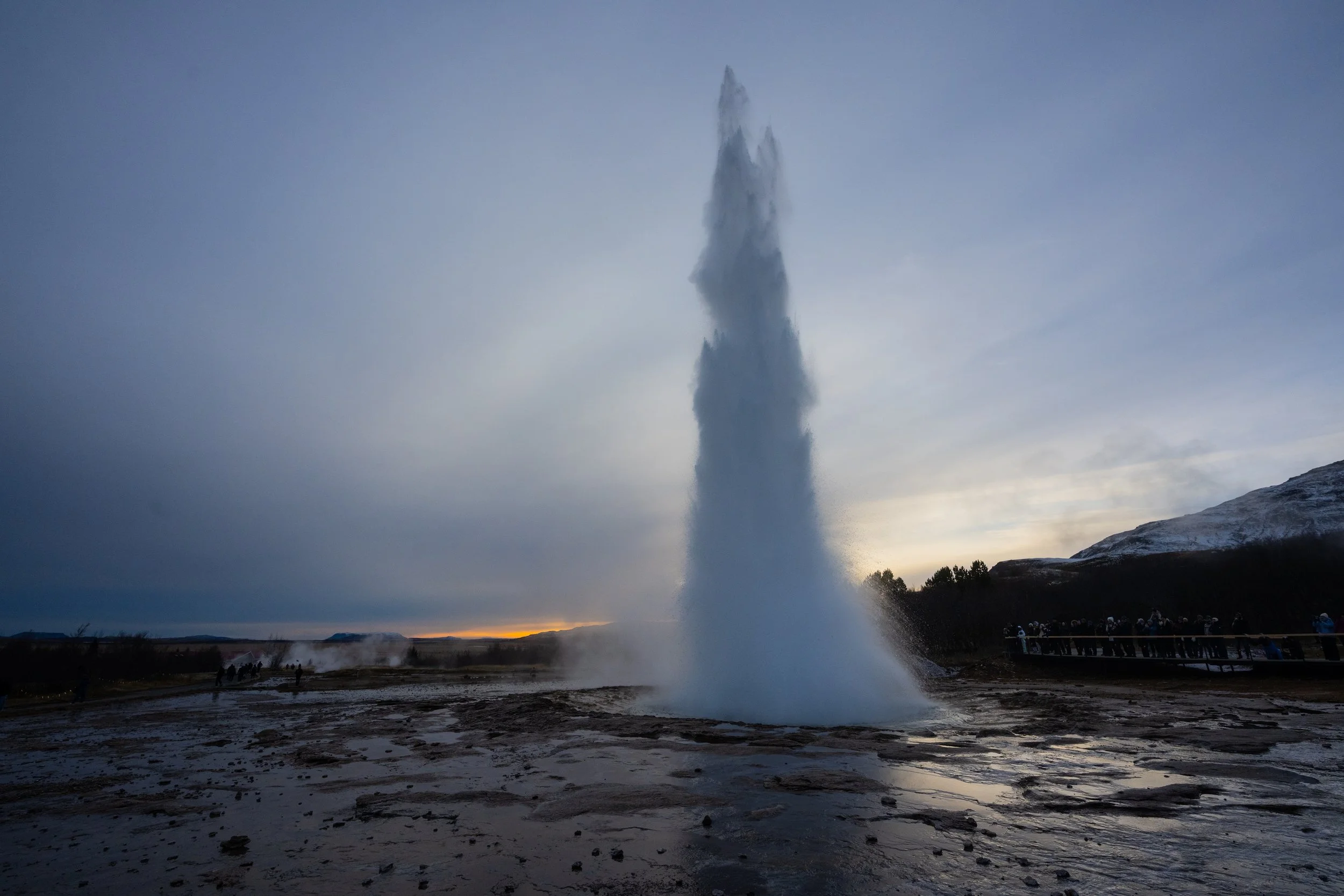
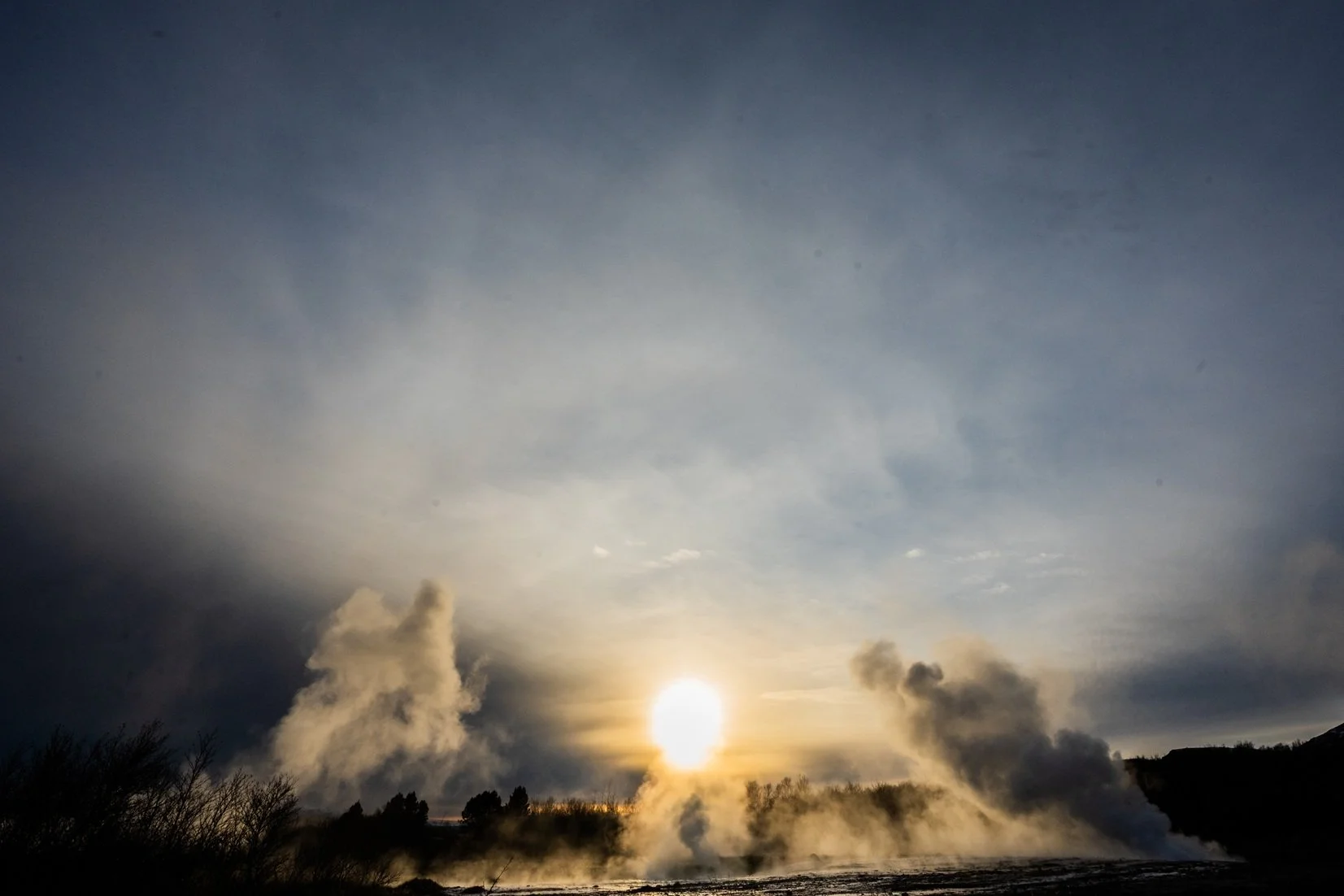
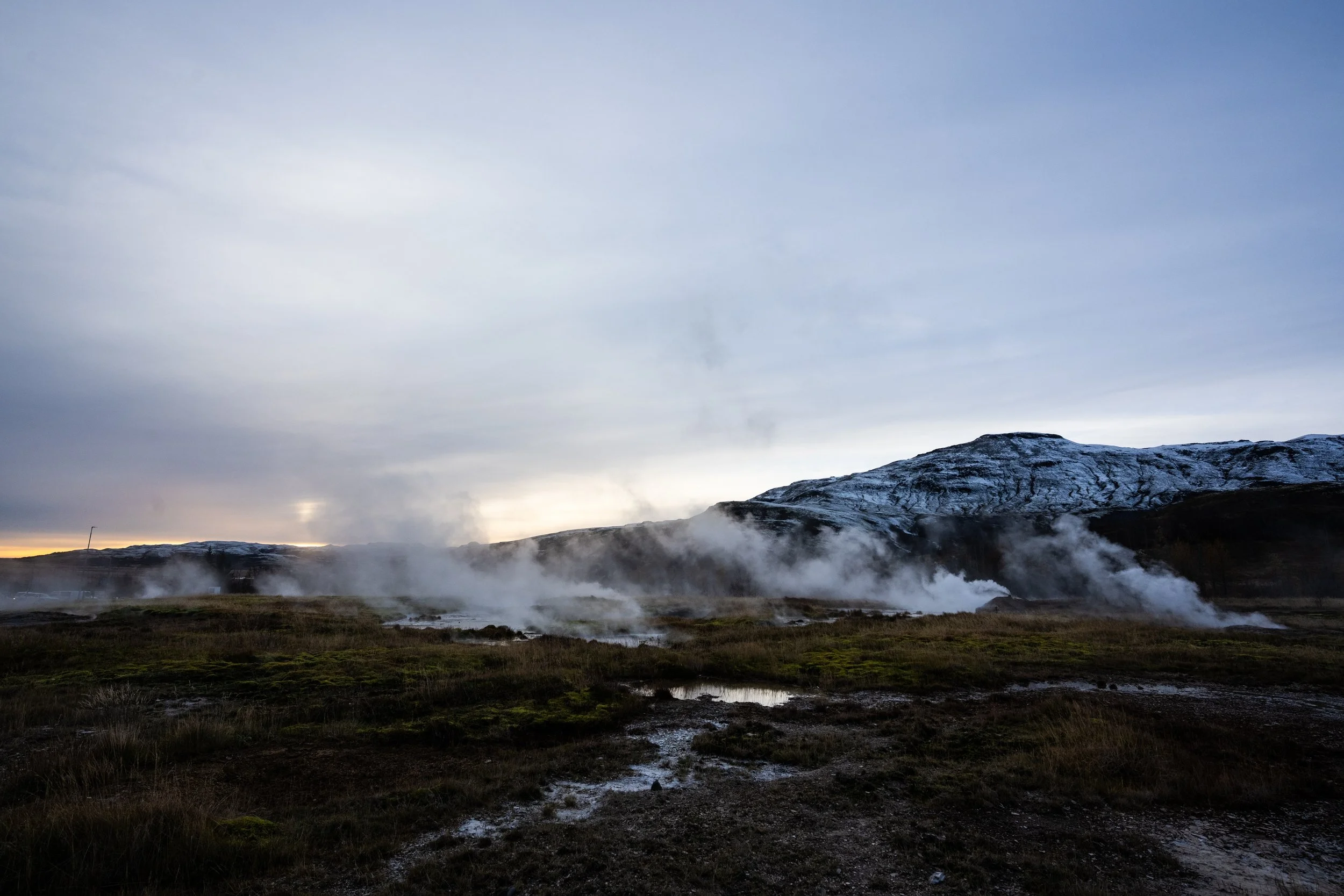
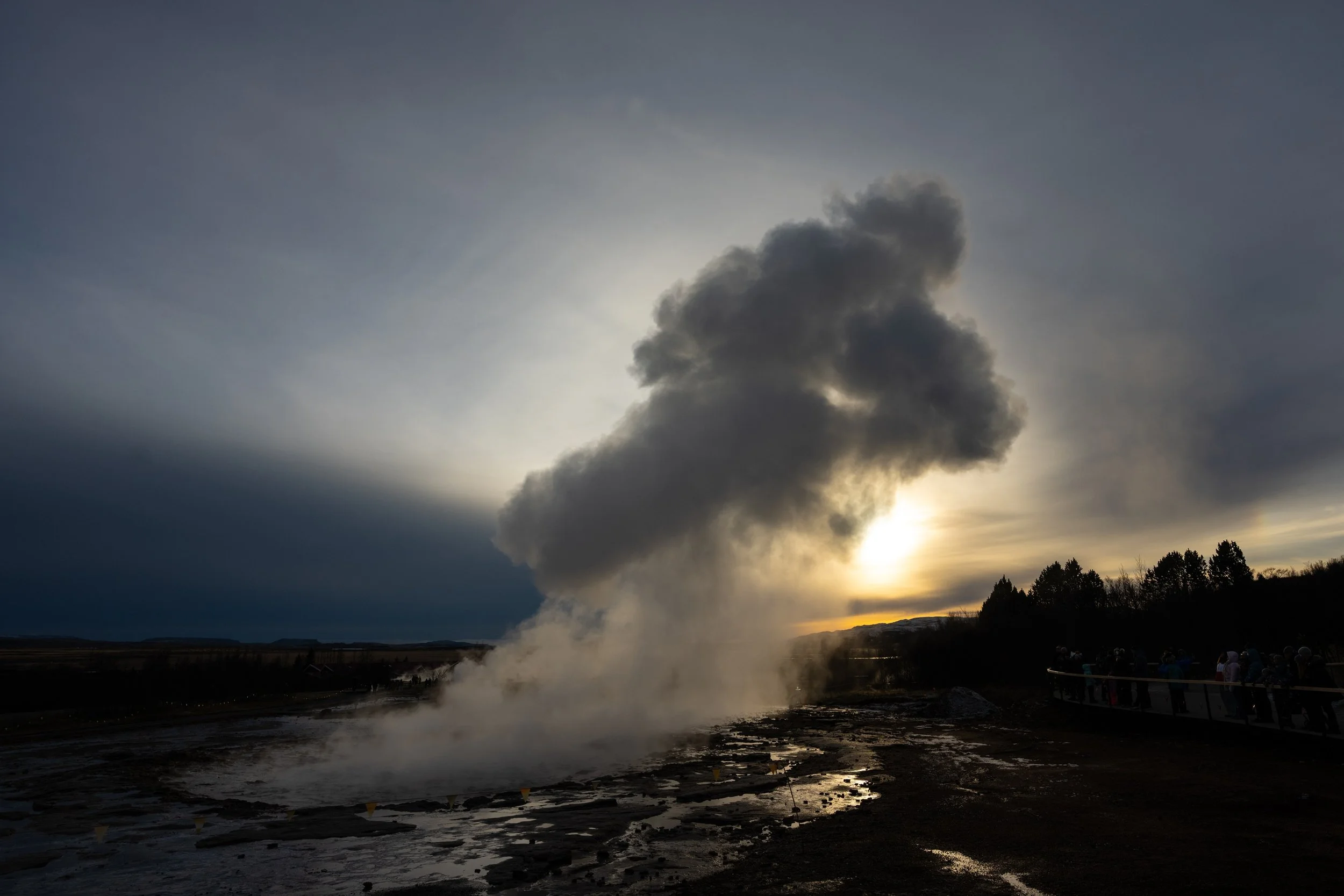
In the Haukadalur geothermal area of southwestern Iceland lies Strokkur, a geyser that erupts every few minutes.
Deep underground, water is heated by geothermal activity. Pressure builds until water and steam burst upwards in a sudden eruption, sometimes reaching tens of metres into the air.
At first, I filmed it on my phone so I could share the experience with my family in real time. I knew the eruption was coming, but when the water suddenly shot into the air, I jumped out of my skin. At least the rest of the group got some entertainment.
After watching a few eruptions, I began to recognise the warning signs. Just before the water shoots upwards, a large blue bubble forms on the surface. It swells for a moment, then bursts into a towering column of water.
I decided that this time I was going to capture that exact moment properly.
I prepared my camera, chose my composition, set the focus and waited.
And waited.
The previous eruptions had come relatively quickly. But now, with everything ready, Strokkur apparently decided there was no rush whatsoever.
I stood there, camera poised, for seven and a half minutes.
Eventually, it happened. The blue bubble appeared, the water erupted, and I caught the moment.
Waterfalls, Waterfalls and More Waterfalls
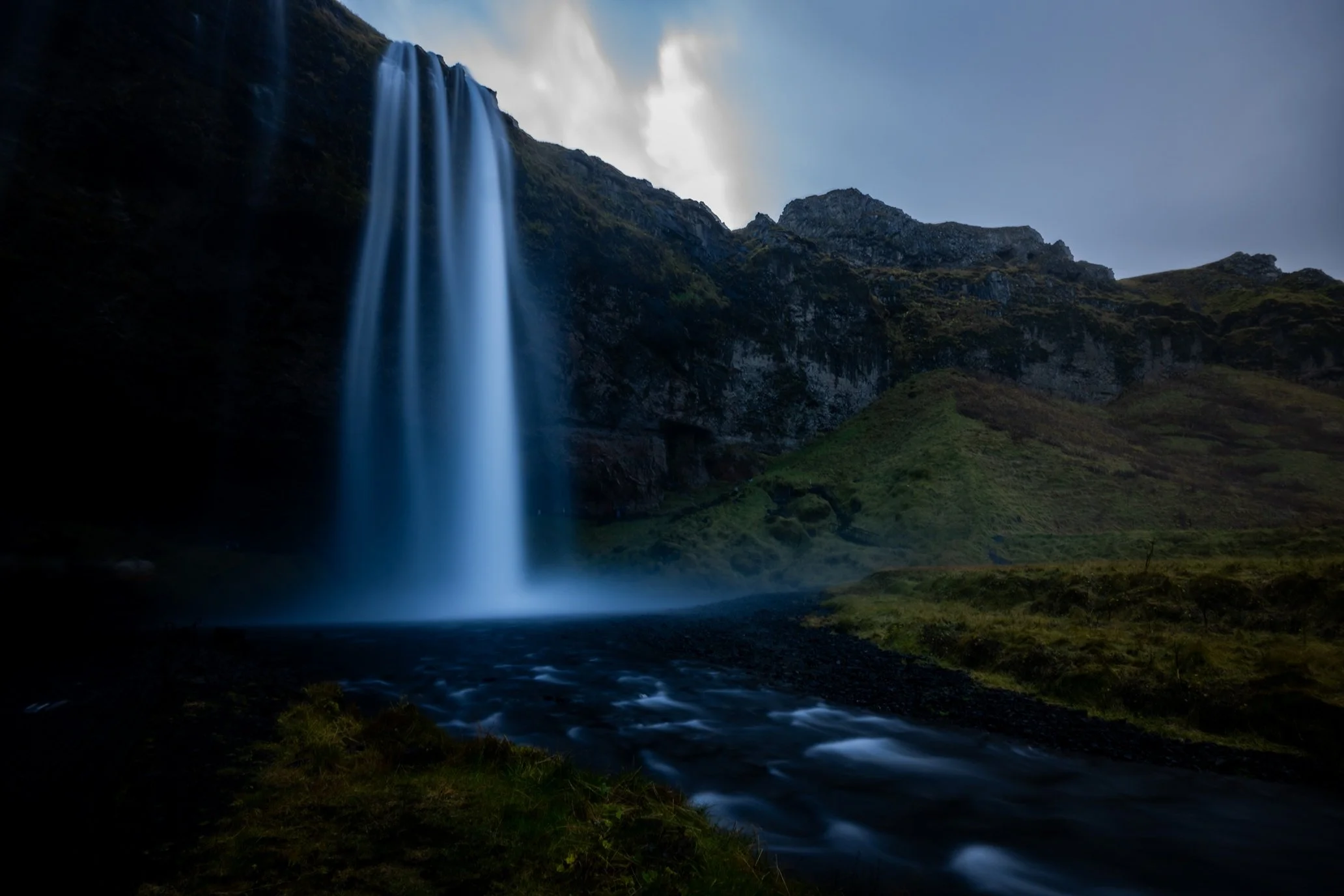
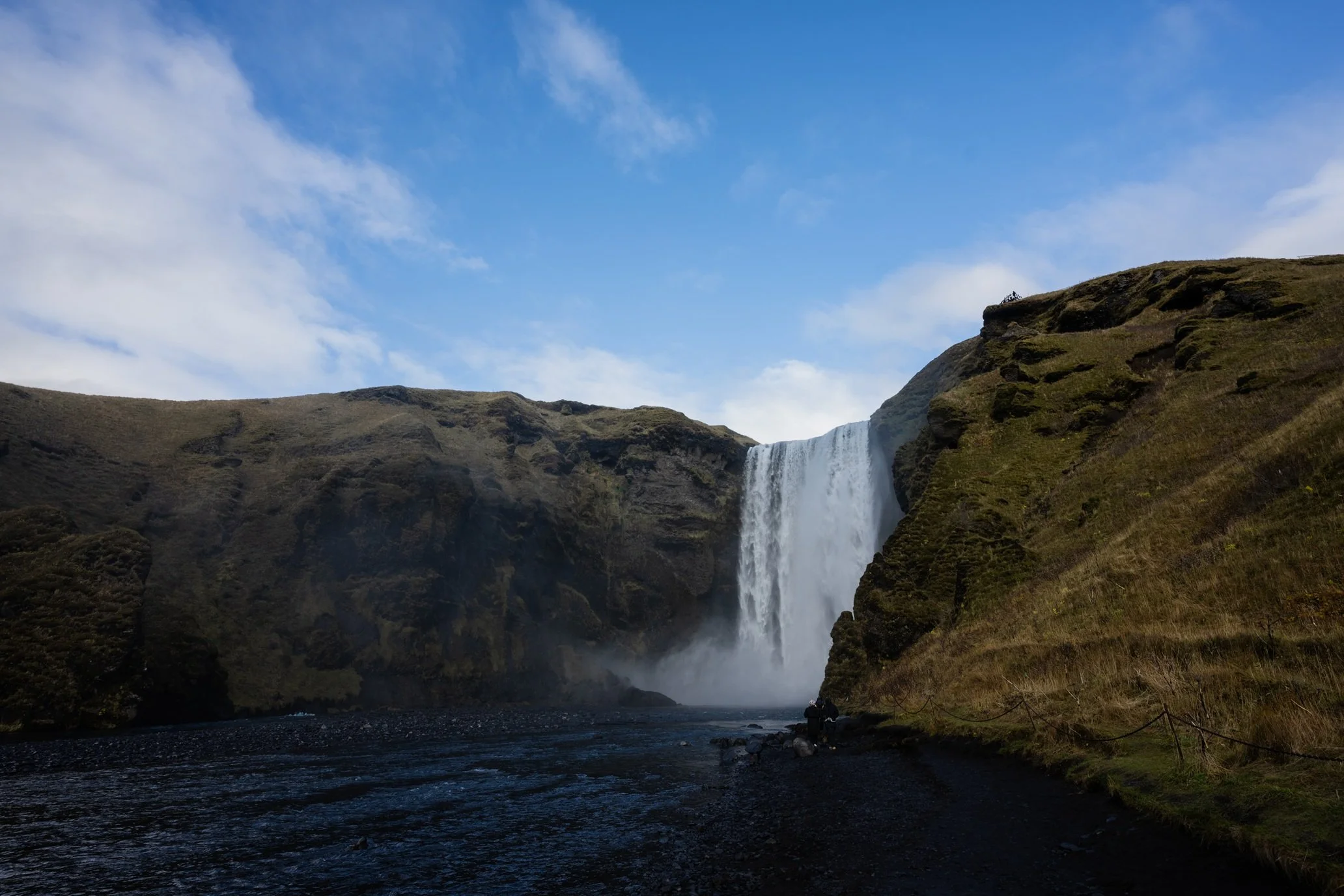
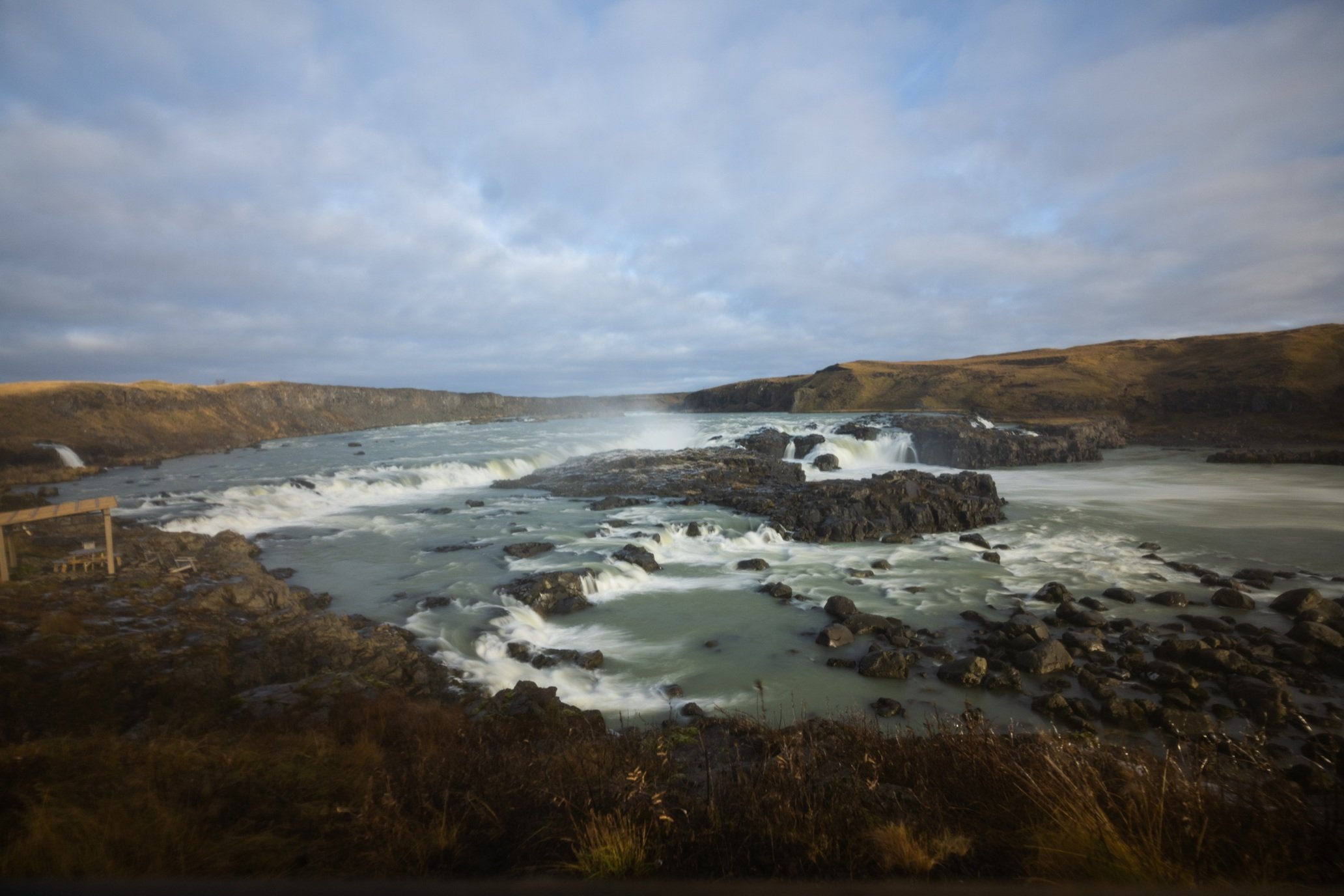
There is water everywhere in Iceland. Streams, rivers, springs, lakes and waterfalls. Water flows down from the glaciers, crosses plains of dark rock and tumbles over cliffs.
Some waterfalls are enormous and thunderous, while others are smaller and more delicate. Nearly all of them made us stop, get out our tripods and start photographing.
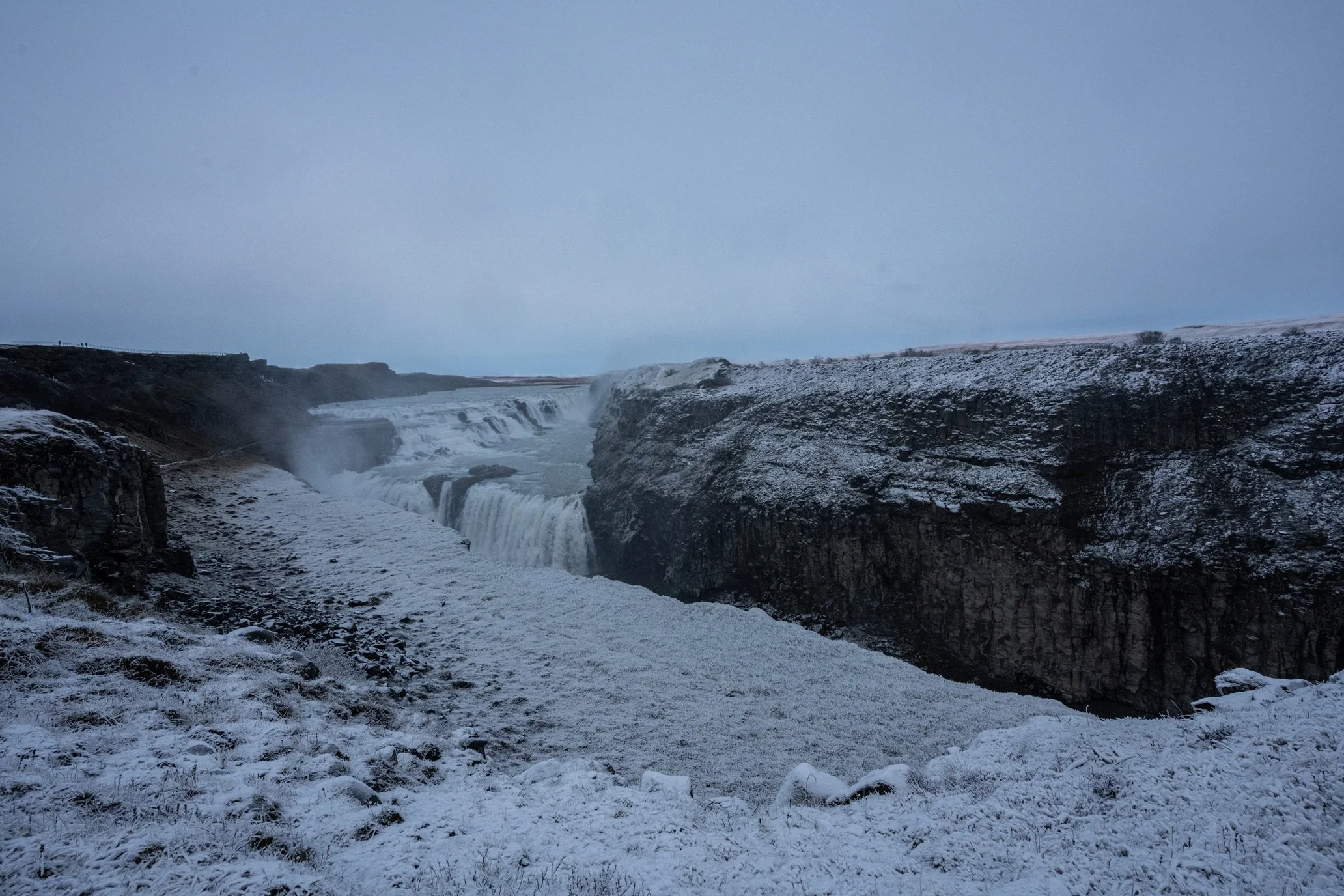
One of the most impressive is Gullfoss, where the Hvítá River plunges in two stages into a deep canyon. You can feel the force of the water even from a distance. When we arrived, some of the surrounding rocks were covered in snow and ice, and the spray rising from the falls mingled with the cold air.
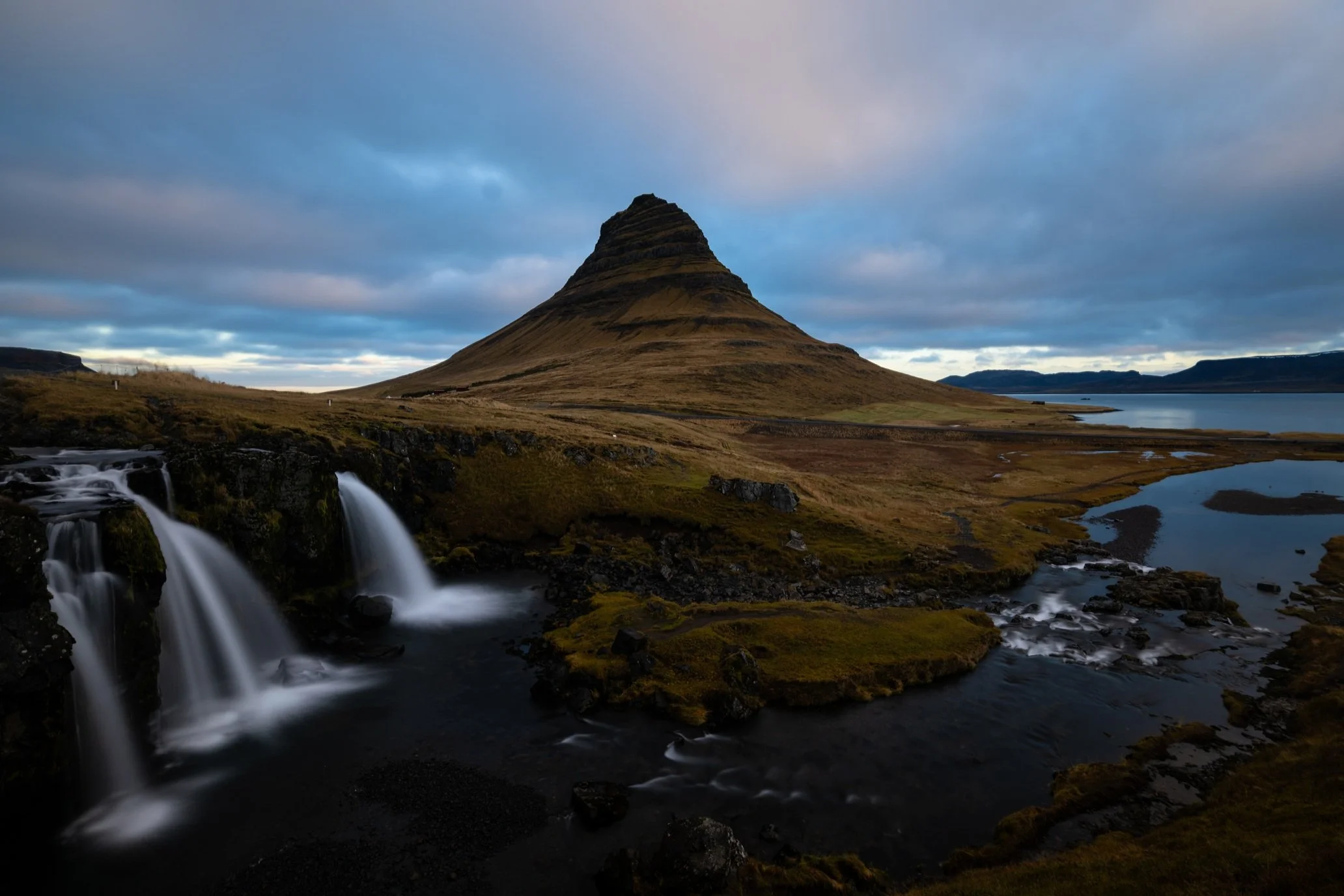
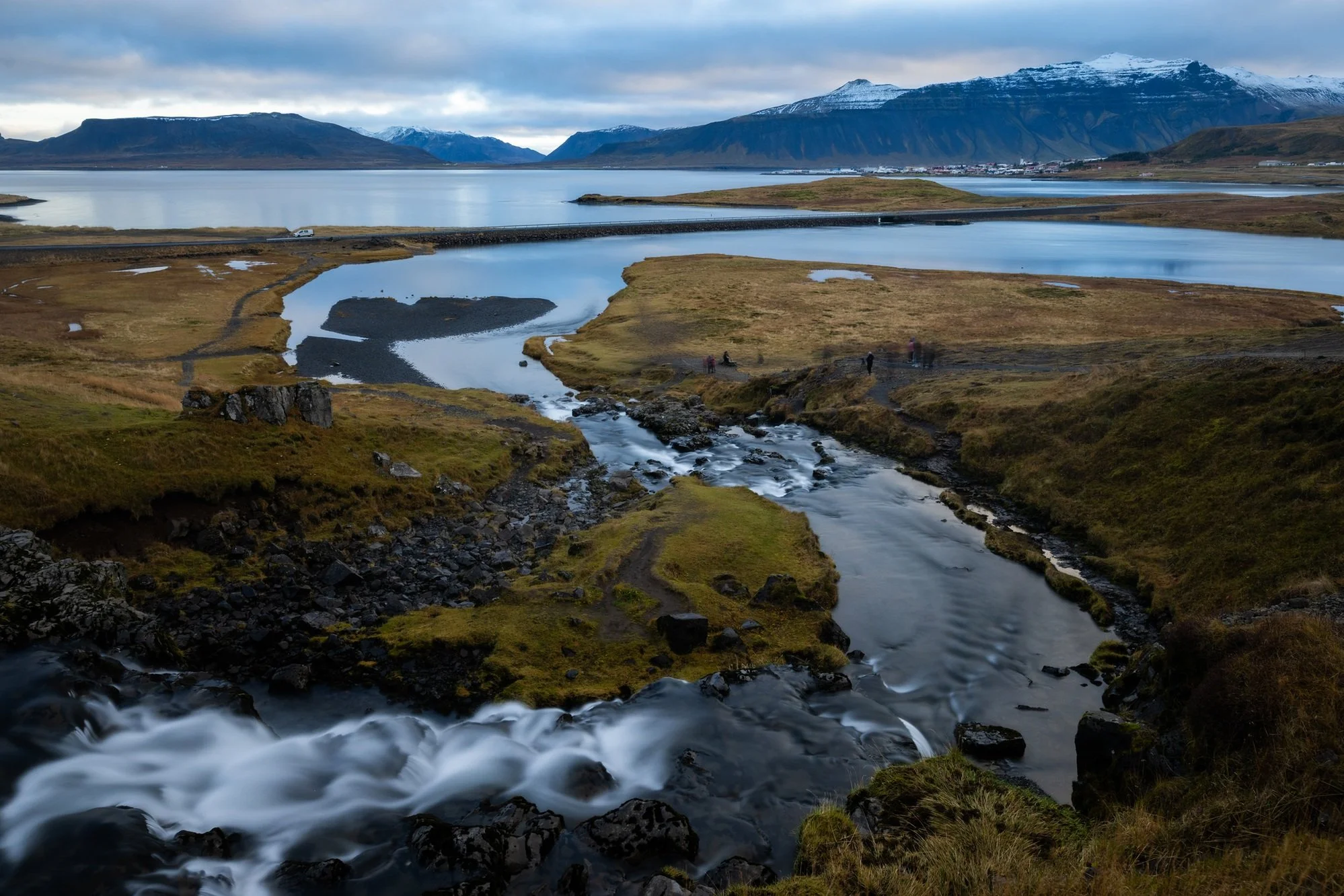
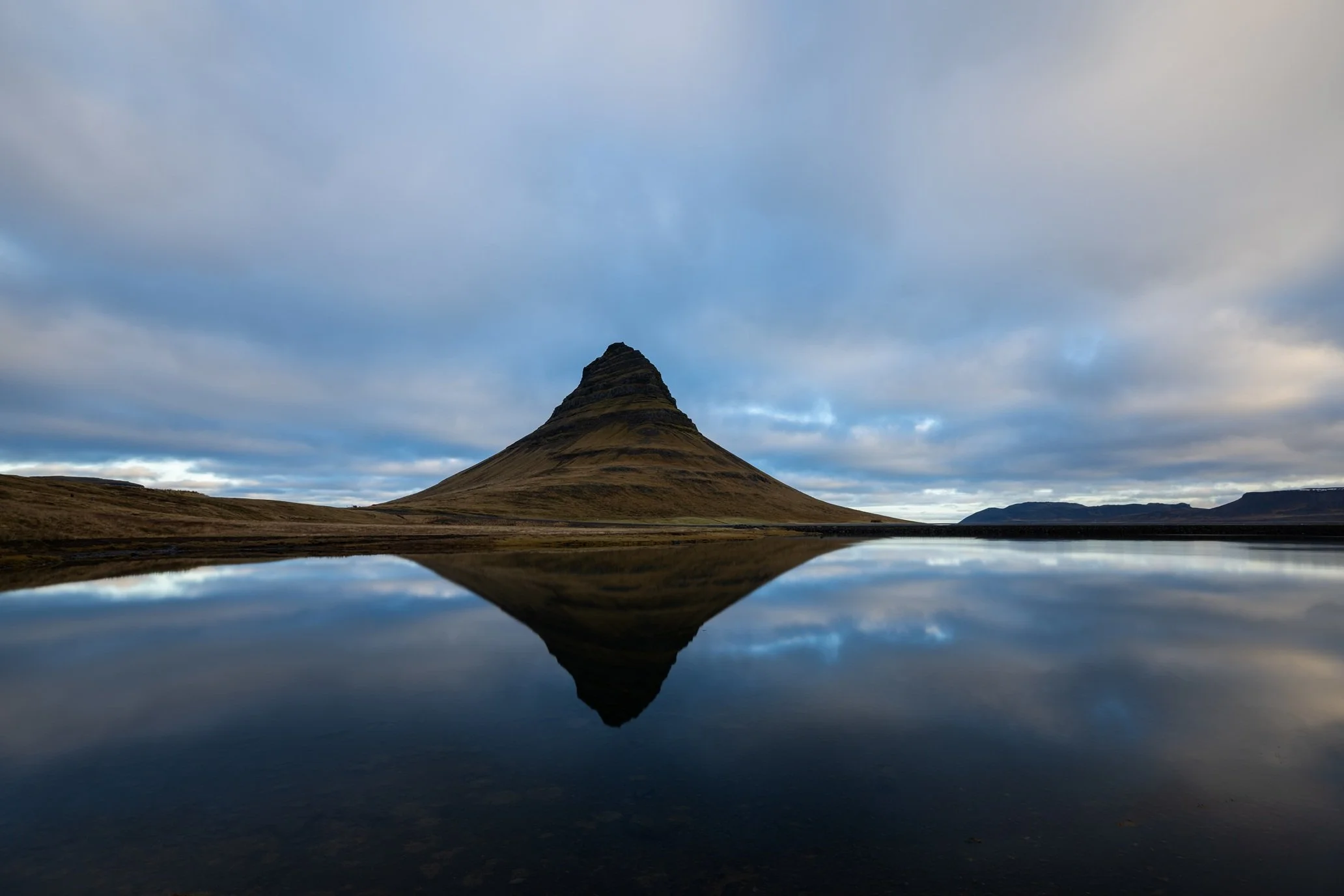
In western Iceland, near the town of Grundarfjörður, are Kirkjufellsfoss waterfalls, at the foot of Mount Kirkjufell. The mountain rises 463 metres, and its distinctive conical shape has made it one of the most photographed mountains in Iceland. The waterfalls themselves are not particularly large. What makes this location special is the chance to photograph the flowing water in the foreground, with the mountain rising behind it.
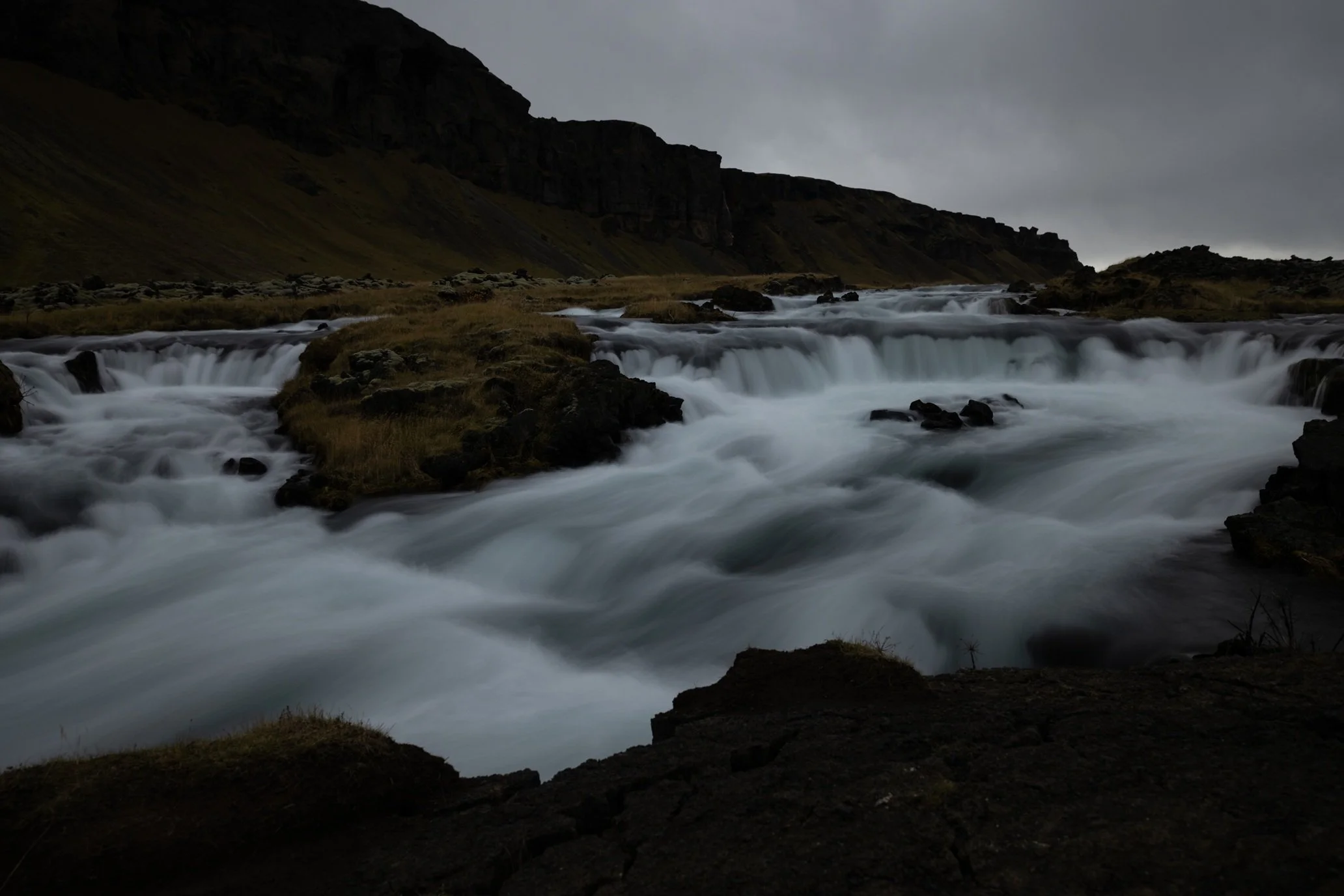
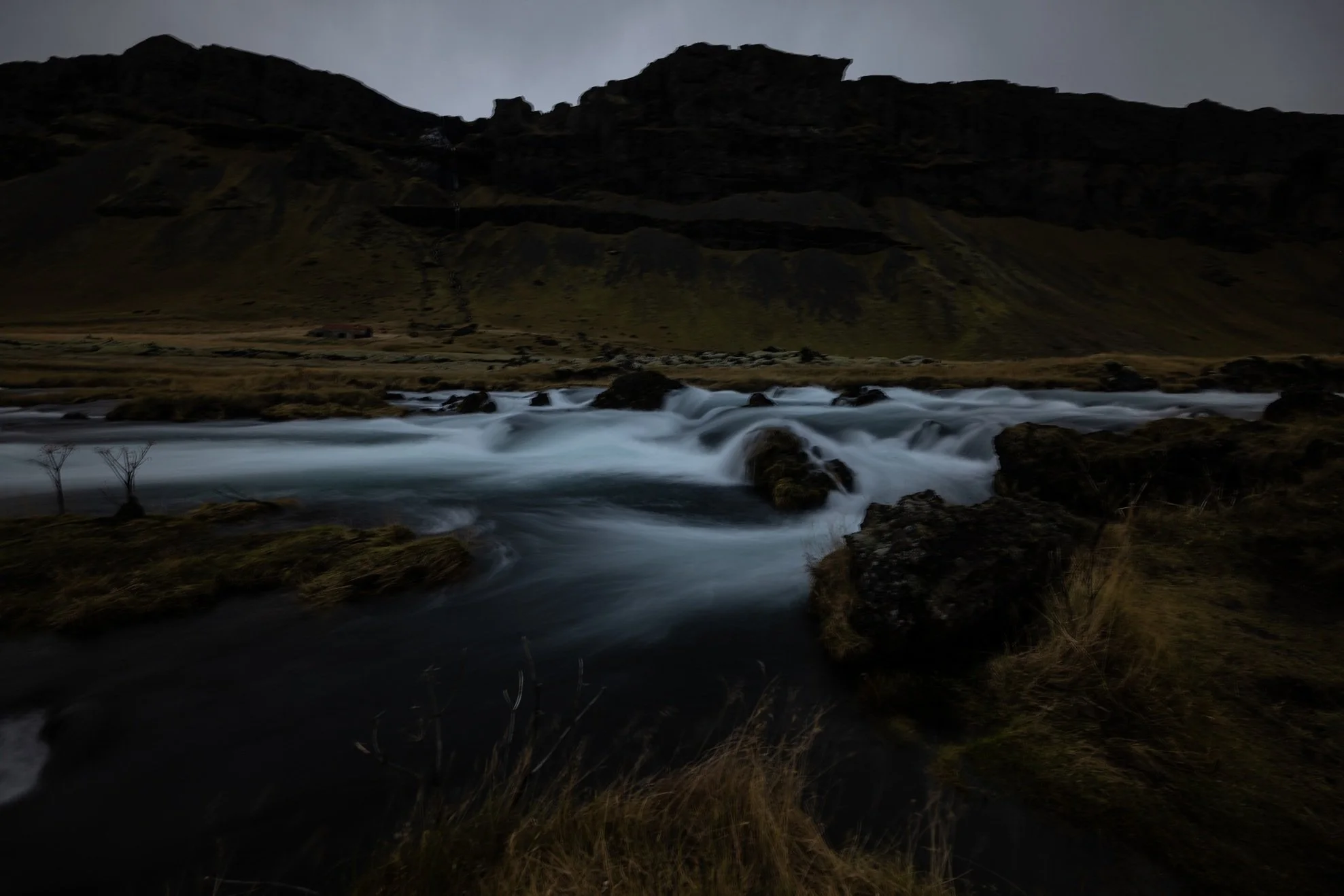
Elsewhere, we stopped beside rivers flowing over layers of basalt rock, creating a succession of small waterfalls.
I particularly enjoyed photographing the water using long exposures. When you extend the exposure time, the flowing water takes on an almost silky texture, revealing its movement between the rocks.
Sometimes the result looks like an abstract painting of white lines against black.
Sometimes It's Worth Waiting Until Morning
One day, we set out to photograph waterfalls in northeastern Iceland, but the weather had other plans.
The wind picked up, the rain grew heavier, and the sky turned dark and oppressive. Eventually, we had to abandon the rest of our photography plans and return to the hotel earlier than expected.
Everyone was disappointed. On a photography trip, every hour of daylight is an opportunity, especially when you've travelled so far to reach these places.
But that evening had a surprise in store for us.
I love food. A lot. For me, discovering a new place means discovering its cuisine, and until that evening, I'd felt that we were missing out on that part of the experience.
Most of the food we'd eaten in Iceland had been good, but not particularly distinctive. Plenty of fish, especially Arctic char, a member of the salmon family with pinkish flesh and a more delicate flavour than salmon. There were lamb dishes, too, along with the inevitable burgers, pizzas and other international favourites you can find almost anywhere.
Then, on the very evening when the weather had driven us indoors, we were treated to a traditional Icelandic meal.
The table filled with salads I'd never tried before, made with beetroot, cabbage and pickled vegetables; raw fish prepared in all sorts of ways; a fish bake that reminded me of shepherd's pie; and finally, tender lamb in a rich sauce, served over potatoes.
Finally! Food that told us something about the place we were visiting.
And I, who normally photographs almost everything interesting I eat, didn't take a single picture. Apparently, I was too busy eating.
The following morning, we woke up to an entirely different day.
The rain had disappeared, the wind had died down, and the sky was blue with a scattering of clouds, as though someone had arranged them specifically for our photographs.
After all the drama of the previous day, Iceland rewarded us with a wonderful day of photography.
Sometimes it really is worth waiting until morning.
Two Minutes Without Gloves
We need to talk about the cold.
I've lived in Jerusalem, New York and Seattle. I know what winter feels like. When I saw the forecast for Iceland, between two and seven degrees Celsius, I thought I was well prepared. Thermal layers, a good coat, hat, scarf, gloves. How bad could it be?
Well, there was the wind.
A lot of wind.
Across Iceland's open landscapes, especially along the coast and in the mountains, the wind was fierce. It felt far colder than the temperature shown in the forecast.
During one stop, I took off my gloves to unfold my tripod and set up the camera. Two minutes, perhaps less. By the time I'd finished, my hands were aching terribly. The pain lasted for hours afterwards.
Lesson learned.
The batteries weren't particularly fond of the cold either. My phone, camera and power bank all drained much faster than usual. I finally understood why photographers visiting places like this keep spare batteries in the inside pockets of their coats.
Apparently, photographing Iceland requires more than a good eye and patience. It also helps if you can still feel your fingers.
Come On, Aurora!
Ever since I started dreaming about Iceland, the Northern Lights had been very high on my list of things I wanted to see.
The aurora borealis occurs when charged particles from the Sun reach Earth's atmosphere and excite atoms and molecules high above us. As those particles release energy, colourful lights appear in the sky. The most common colour, green, is mainly associated with oxygen at certain altitudes.
But seeing the aurora isn't simply a matter of being in the right place at the right time of year. You also need suitable geomagnetic activity, darkness and skies free of cloud.
And so, throughout the trip, we all became amateur weather experts.
It wasn't just about the temperature or the chance of rain. We constantly checked wind speeds, cloud cover and geomagnetic activity forecasts. Everyone was studying apps, comparing predictions and glancing up at the sky whenever possible.
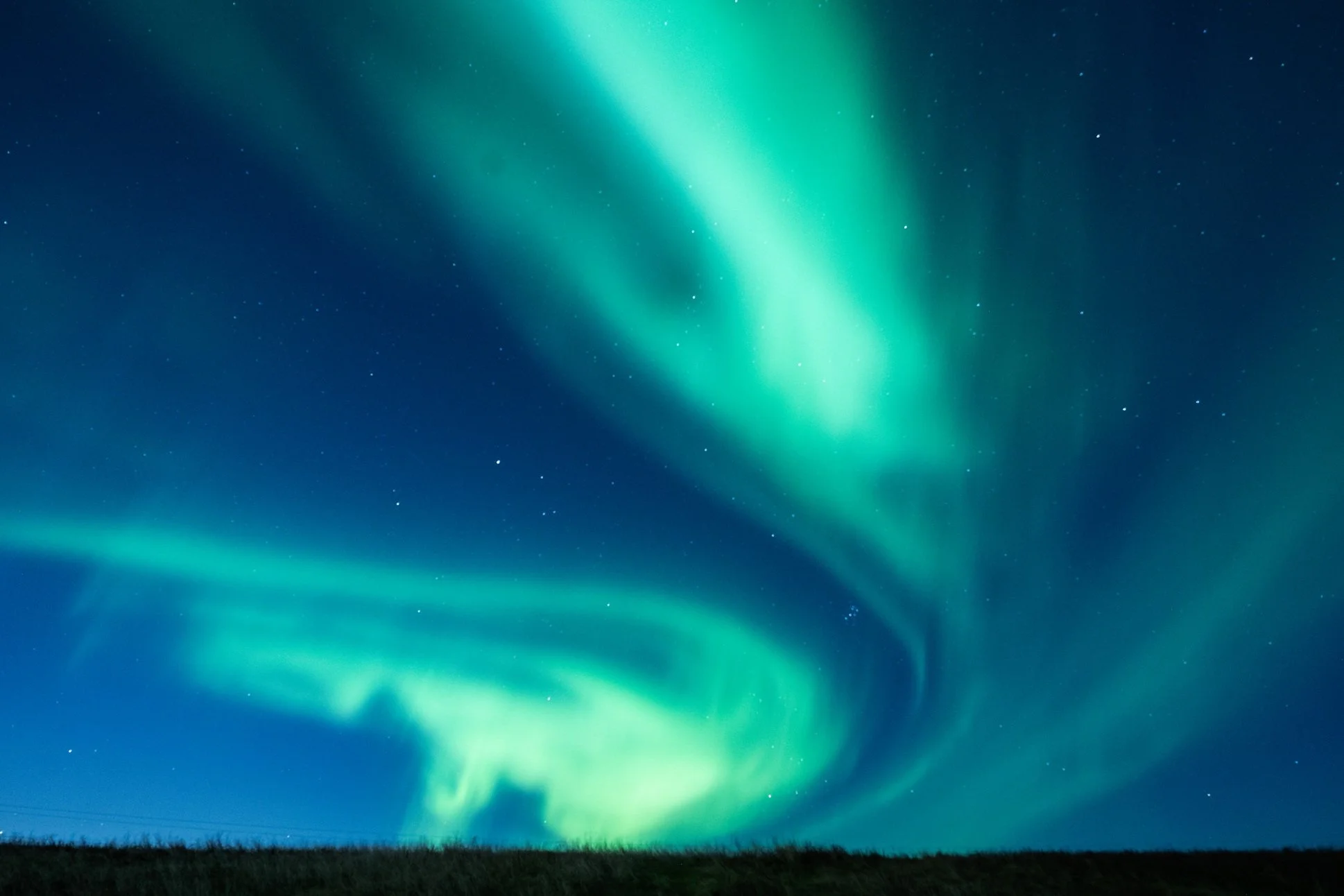
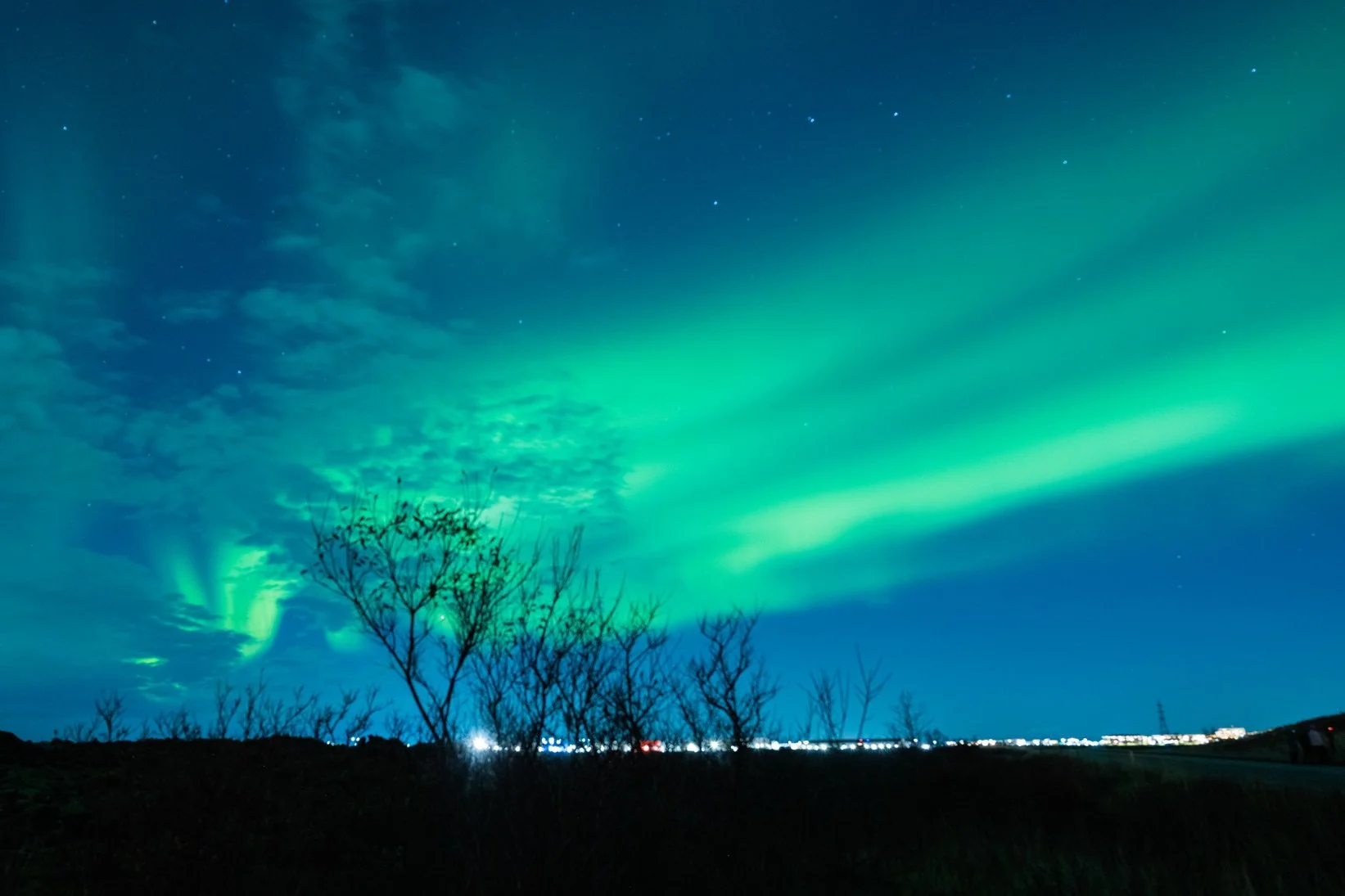
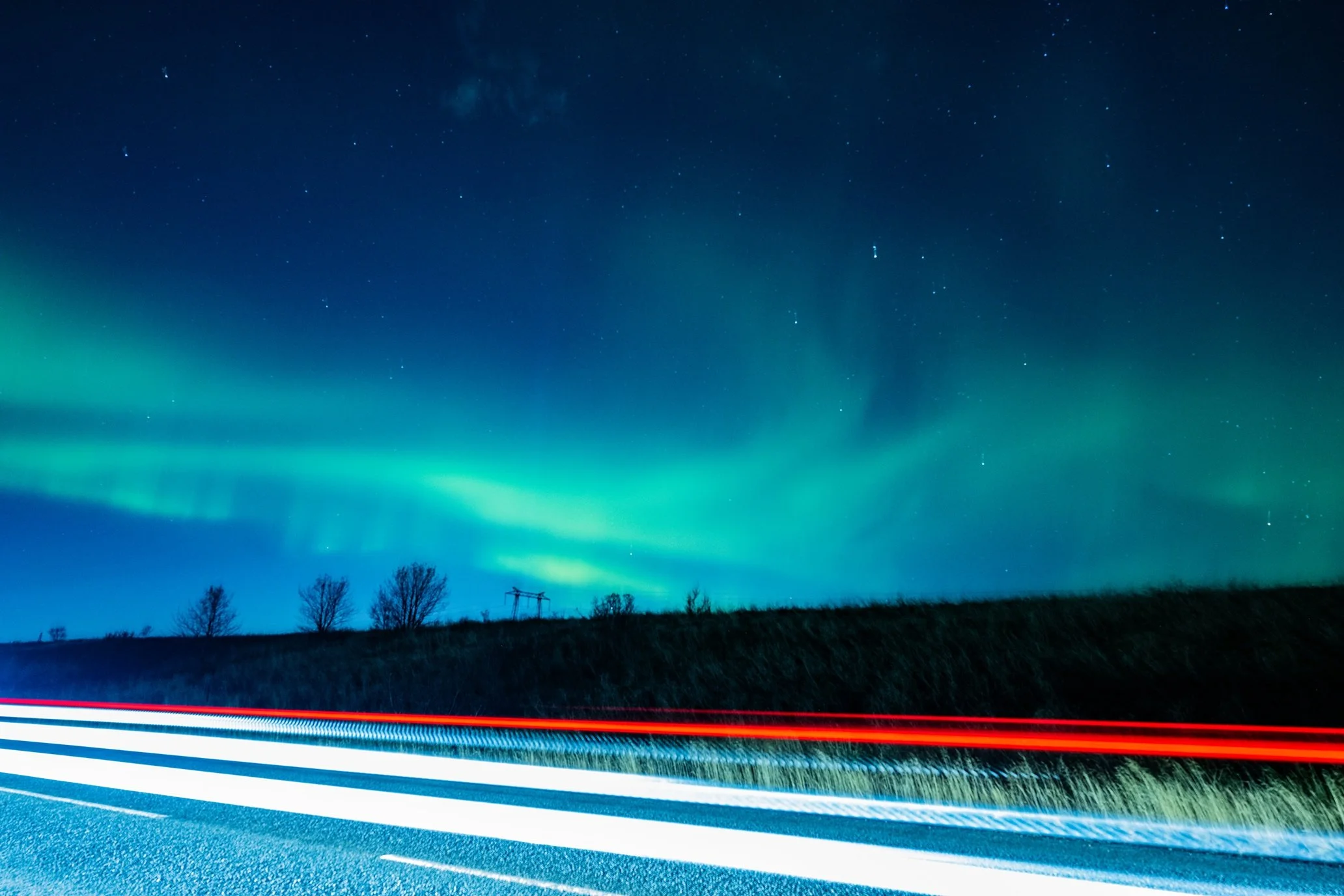
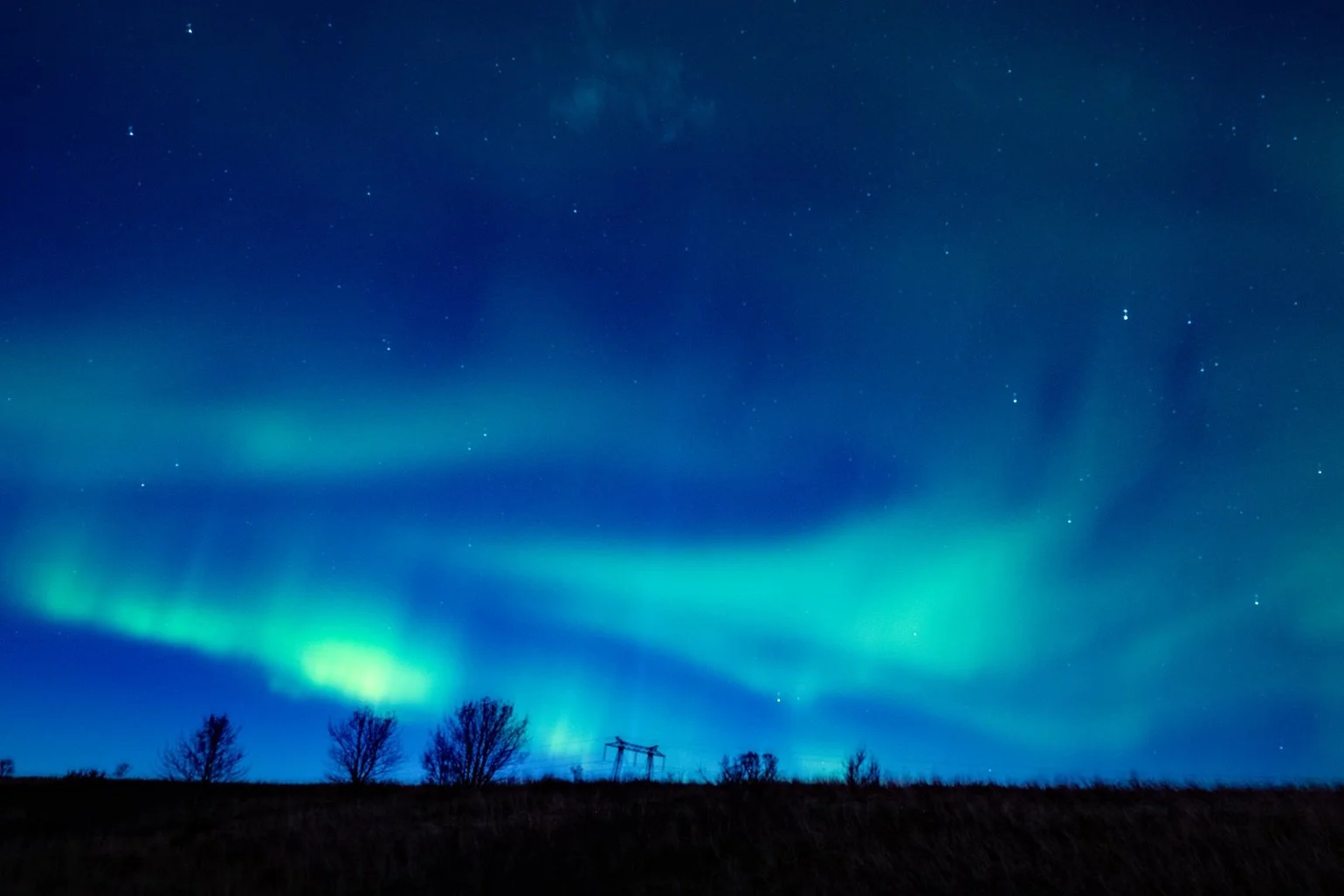
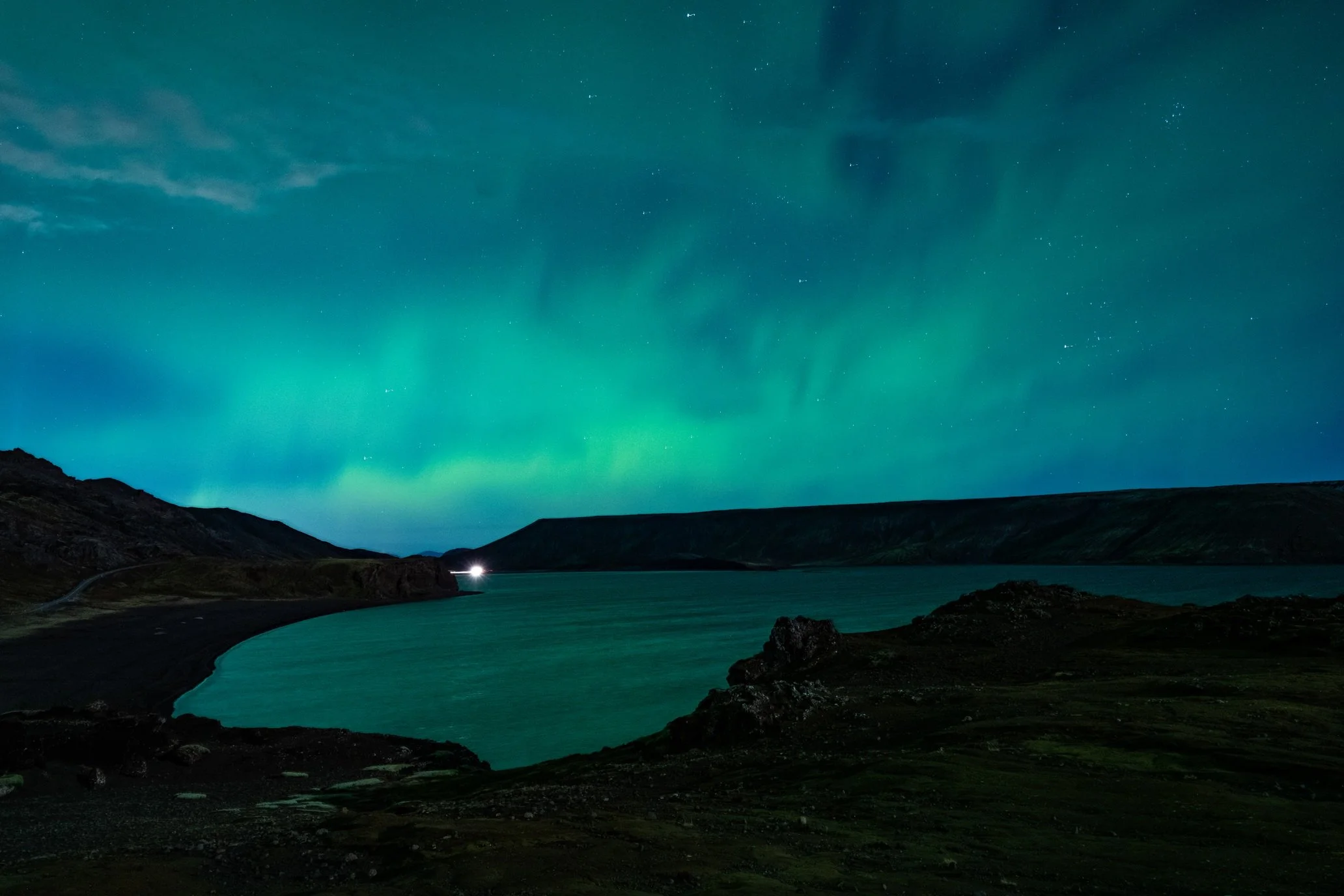
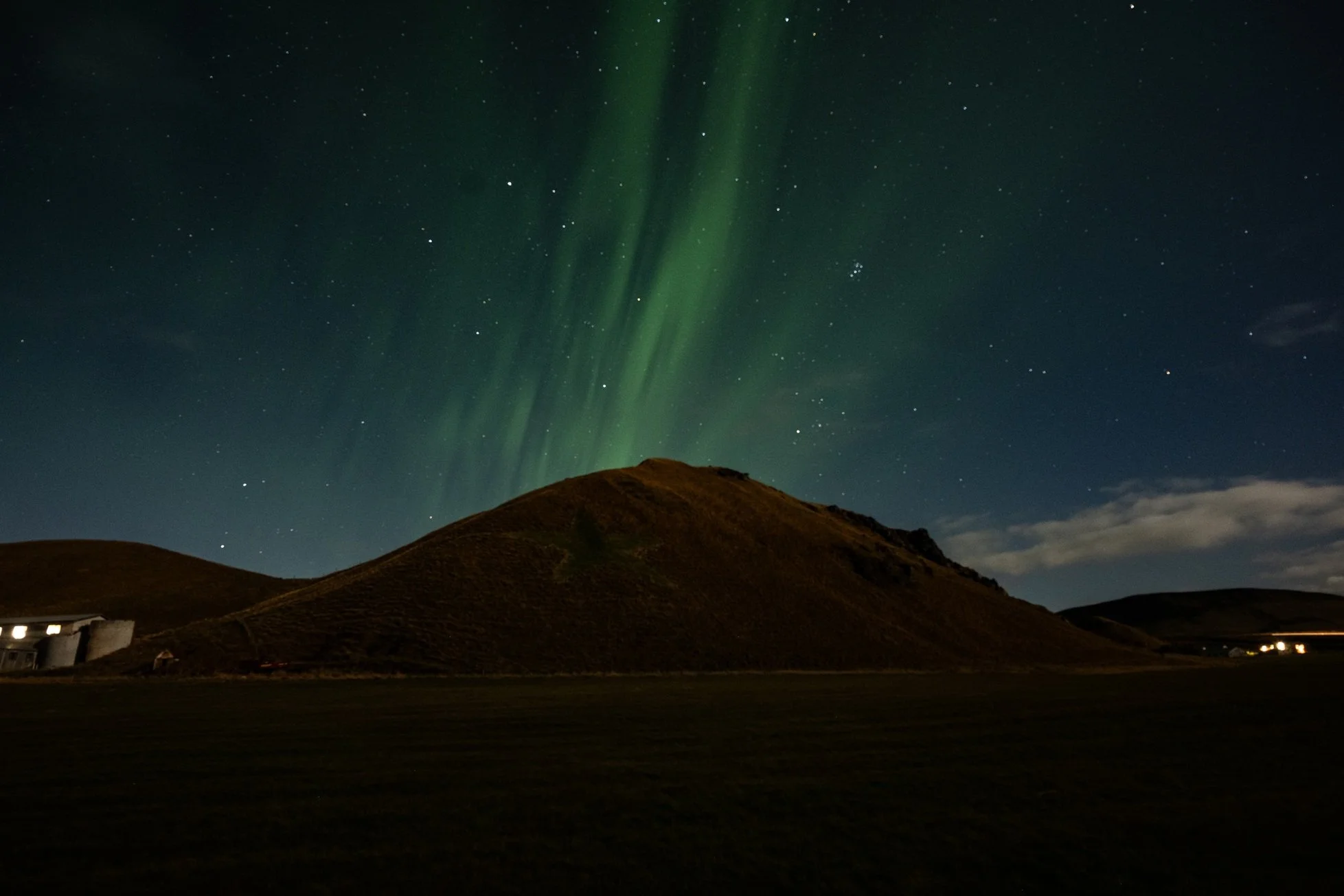
We were incredibly lucky on our very first night.
We stepped out into the darkness and there she was. A green aurora, moving and dancing across the sky. Sometimes she looked like a transparent curtain, sometimes like ribbons of light twisting above us.
I stood there with my camera and simply couldn't stop shooting.
Later in the trip, we discovered just how elusive she could be.
Some nights looked full of promise. No clouds, favourable forecasts, and all of us heading out once again with our cameras and tripods.
Nothing.
Apparently, the aurora doesn't read weather forecasts. And she certainly doesn't organise herself around the itinerary of a group of Israeli photographers.
I Want Everyone to Go. Actually, No.
I came home from Iceland with thousands of photographs and the feeling that I'd visited one of the wildest places I'd ever seen.
There was a kind of quiet I'd almost forgotten existed. The quiet of vast open spaces, very few people, clean air and days spent thinking mainly about light, clouds and the weather.
After the past few years in Israel, I realised that this was exactly the kind of peace I'd needed.
Since coming home, I've been telling anyone who'll listen that they absolutely must visit Iceland. See the black beaches, the blue glaciers and the green skies. Stand before those enormous mountains and feel the sheer scale of the landscape.
But I have a small concern.
That if too many people arrive, there will be more and more hotels, roads and tourist attractions, and something of that wildness will be lost.
So, on the one hand, I recommend Iceland to everyone I meet.
On the other hand, perhaps you'd better not go after all. Leave it just the way it is. For me.
Thank you to Ilan, who knew exactly what I needed and gave me a gift I'll never forget, and to Allon and Suzi Kira for the journey, the guidance, the patience and their photographic eye.