Limor Poran: A Life Between Three Continents, One Home, and a Human Way of Working With the World
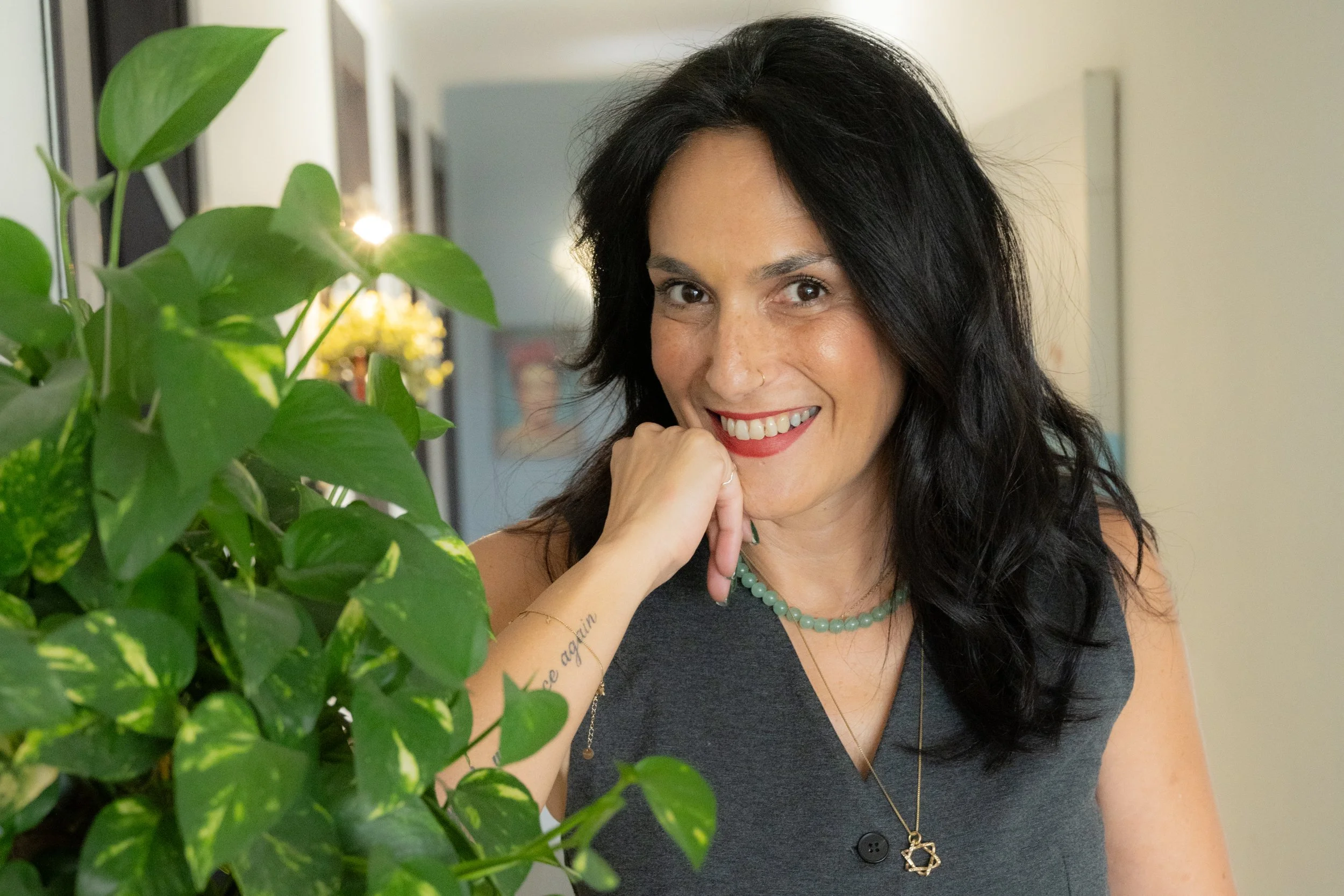
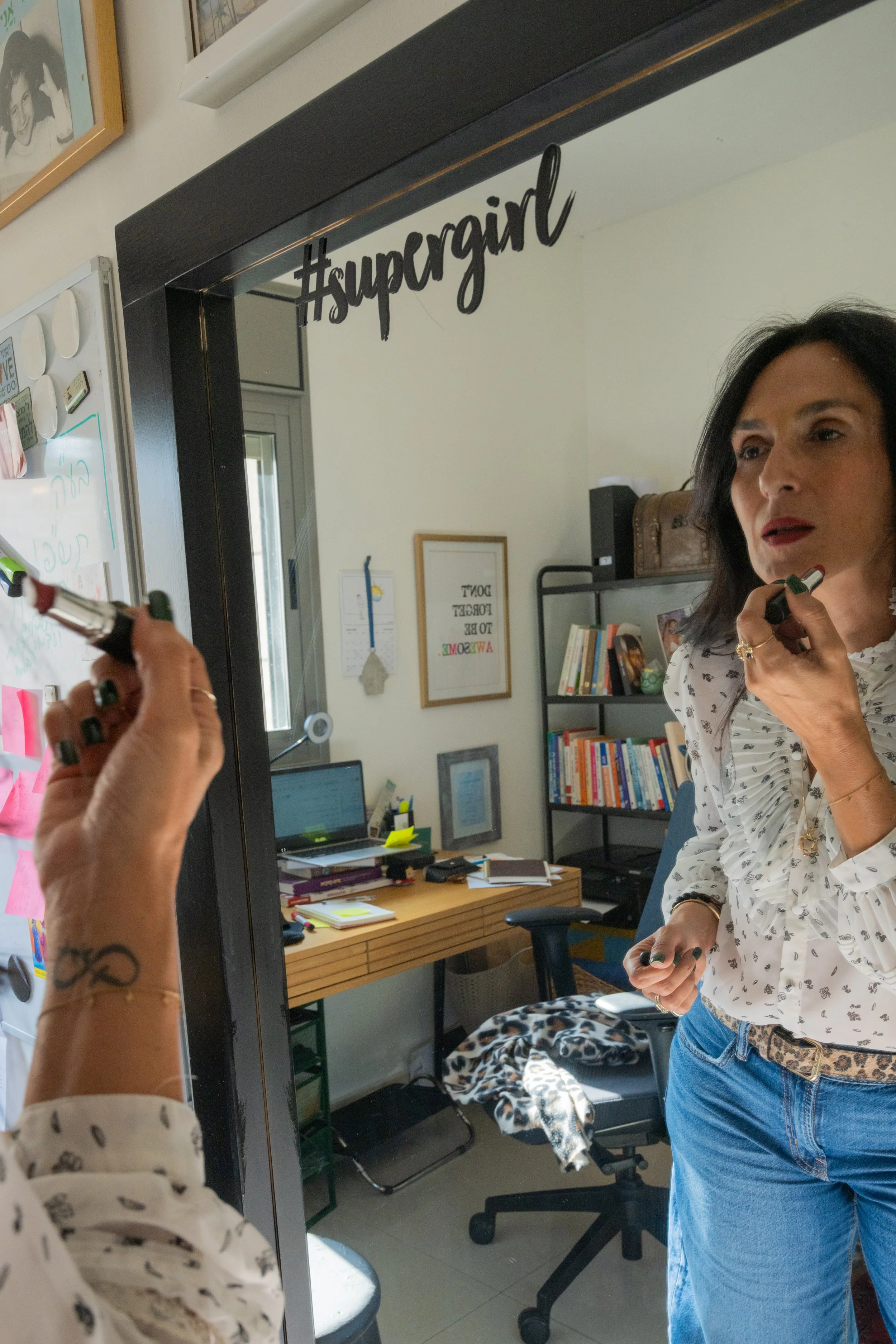
On a quiet morning in Kfar Saba, I step into Limor Poran’s home. She is standing in front of the mirror, drawing a red line across her lips. It’s not a fashion gesture. It’s a small, daily ritual of choosing to be present.
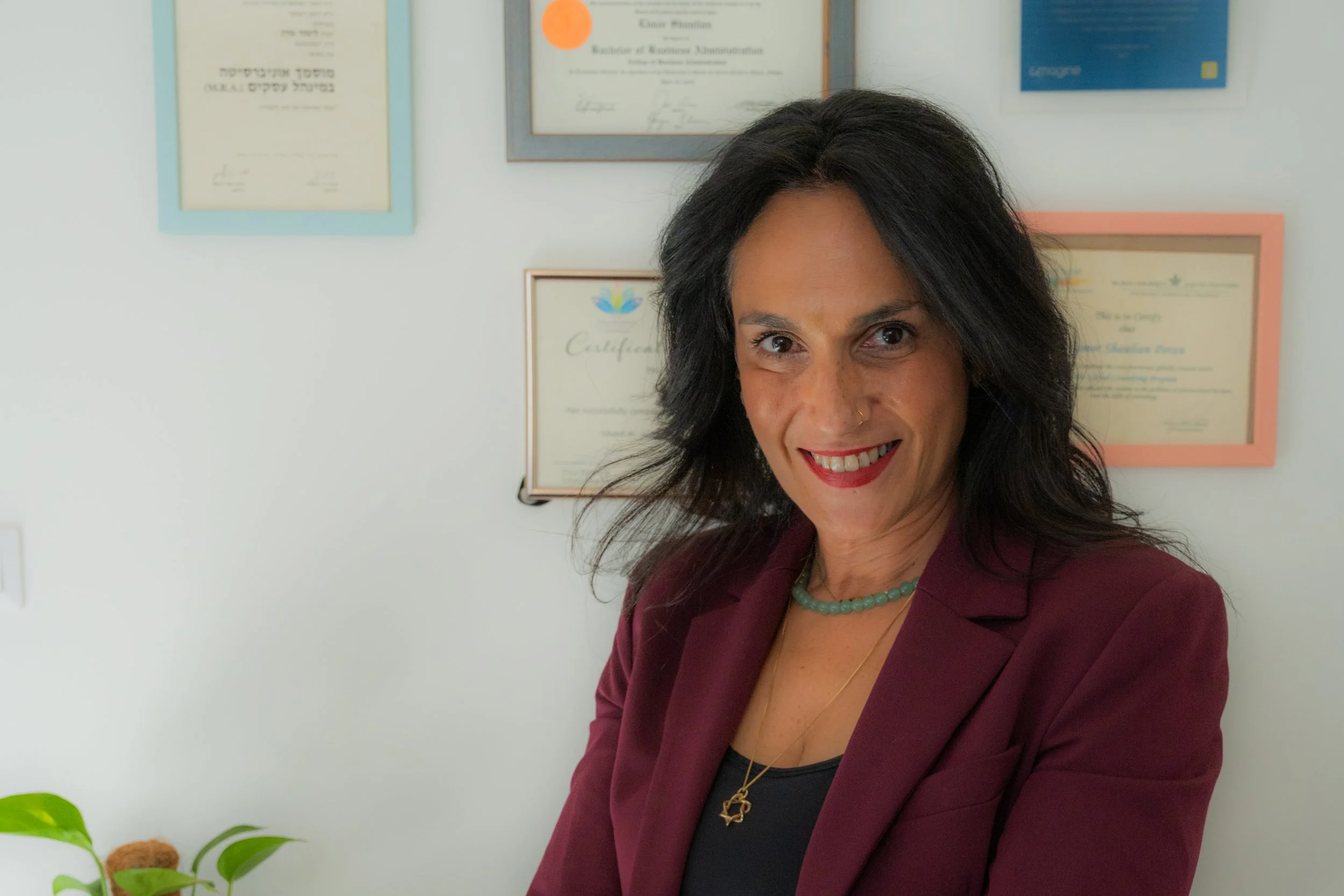
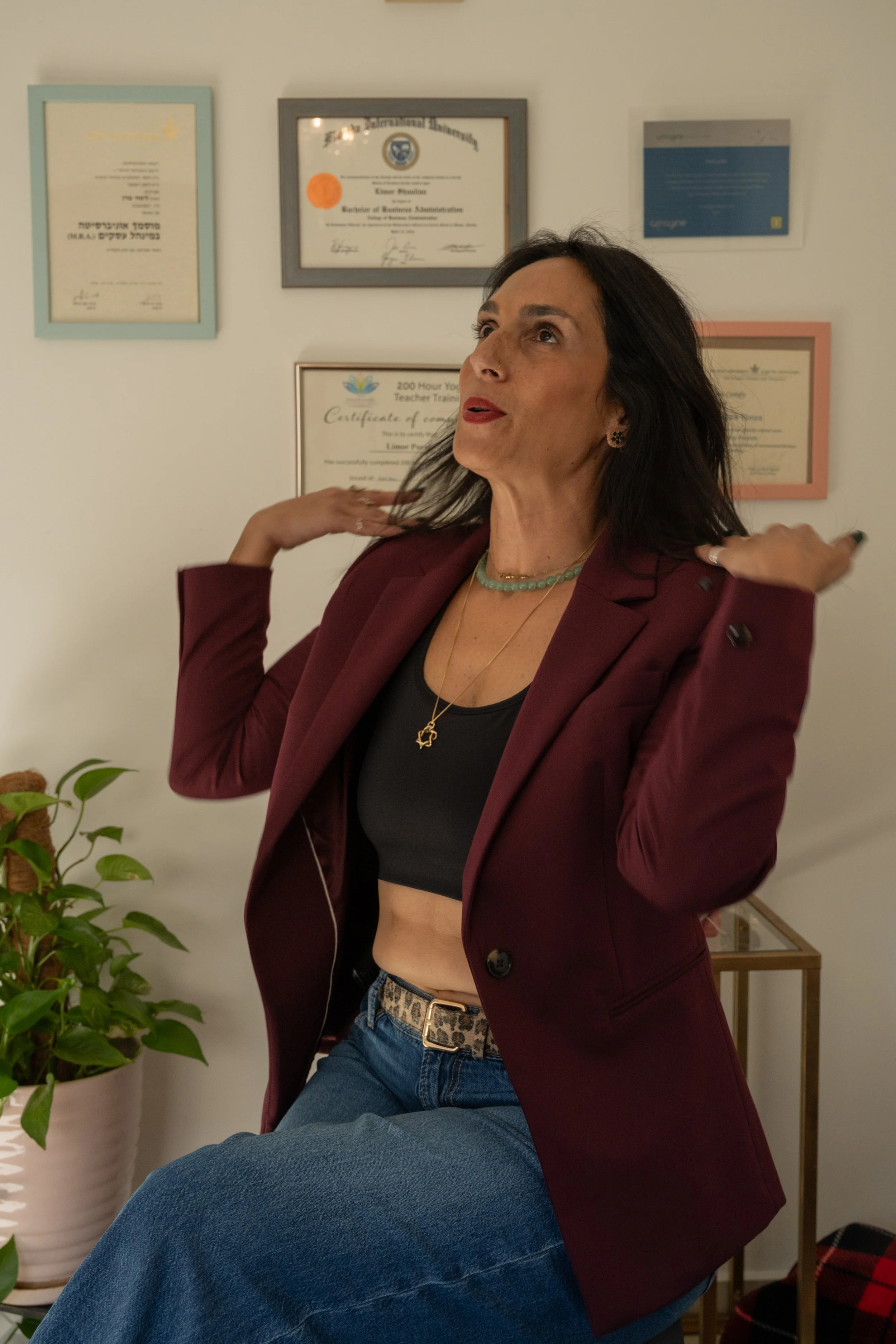
Behind her, a wall of certificates, books and milestones. In front of her, a workday that might begin with a workshop alongside an HR director or a planning call with a startup CEO, and end in a small circle of listening and breathing.
“There are forces of darkness and forces of light in this world,” she likes to say. “Choose to be light.”
Already in these very first minutes at her home, it’s obvious to me: this is not a slogan. It’s a way of living.
A childhood in motion, an adulthood of choice
When Limor talks about her childhood, I can almost see the house she describes: a familiar, colorful Israeli home with Persian–Tunisian roots, full of music and very strong opinions. Her childhood moved between Ramat Hasharon, Holon and Herzliya. At first, movement was a survival mechanism. Over the years, it became a choice to enhance her curiosity: to search for a place, a language, a point of view.
In the army, she served in the Givati Brigade. That is where she learned to work under pressure, to listen for the subtext, and to stitch together precise solutions, even when there was no time. As I listen to her describe that period, I can recognize the foundations of what she does today: presence, resilience and a sharp eye for the details everyone else misses.
A career across three continents
Her first “official” stop in Israel was Pelephone: managing call centers, building operational projects, working closely with external customers.
“That was my real university,” she tells me. “Numbers, people, processes - all at once.”
When she felt she had hit a glass ceiling at Pelephone, she left for India – a waystation that expands your questions.
“India taught me that when you ask one question, ten more find their way in,” she says. “The body and soul start talking to each other.”
I can hear how this pattern repeats itself in her life: whenever she feels stuck, she chooses movement. In India, a new interest takes shape: how to work well with people, with energy, with choice.
In her early twenties, London calls. A city that teaches you how to move wisely among strangers, with certain rhythm and aesthetics. Then came Miami, where she moved following a romantic relationship. Along the way she completed a degree in Business Administration with a focus on Marketing, graduating on the Dean’s list, and worked on complex projects with Israeli delegations.
That period sharpened her tools: how to build conversations between cultures, how to present the right idea to the right audience, and how to translate values into actions.
“I came in the name of love and stayed for the studies,” she says. “In the end I came back in my own name. We broke up over the phone, when I already had a ring on my finger.”
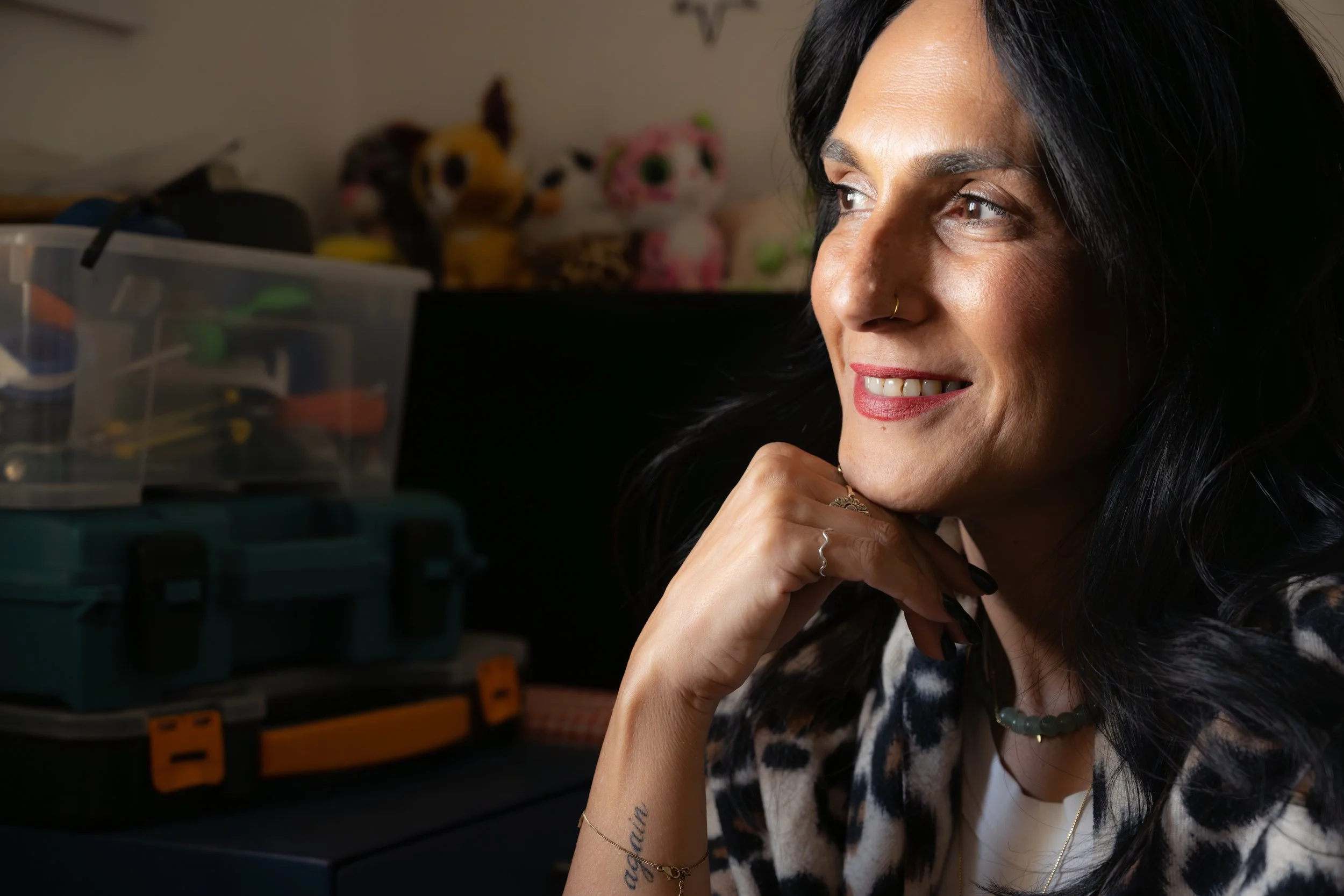
From the big metropolis she returned to a small country. On the way, she lived in more than twenty apartments. “When something didn’t feel right, I packed and moved,” she smiles.
In every place she landed, she reinvented herself, while keeping her guiding lines: always stay in motion, always be a source of inspiration, always notice what has changed and adjust to the new reality.
Back in Israel, her career continued to unfold: marketing, service, consulting. Limor moved into leading roles in marketing, content and innovation, accompanying startups and tech companies, meeting teams who needed strategy, story and hands on the wheel at the same time. Together with the CEO, she helped lead the company Cimagine to a successful acquisition by Snapchat.
At a particularly important professional crossroads, she encountered Amdocs. There, she became a true partner in a series of complex projects. When she talks about those years, I can feel how deeply she has experienced organizations from the inside. At Amdocs, she sharpened her understanding of the power of an organizational story that connects leadership and the field, and worked with senior leaders to embed that story into the company’s day-to-day life.
And then, the world changed
Even before a virus appeared and reshaped the world, Limor was already on stage with a new content line called “In a Suit and Flip-Flops” about the future of work: how people and organizations can prepare for a radically changing world of work.
COVID, the endless lockdowns and the shift to hybrid work pushed her into a deep dive on “the new normal,” right after the first lockdown.
In recent years, something in Limor has come into even sharper focus. Alongside her personal, family and professional journey, a new direction has emerged – almost inevitably – that deals with what happens to us as human beings in a world that moves at the speed of machines.
Working with leaders, teams and organizations after long periods of overload and uncertainty has shaped a new language in her work. It’s a language that pauses to ask: how are we really functioning? And what do we need in order to remain human inside all this technology?
As I listen to her describe her workshops and processes, I understand very quickly that this is not another “soft skills seminar.” She is building an operating system for real people, with real overload.
Out of this work came the idea she is researching and developing today: Human Intelligence. Not as something mystical or spiritual, but as a mental–emotional–energetic capacity that enables people to work, lead, decide and take care of themselves in a smart and healthy way.
She calls it a Human Intelligence Operating System built on four elements – a simple, clear model that helps leaders and teams recognize overload, create clarity, balance their pace and act from a place of precision, rather than burnout.
Once, this was called “work–life balance.” Today she talks about something else: the ability to stay connected to ourselves in a world that keeps asking us to be more efficient, more available and faster than we were ever built to be.
This might be the clearest thing about Limor in this period: the connection between humanity and performance. Between breath and results. Between depth and everyday life.
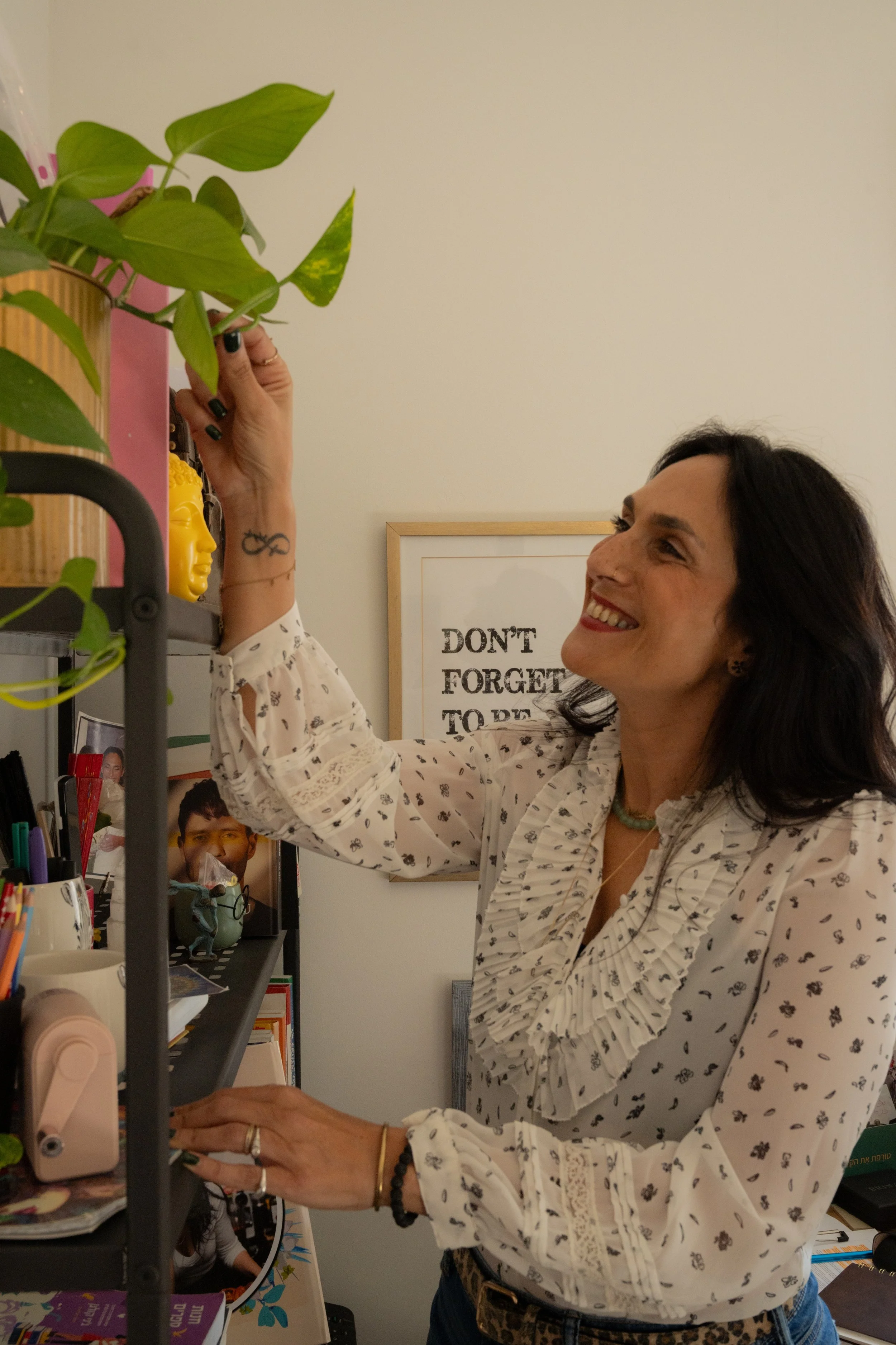
Ziv, Lia and Yoni: a home that builds a compass
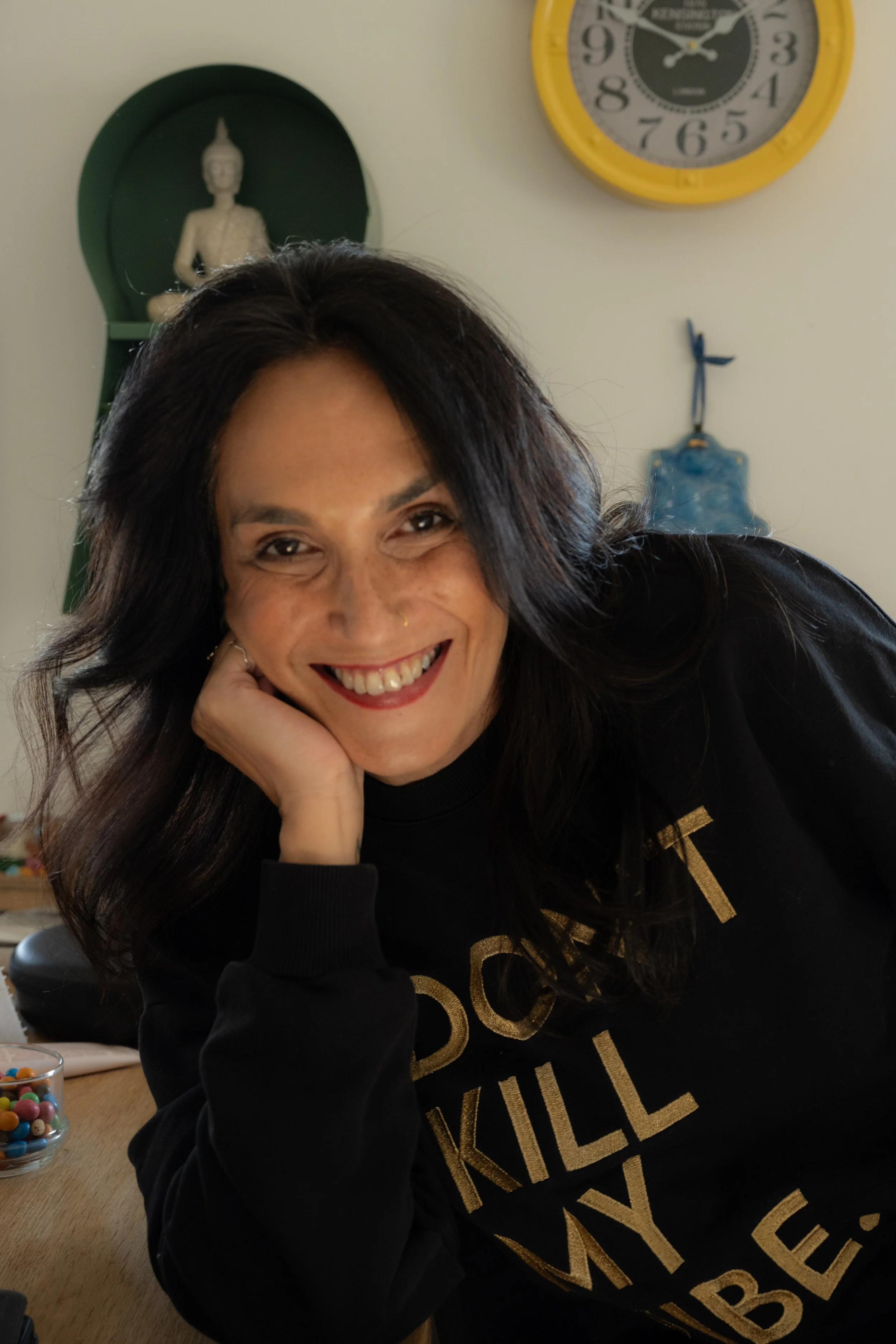
In the middle of all this, she has built a home. Ziv, her partner, is a psychologist and teacher. “He is exactly what I needed,” she laughs, “and an excellent partner for raising our very specific children.”
Their home was never designed as an iconic project, but as a living space: to experiment, learn, make mistakes and laugh.
Lia, the eldest, is sharp, deeply ethical, with a rare internal compass. When she was born, Limor was certain she would be back to emails a few days after giving birth. Reality taught her a different order of priorities: the body needs time, the relationship needs presence, and work learns to align itself to life, not the other way around.
Yoni, her son, is on the autism spectrum. Together with him, the family has been through a journey of diagnosis, self-advocacy, choosing frameworks and building a community that understands difference. Alongside demanding work, Limor initiated and joined “Hackautism” (hackathon + autism): taking the sharp thinking, difference and improvised creativity of kids and parents on the spectrum, and distilling them into a short community sprint with small, measurable tasks – a living lab for everyday solutions.
“Parenthood is a leadership school,” she tells me. Setting boundaries and offering safety. Knowing when to slow down and when to accelerate.
That same home is what keeps her steady at work: someone who can hold complexity in the living room can hold it in the boardroom as well.
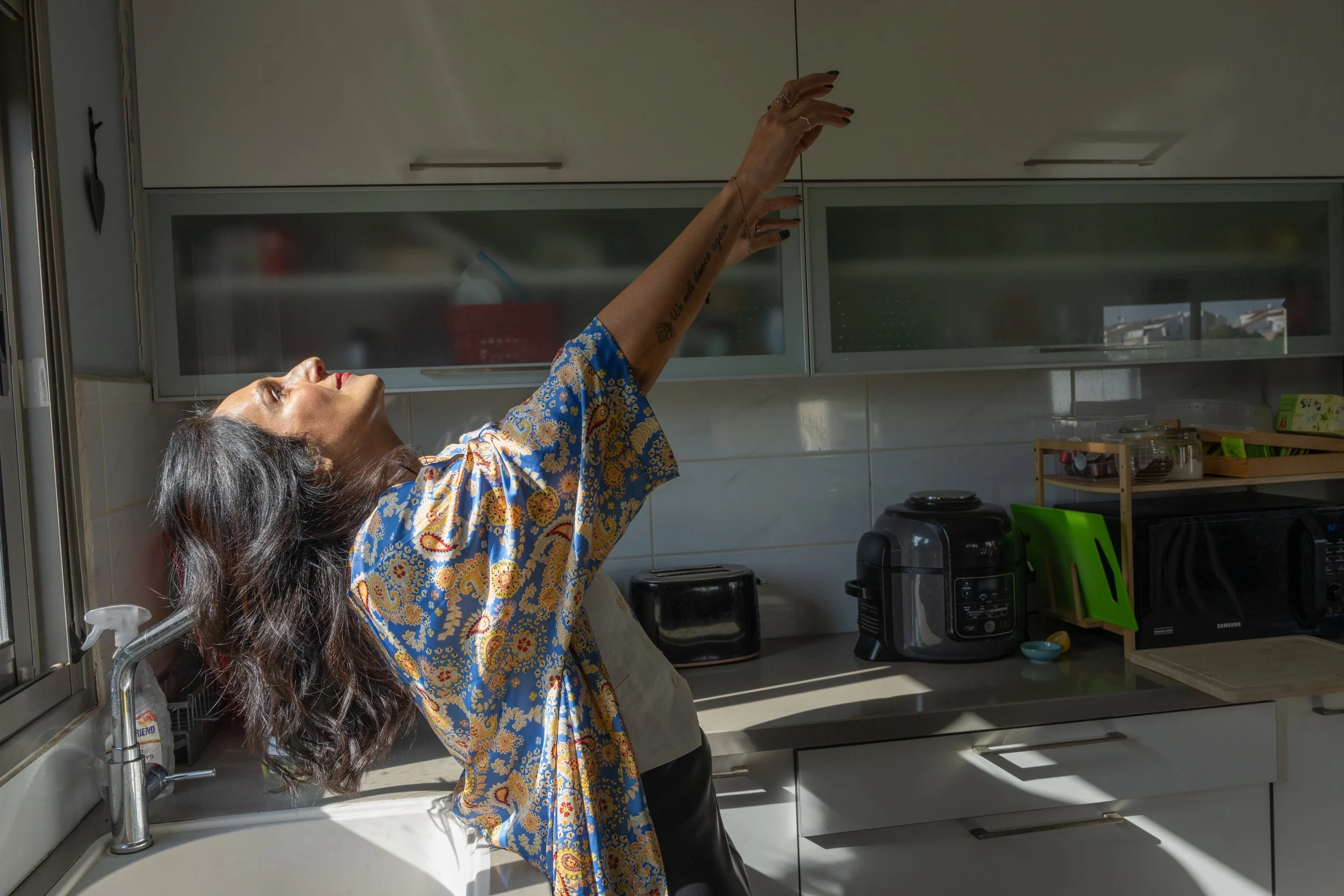
Limor, wartime
October 2023 cut through the air in Israel. Limor found herself holding others: women’s circles, supportive conversations, small breathing exercises in the middle of overloaded days. At the same time, she tried to earn a living, keep her family stable, and stay human in front of an endless news cycle.
During this period, the language she brings today fully crystallized: a model that reshuffles the cards, along with workshops and talks that are designed to grow resilience rather than just talk about it.
The return of the hostages allowed her to finally implement plans that had been waiting since late 2023. “I could finally breathe again,” she tells me.
Small signs: lipstick, cards, a notebook
When I look at her desk, I see small objects that make up an entire language.
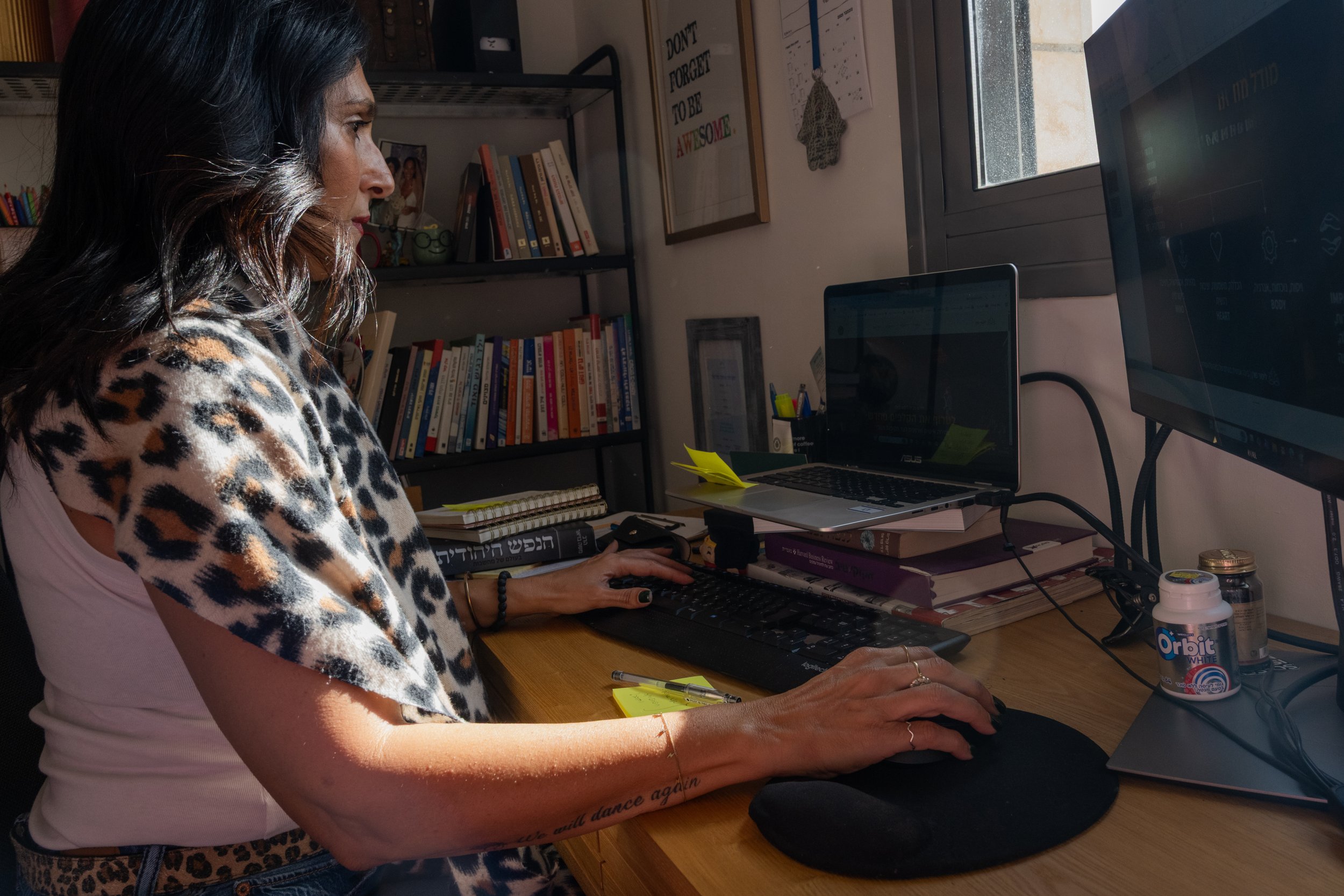
The deck of cards help her open channels of communication that people don’t usually use. The red lipstick is an anchor of visibility: a reminder to herself that she is here, choosing to show up. The laptop is nearly always open; the notebook is always capturing thoughts. These may be small details, but together they describe a method: one-minute morning rituals that align you with your heart before the workday starts.
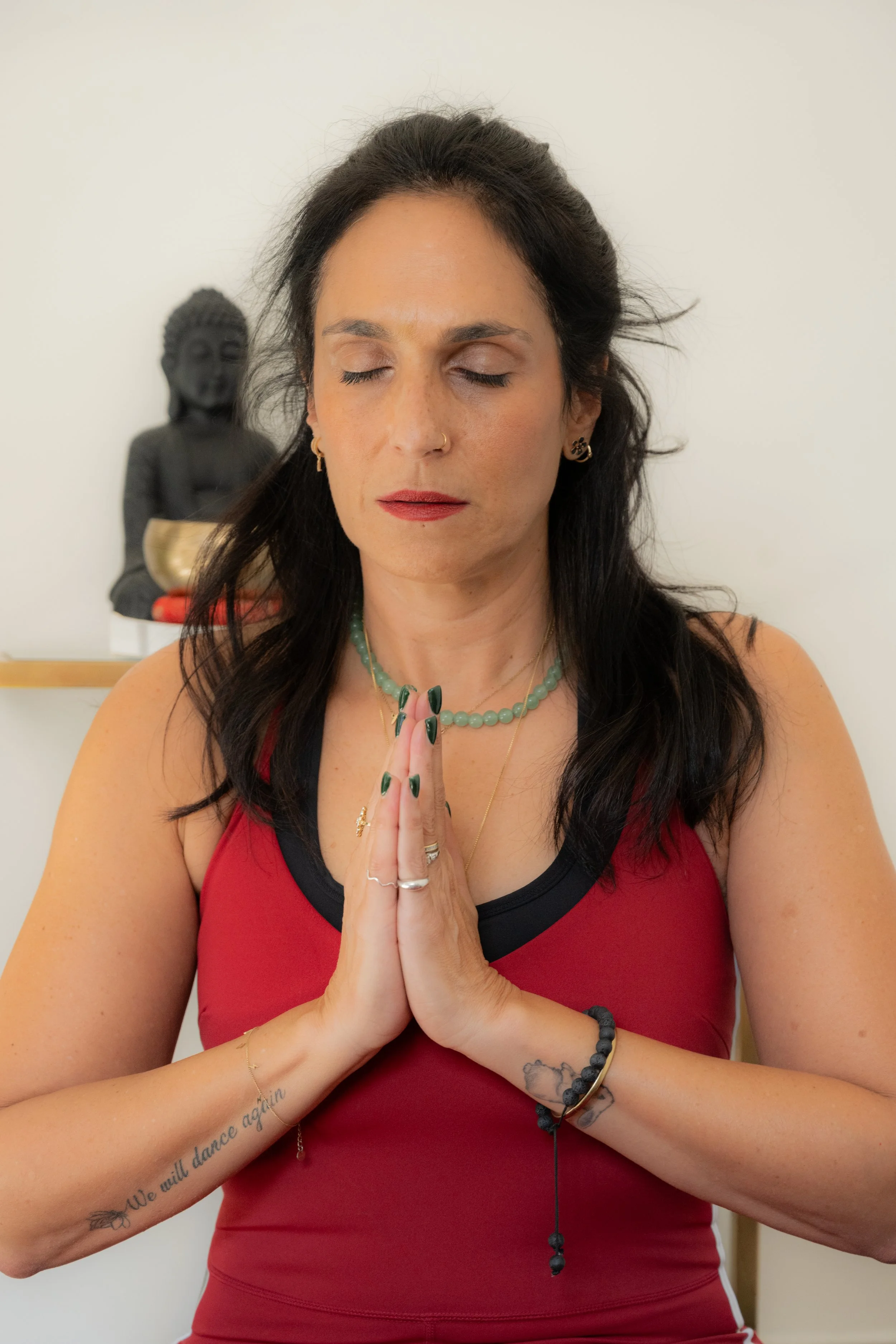
Alongside that, Limor keeps practicing yoga regularly. During the war, she fulfilled an old dream and became a yoga teacher, and has recently been leading yoga and consciousness-card workshops for the Nova survivors. At the same time, she studies Buddhism, deepening her understanding of listening, compassion and presence, and weaving those principles into everyday practice and into her meetings with people, in a way that is simple, applicable and never preachy.
What she does today, naturally, without noise
When Limor walks into an organization, you can feel the air in the room change. Not because of a showy keynote or a miracle tool that “works on everyone,” but because of a rare capacity: she sees the people, senses the dynamics in the room and translates them into a language leaders can use.
She brings all of herself into the work: years of fast, demanding high-tech, periods of inner journey, experience with entrepreneurs and large systems, and a lot of quiet wisdom gathered along the way. The result is a unique blend of human depth and business thinking.
Sitting with her in a room, I can see how she listens, sharpens, and slowly creates clarity, the kind that lets people return to themselves, and lets an organization return to operating from precision, stability and meaning.
Today, Limor lectures, facilitates and guides organizations as they “update their version” to the new reality and develop Human Intelligence alongside a thoughtful adoption of Artificial Intelligence.
Human intelligence – what that actually looks like with her
SWhen she talks about “Human Intelligence,” she means:
The ability to understand, choose and act in the middle of uncertainty.
A skill, not a fixed trait: everyone has it, and it can – and should – be developed further.
Four elements that don’t stop at the brain: it lives in awareness, in the heart, in the body and in the learning that comes from lived experience.
Conscious choice: before every technical decision, a brief human check-in of intention, value and impact.
Short moments of presence: micro-practices of 90–120 seconds that stabilize the workday and encourage creativity and innovation.
A shared language for teams: short phrases that replace “oxygen masks” in moments of pressure.
AI as an assistant, not decision-maker: technology accelerates; the human being directs; ethics sets the frame.
In her view, the combination of a mindful adoption of AI with an upgrade of Human Intelligence creates the conditions for meaningful leaps forward, for both people and organizations.
She works with leadership teams, HR, educators, parents and professional communities in transition, creating spaces that hold professionalism and ease together, authority that still makes room for breathing. The effect is not a one-time “wow,” but a small, ongoing shift: one sentence you carry into a meeting, one practice that prevents an argument, one habit that protects you from burnout.
Closing moment
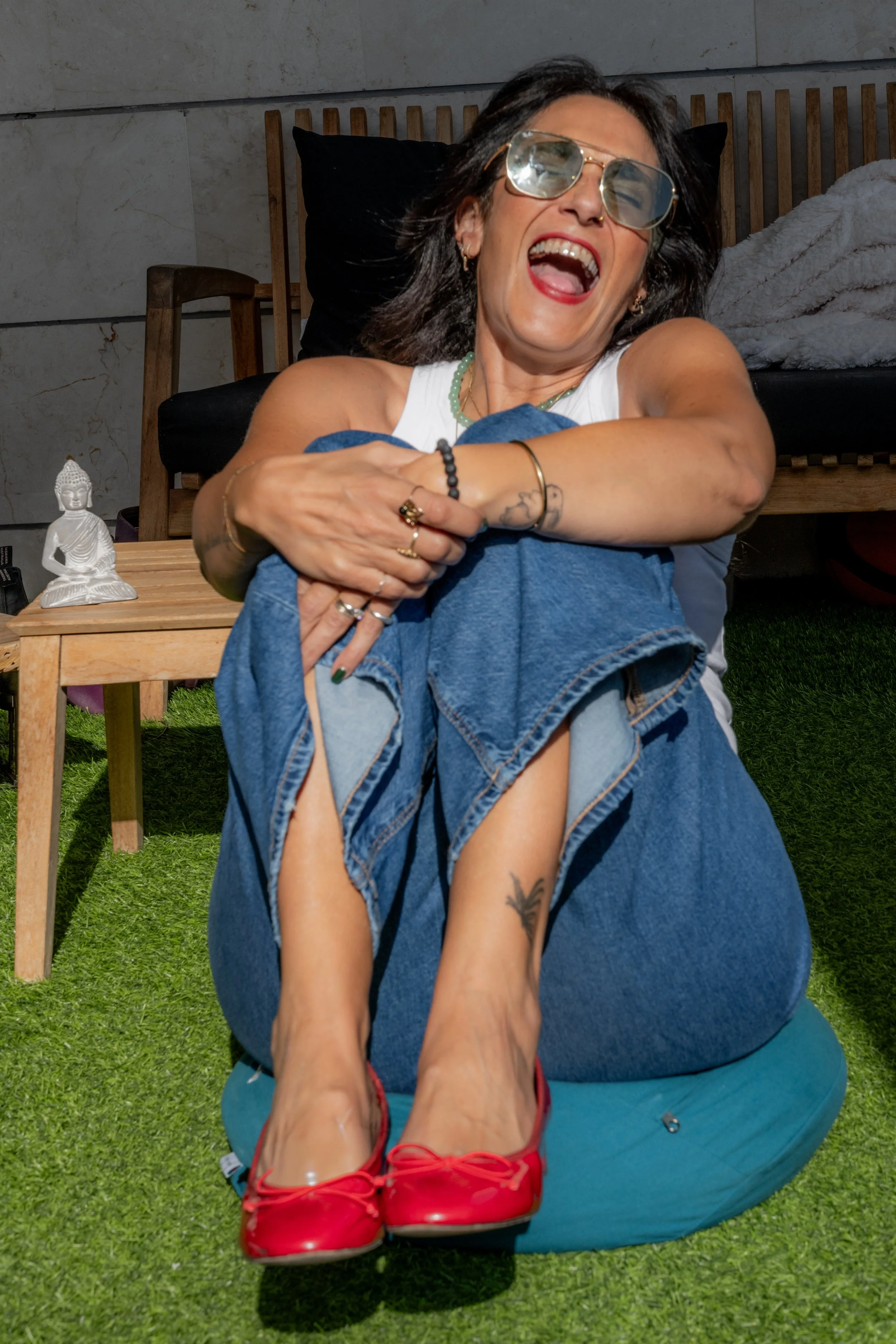
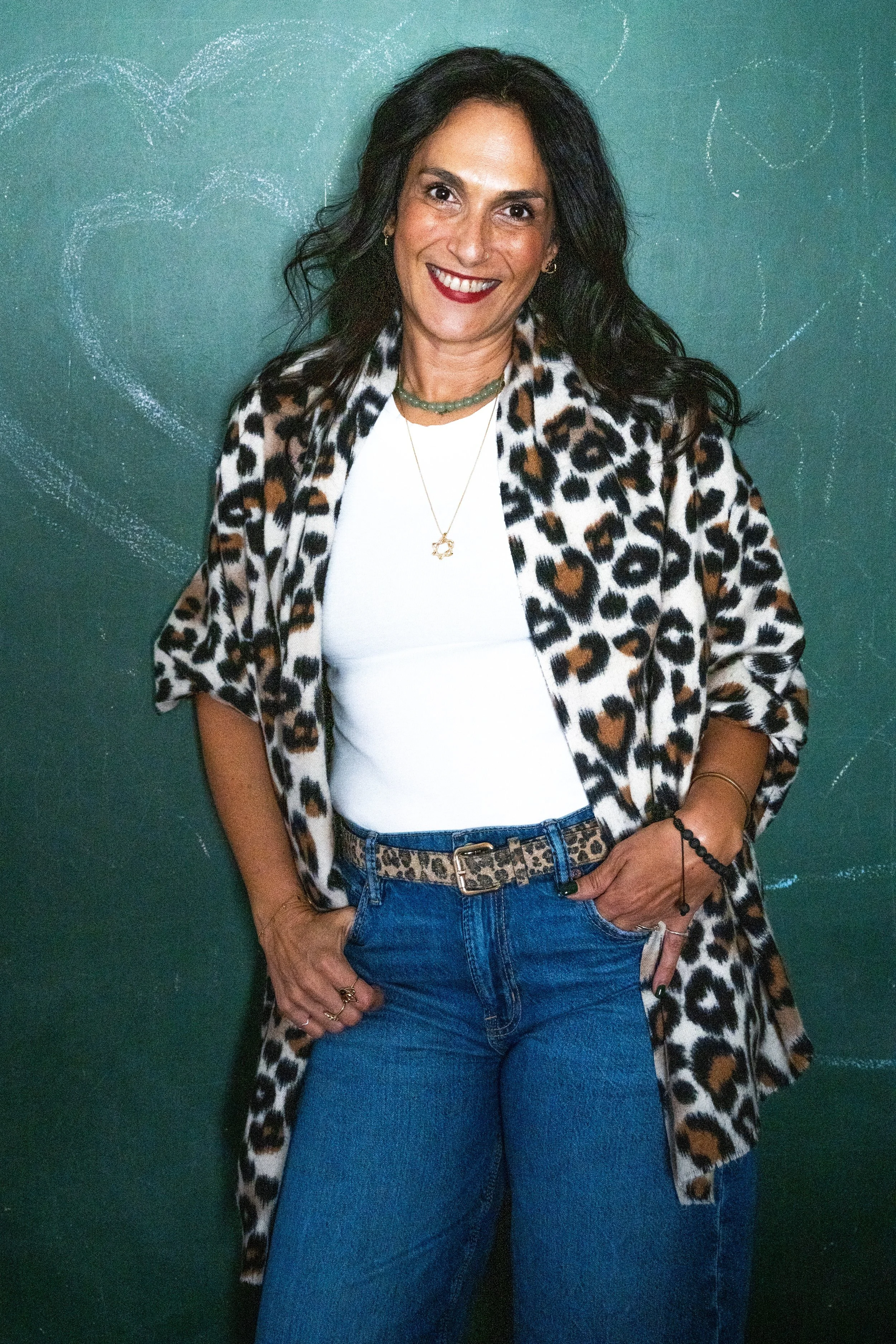
Leaving Limor’s home, from the green chalkboard to the balcony where she wore her red shoes, it’s easy to see how her life comes together into a simple circle: asking a good question, breathing, and meeting people as they are.
Her career, her home, her children and her journeys are not separate chapters. They are one language. Limor is not searching for the perfect answer; she is looking for the next precise moment. Sometimes that's all it takes to make the next step - forward.