Tel Aviv Doesn’t Remember – But Some People Do
A walk between four craftsmen in a city that never stops changing
A journey between four craftsmen in a restless city
Tel Aviv always looks like it is half a step ahead of everyone else.
It feels as if the city sheds its skin every time you look at it again. One more tower. One more café. One more street that went through some “urban renewal” that photographs well for Instagram.
Maybe that is exactly why, in the middle of this almost dizzying pace of novelty, something in me wants to pause. To search for the layers underneath. For the places that are in no hurry to disappear.
I joined the “Professions that are Disappearing from the World” walking tour partly out of curiosity, but also out of longing. In an era where everything becomes digital, it is easy to forget that the world was once built by hand. In real materials. With real smells. In real time.
The fact that this tour has been running for nine years already, fills up completely and has a waiting list, says something deep about us. We want progress, yes. But we are not ready to say goodbye to the world that came before it.
We still need to see and touch and feel. Exactly as we once did.
Before we begin – coffee, a dog and the first winter rain
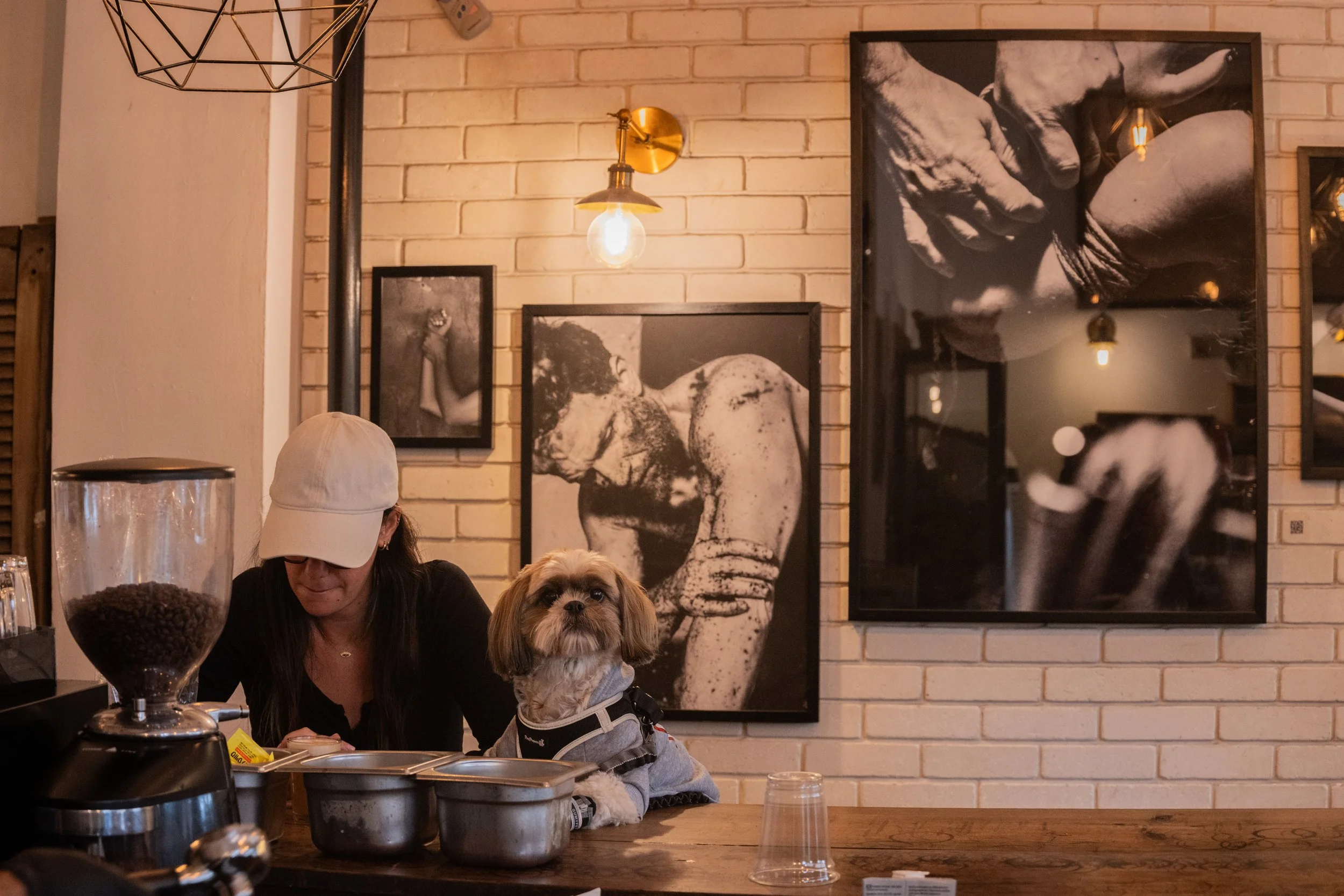
The day started in a small café. The kind Tel Aviv has learned to love. A place where laptops and phone calls share the same tables with conversations between the barista and the regulars, the ones he knows by name and knows exactly how they take their coffee.
Inside the clean design it is obvious there is also a resident dog. You do not need to see him to know that he is there.
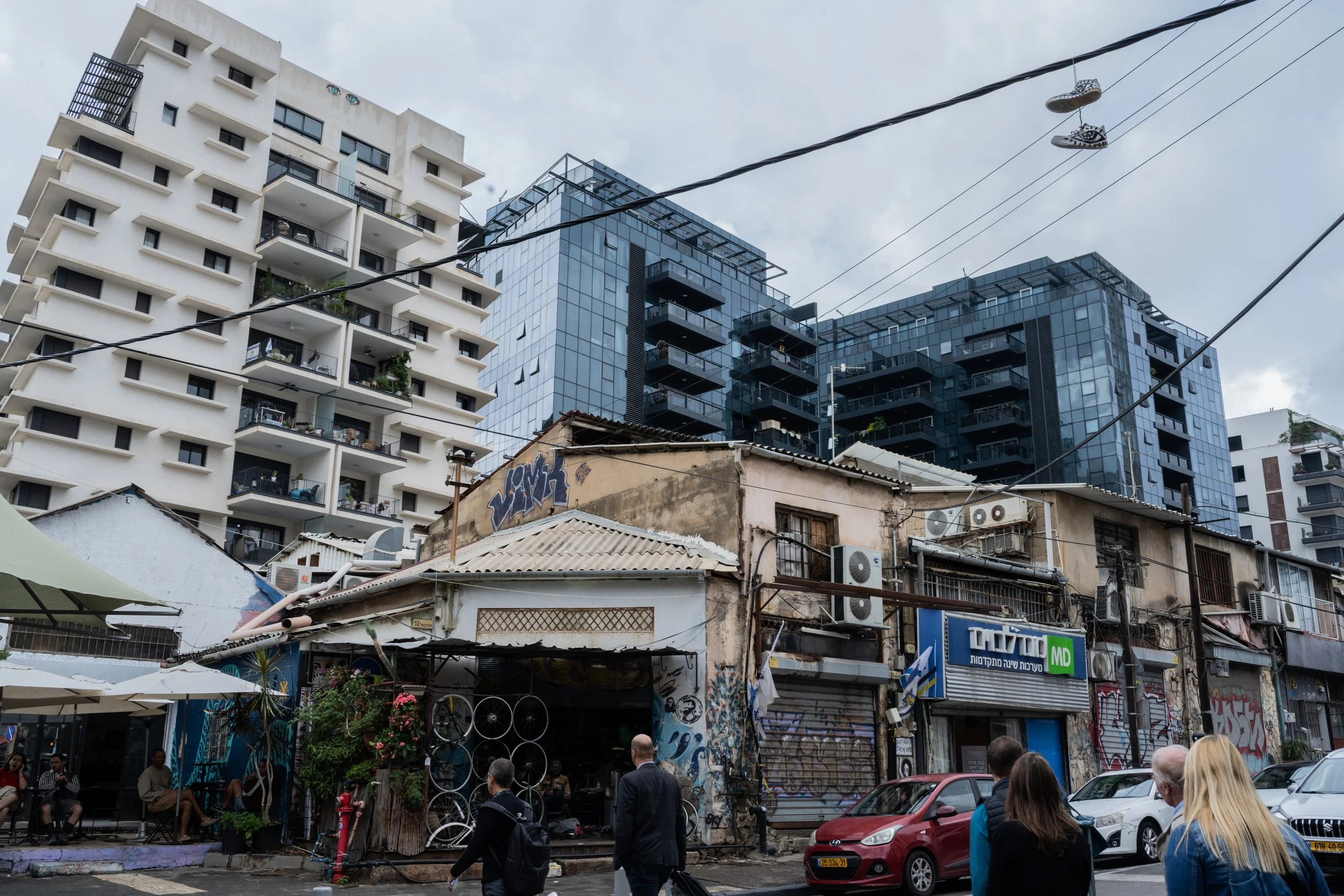
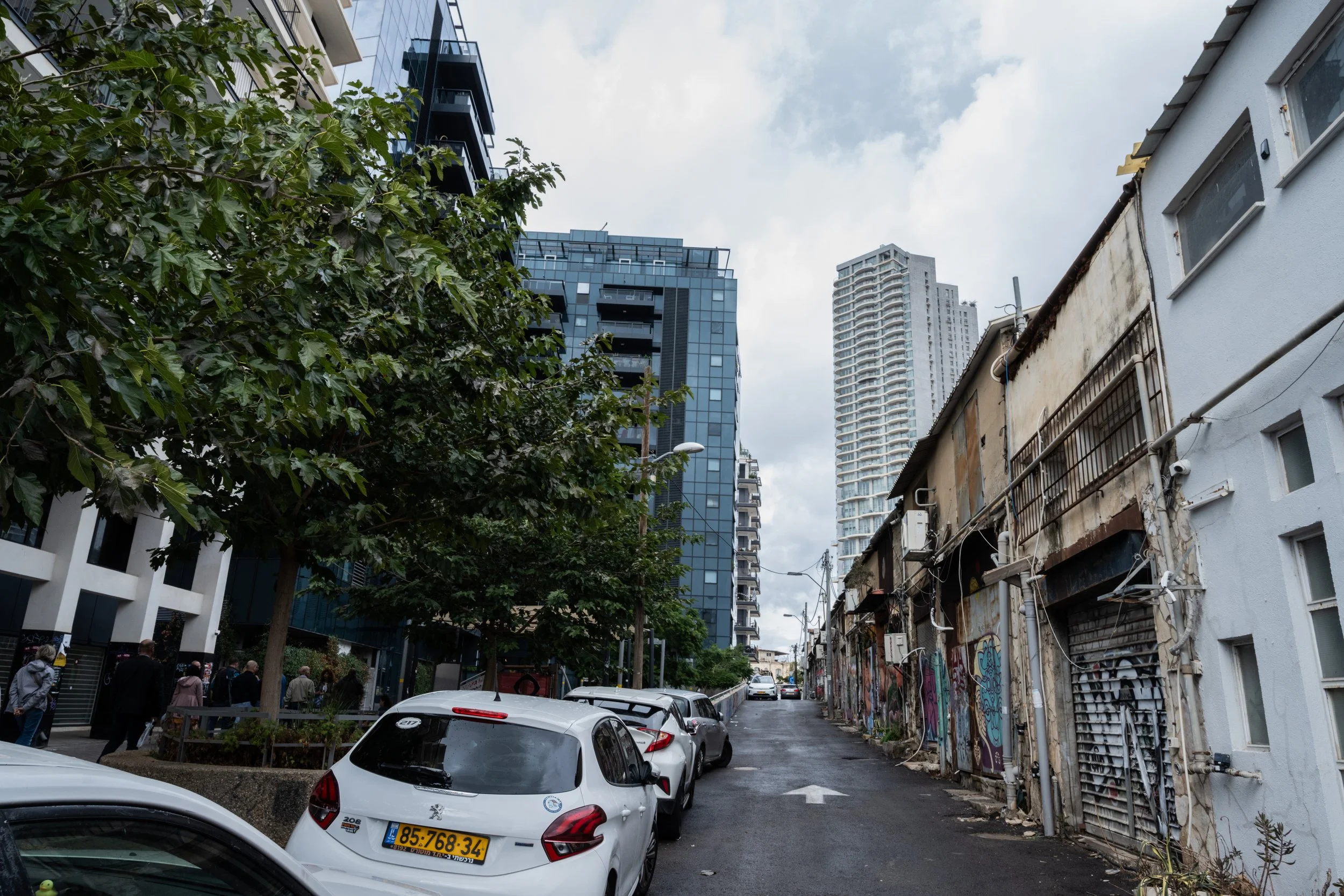
A few minutes’ walk away, the street changes. On one side are new towers scratching the sky. On the other side, old apartment blocks still holding on to wooden shutters, laundry swinging from lines, and faded signs from another decade.
This dialogue between new and old follows the whole city. That is exactly where our story begins.
Jacob Dabah – hamsas that refuse to give up on good luck
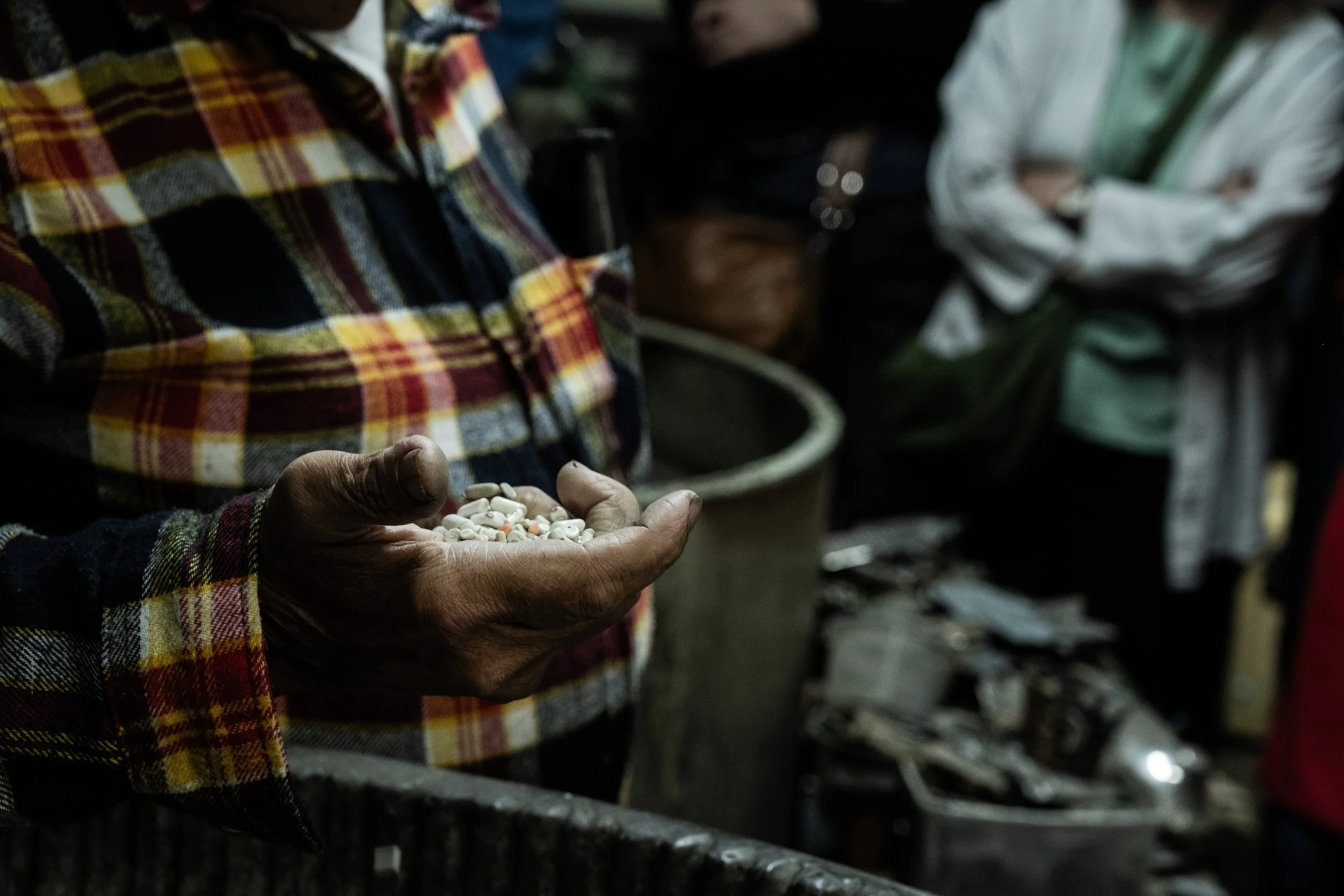
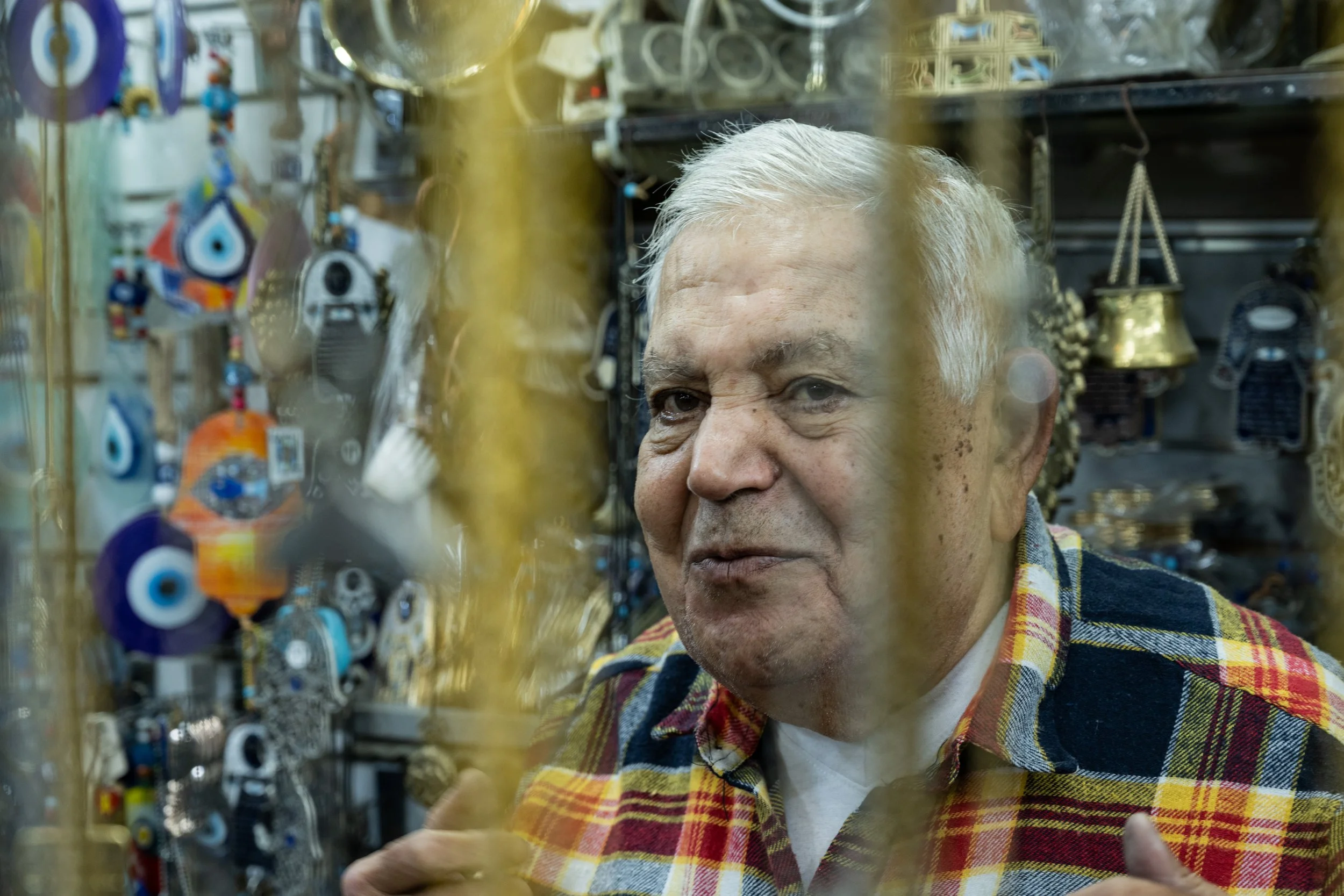
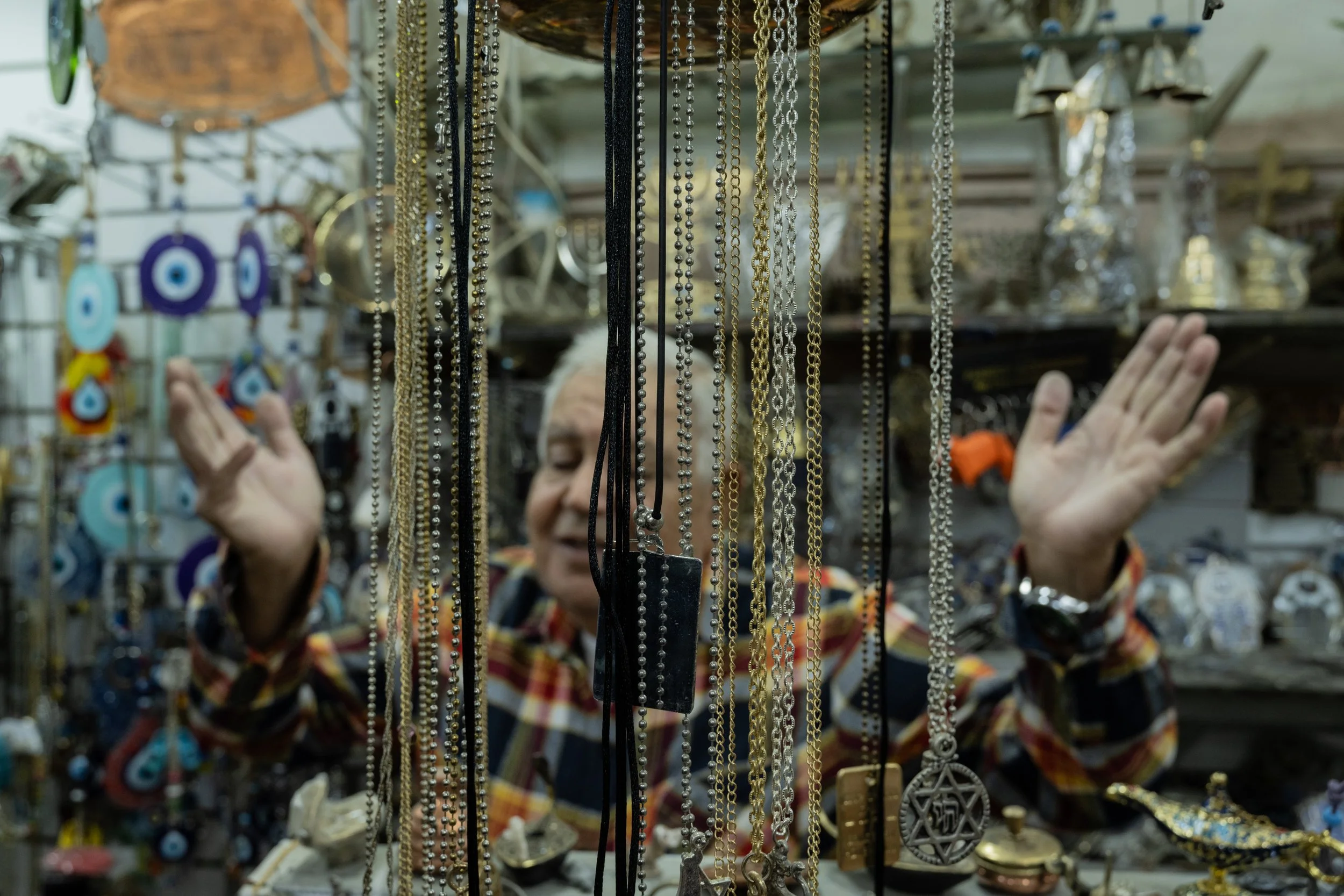
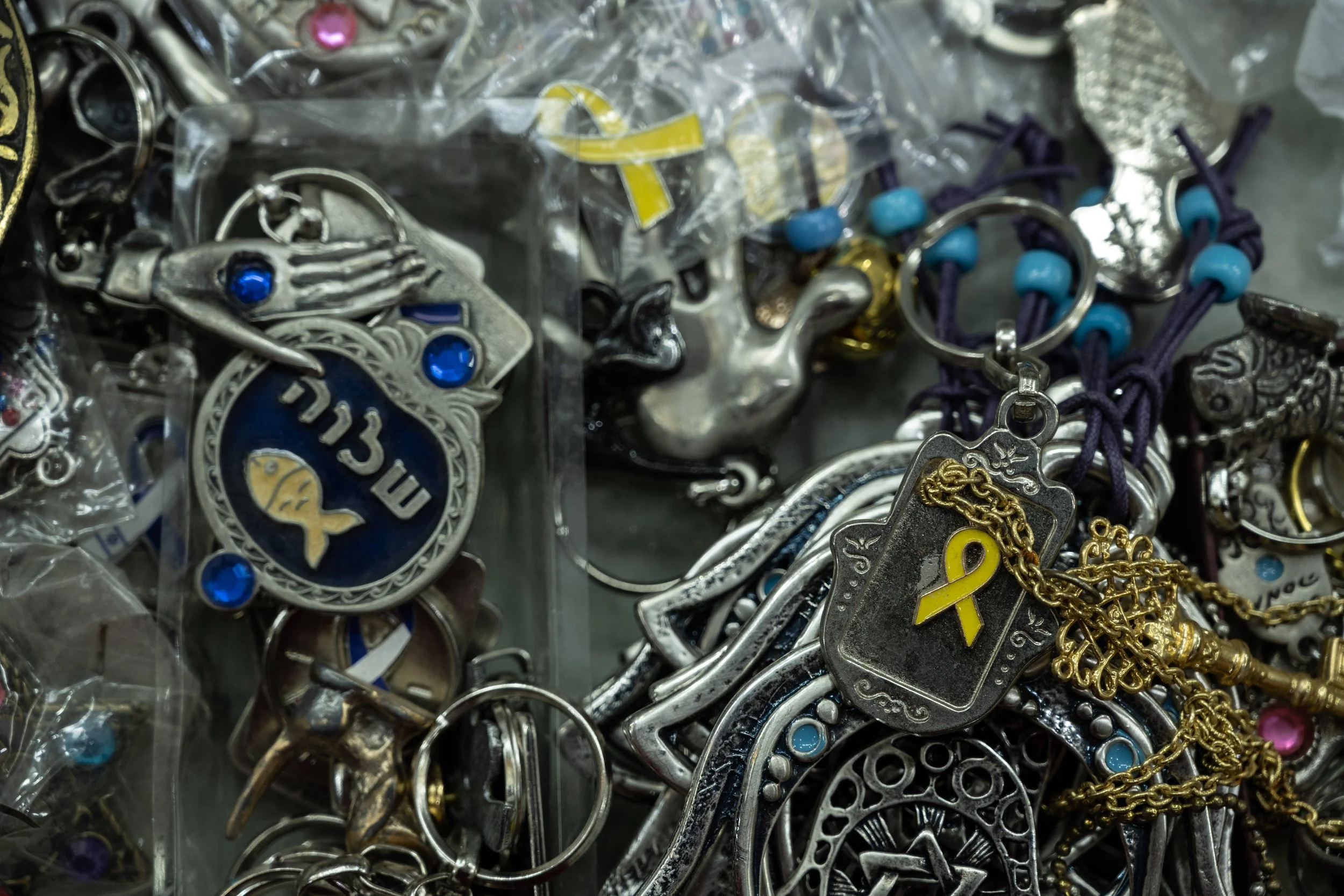
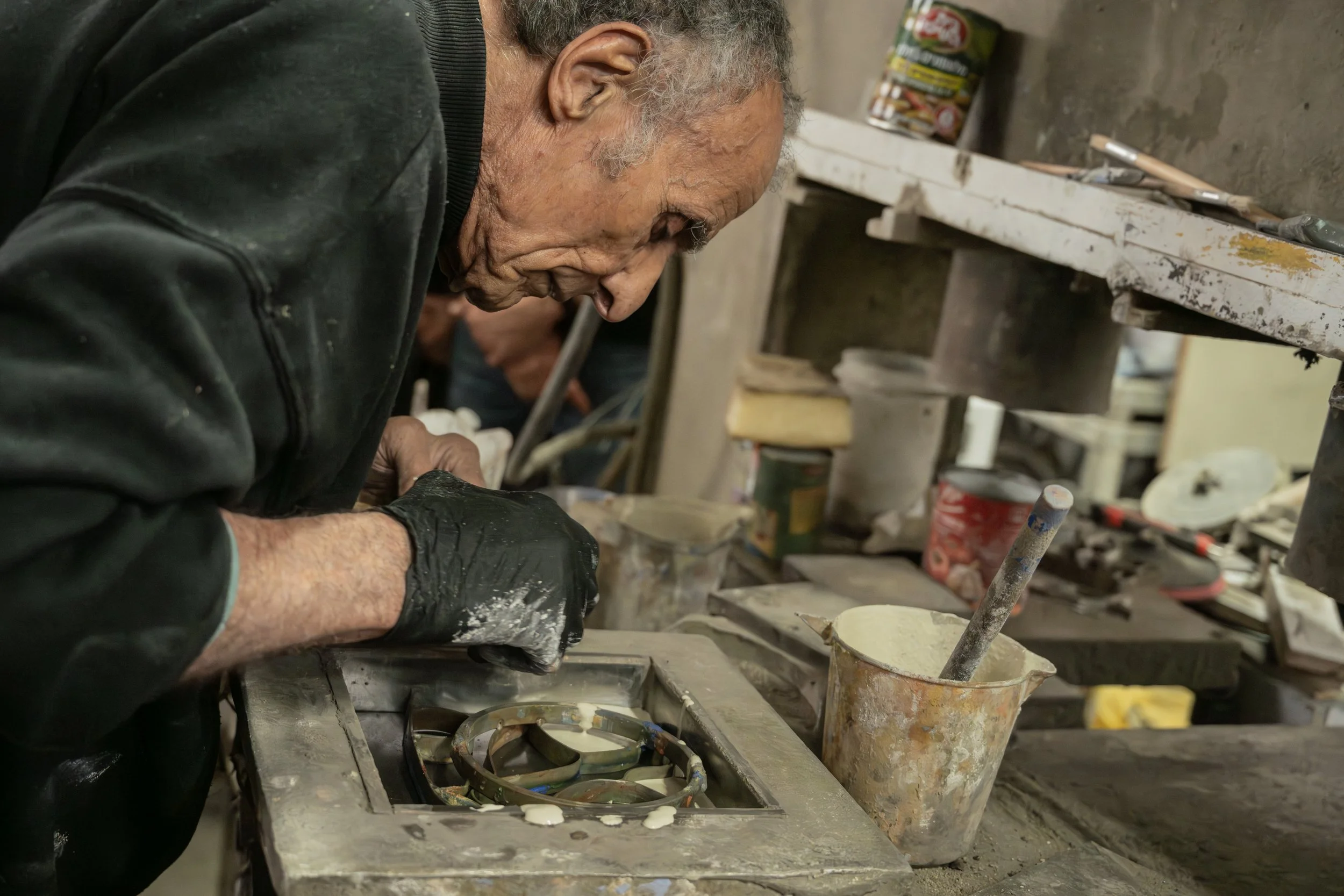
Our first stop is with Jacob Dabah, the owner of a small casting workshop that has been here for over forty years. Jacob makes everything himself. Hamsas. Necklaces. Pins. Whatever you ask for.
There is something comforting in his creations. They are not generic tourist souvenirs. They are objects that carry tradition, belief and something almost family-like inside them.
When I saw Jacob, I recognized him immediately. He is the one who made the hamsa-shaped keychains with our names and wedding date that we gave to our guests on our big day, many years ago. Jacob does not remember, of course. But I do. And suddenly I am washed with nostalgia.
I realized that the hamsa is not only protection against the evil eye.
It also protects against forgetting.
Shalom Zimber – the books that ask for a hand to rest on them
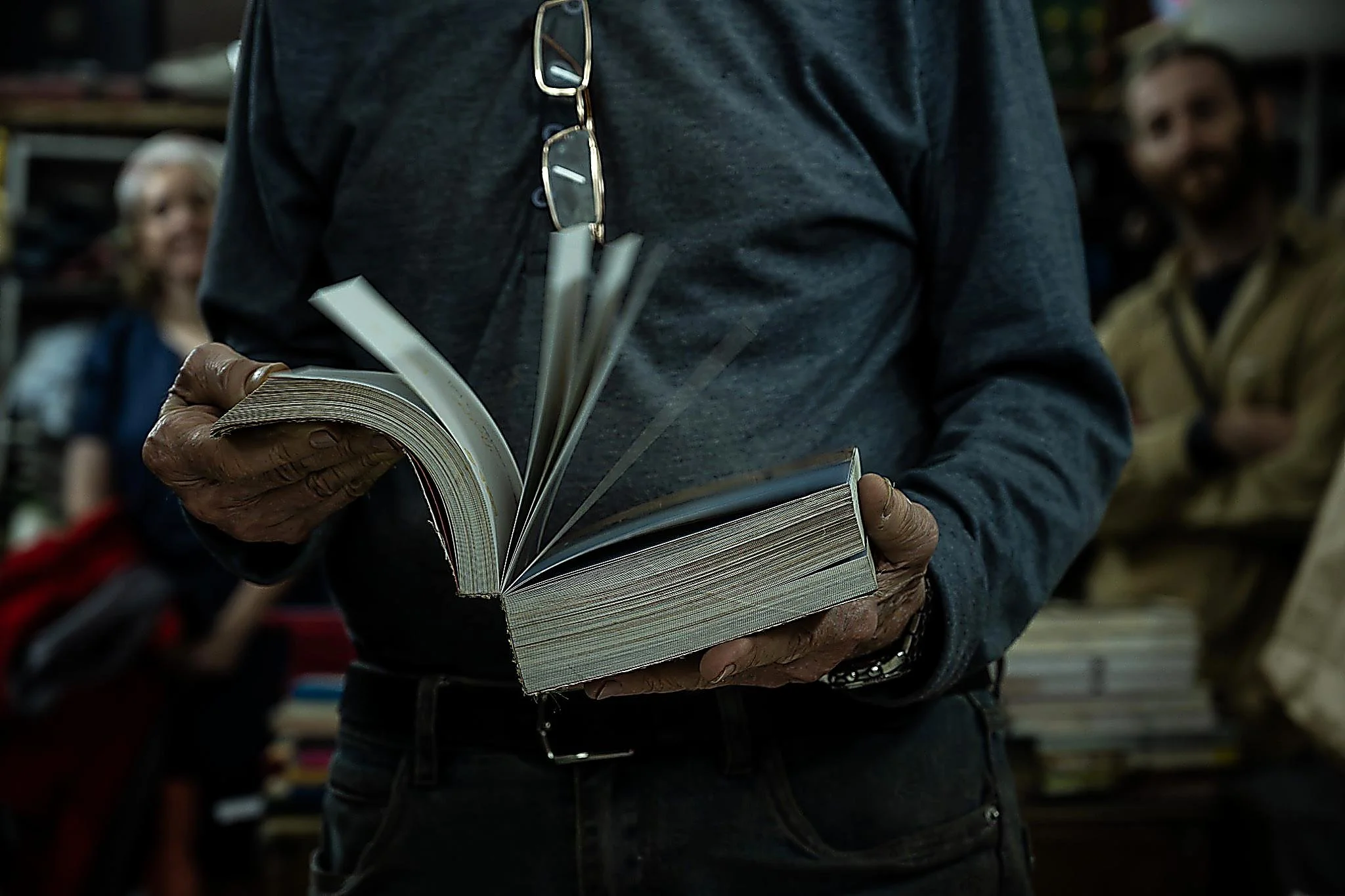
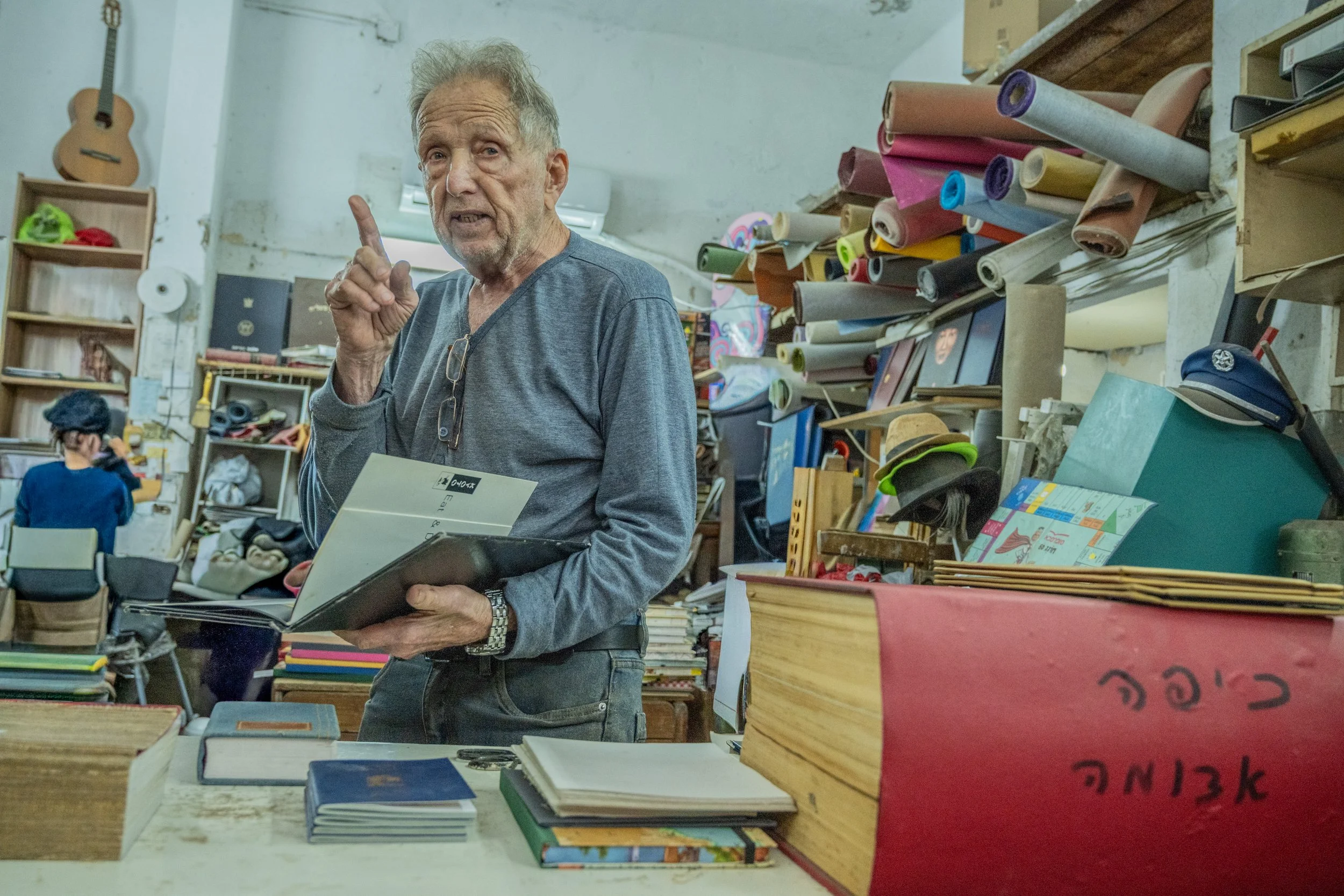
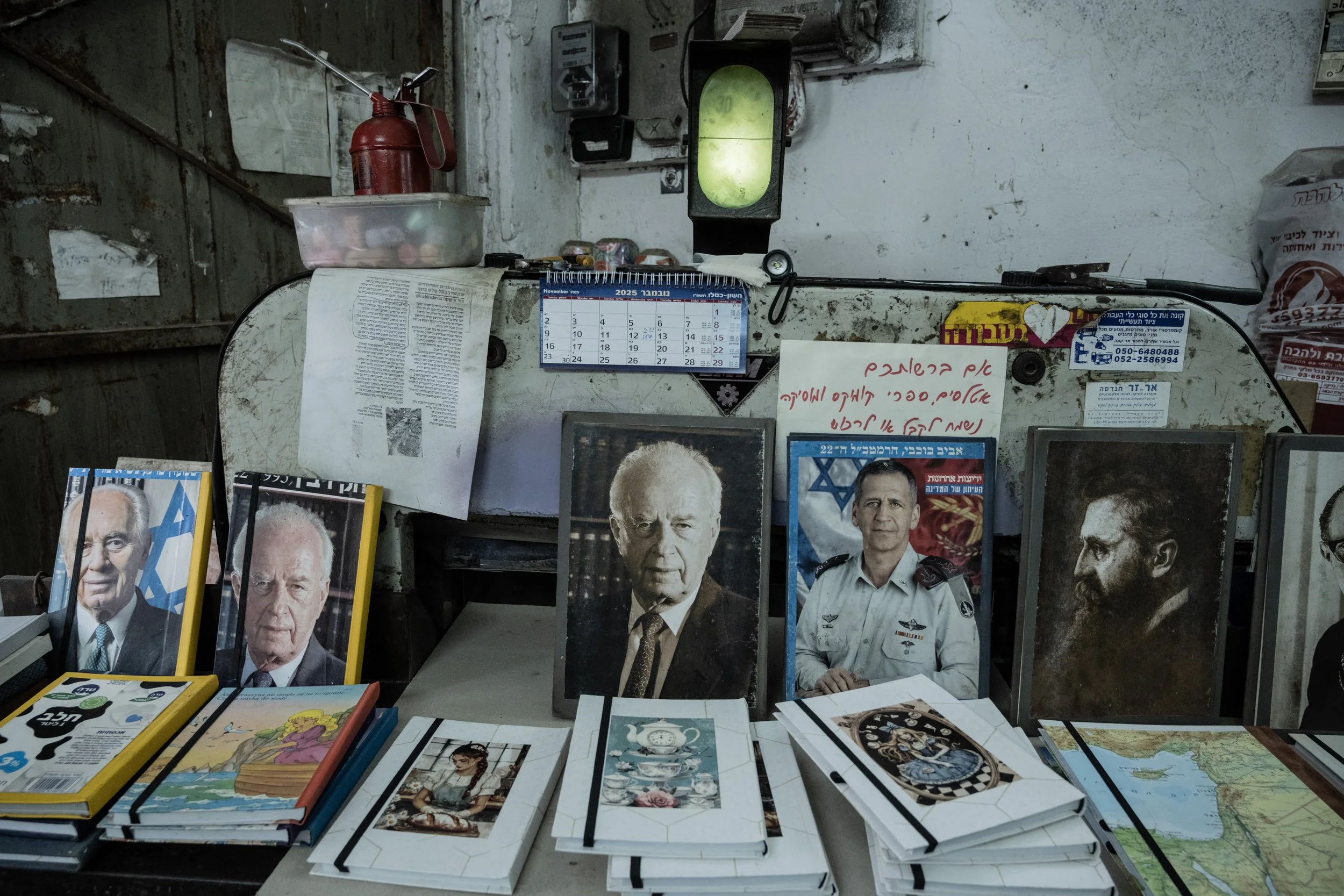
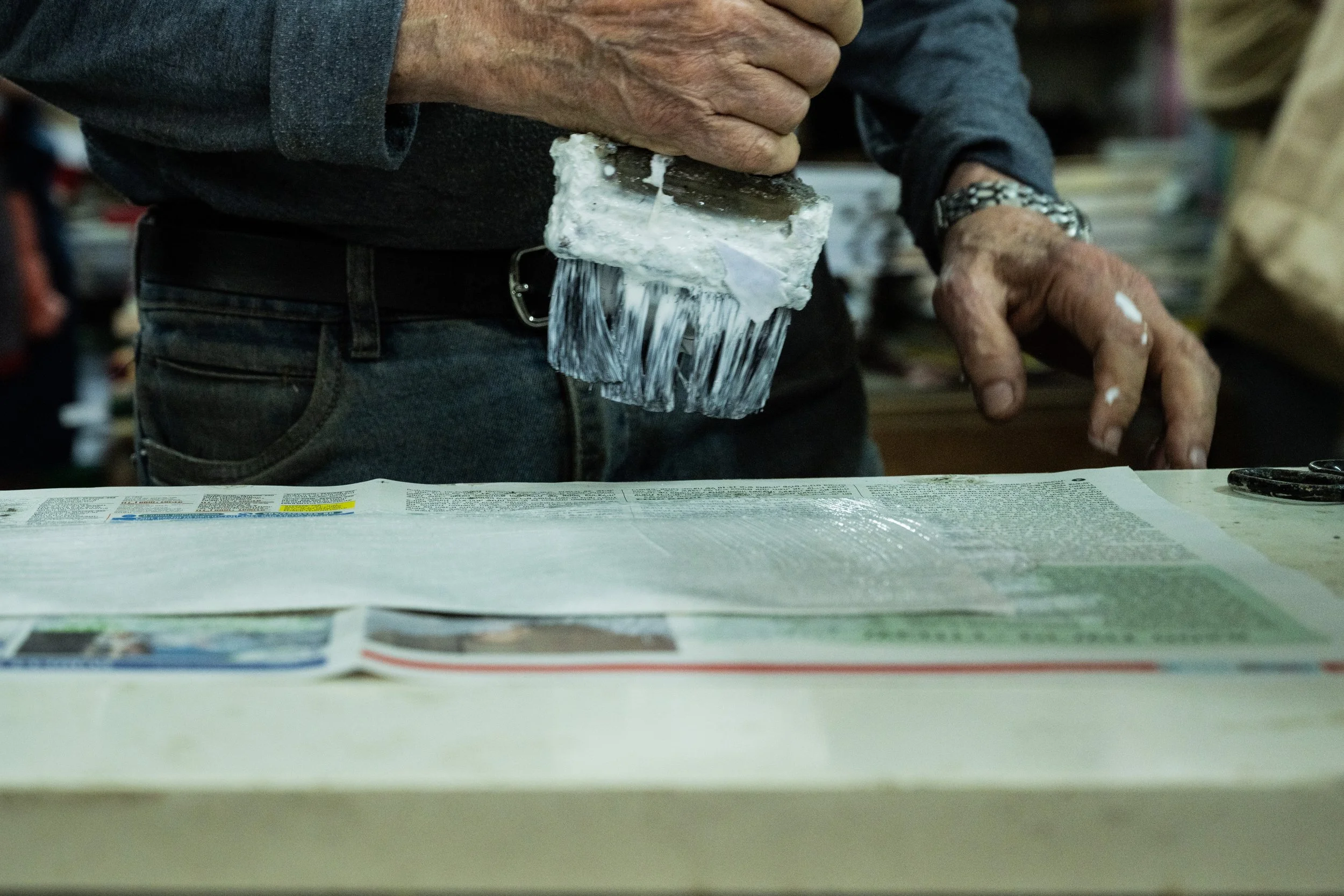
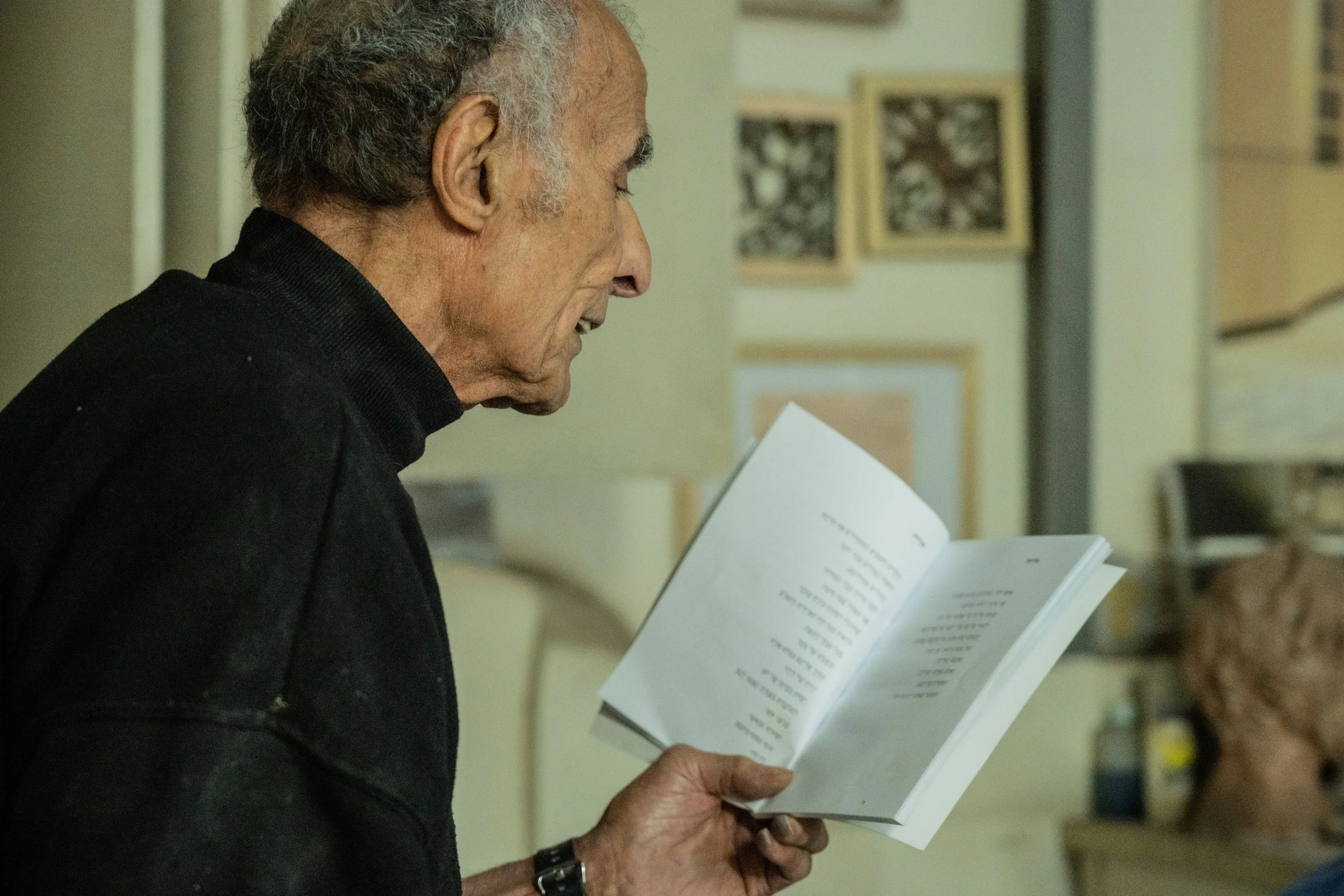
In Shalom Zimber’s bookbinding studio, the air is full of the smell of glue and old paper.
I have been reading and writing since childhood, so words are stitched into my life. Walking into his place feels like stepping into a room where time works differently. Whoever brings a book to Shalom also brings a life story. He returns to them pages that hold together again.
In one corner stands a huge red volume titled Little Red Riding Hood. Shalom explains that it is actually a set of old magazines he bound into one book. I immediately think of the bound magazine volumes my grandfather made for my father, the ones I used to pull off the shelf every time I visited my grandparents in Kiryat Motzkin.
Today I read on a Kindle. But meeting Shalom reminded me that even in a digital city, there is still room for a printed page that refuses to give up.
Avner Gluska – one handmade tile a day, each is one of a kind
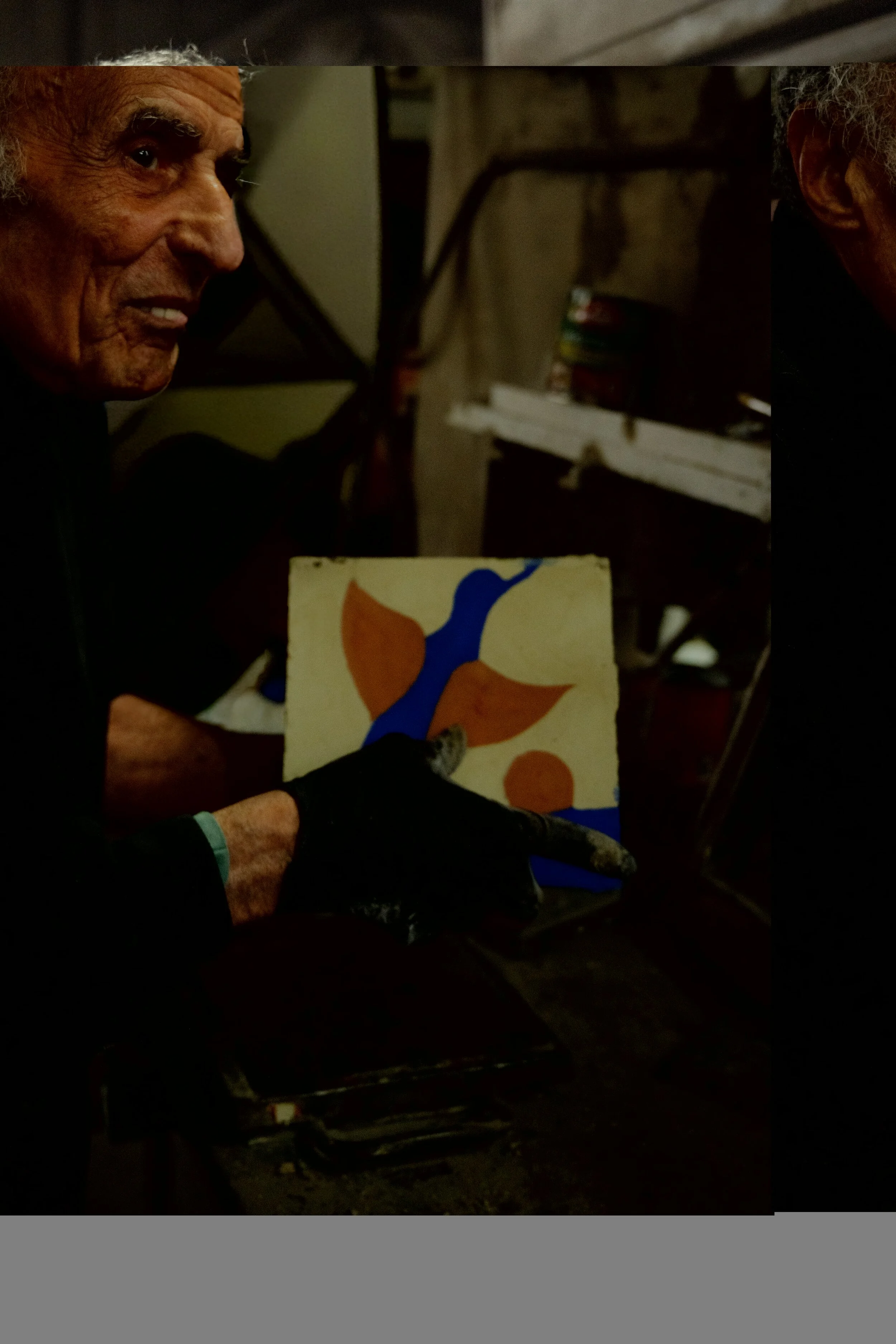
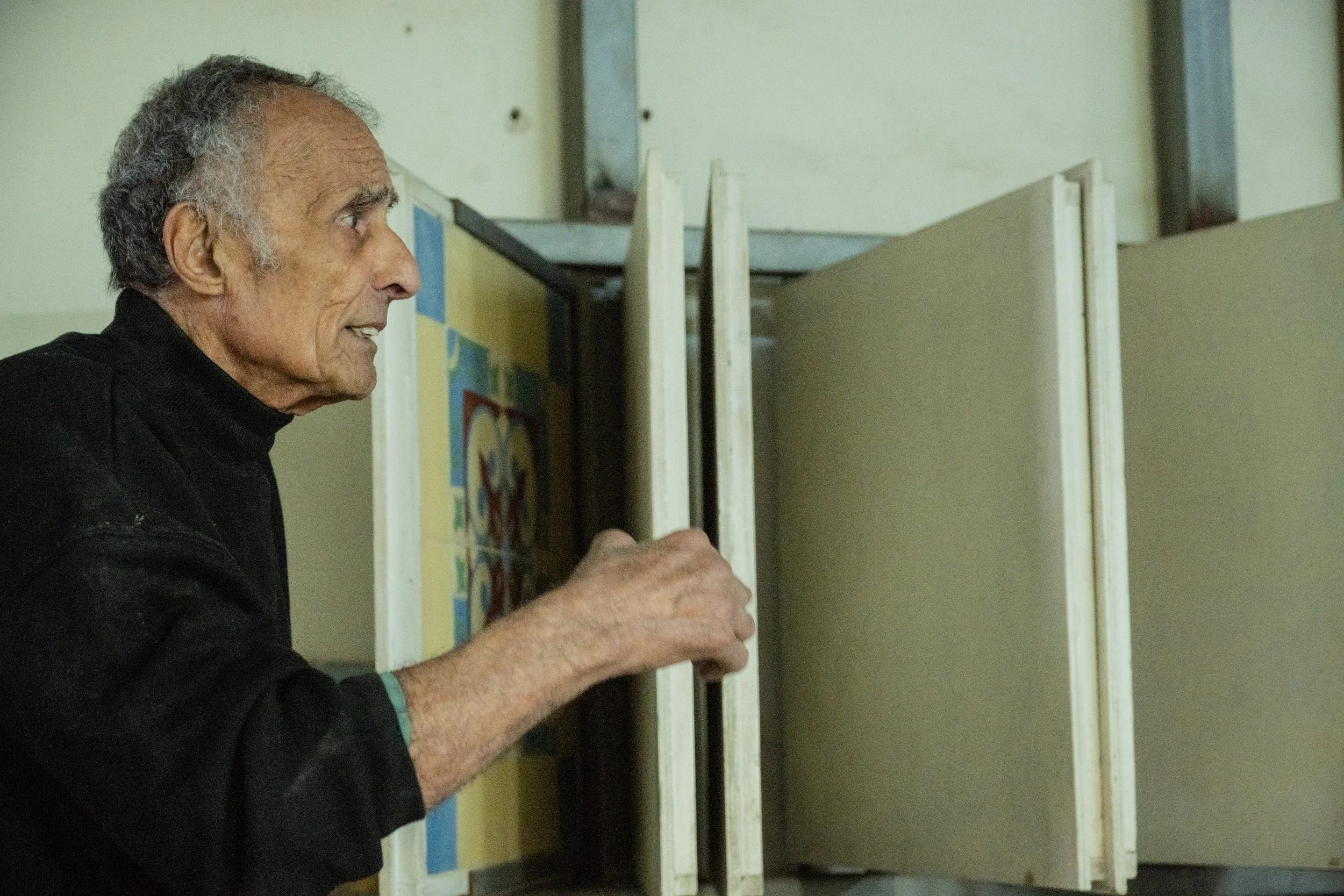
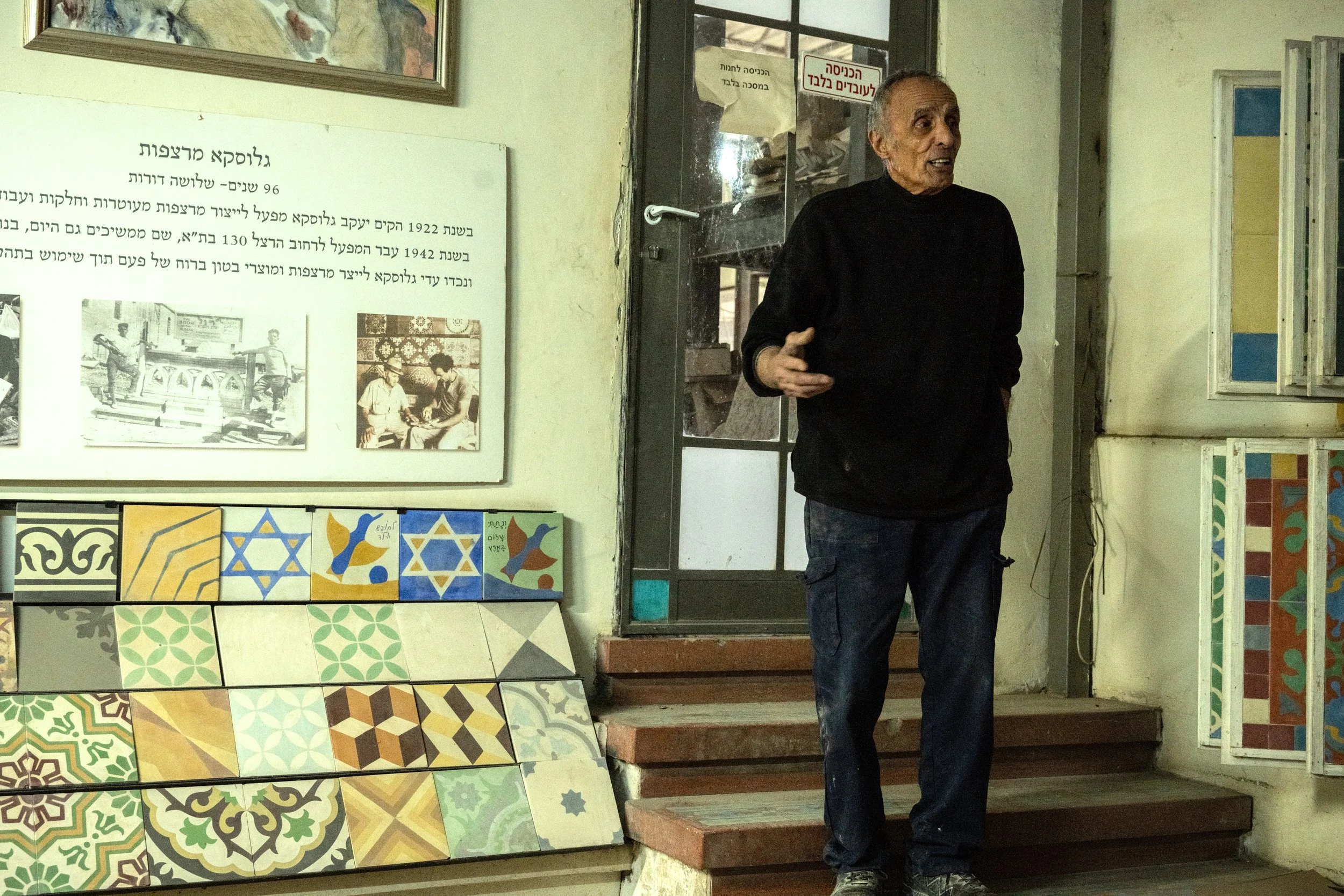
Avner Gluska makes handmade cement tiles – a craft that hardly exists anymore.
Watching him work is like watching a painting being built layer by layer. Color. Sand. A mold. A soft vibration. Waiting.
It is not efficient.
It is not particularly profitable.
But it is beautiful. And deeply human.
Avner produces just a few square meters a day. No more.
It is so different from the pace of Tel Aviv that surrounds him. A city that prefers instant over slow. Modular over personal. Avner sits in a small workshop and creates tiles where each one is a one-off composition.
It is moving to see that there is a next generation here as well. His son learned the craft the way Avner learned it from his own father. He continues the work and proudly explains the process to customers.
Suddenly the word “old-fashioned” feels like a compliment.
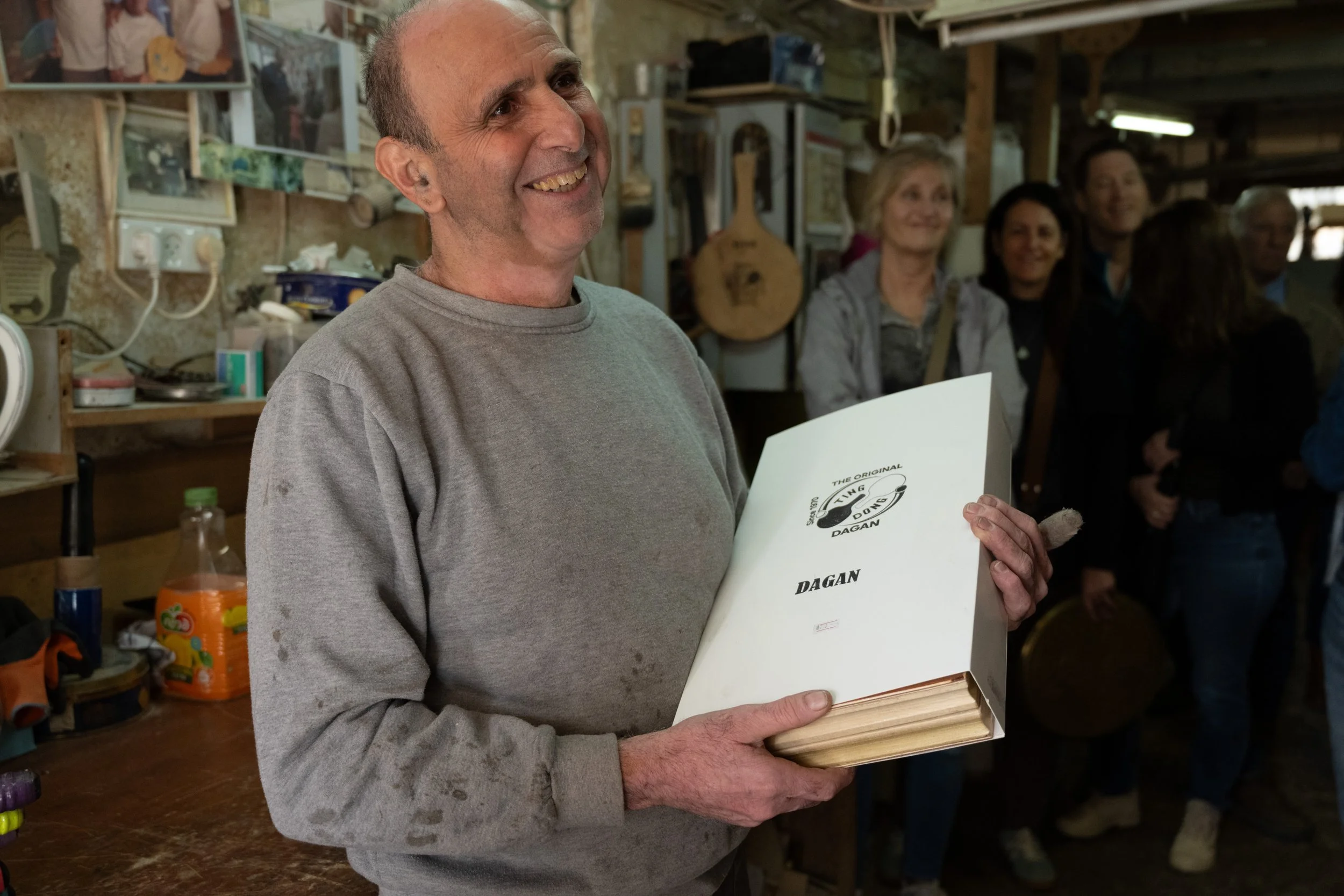
Haim Dagan – paddles that play the music of the sea
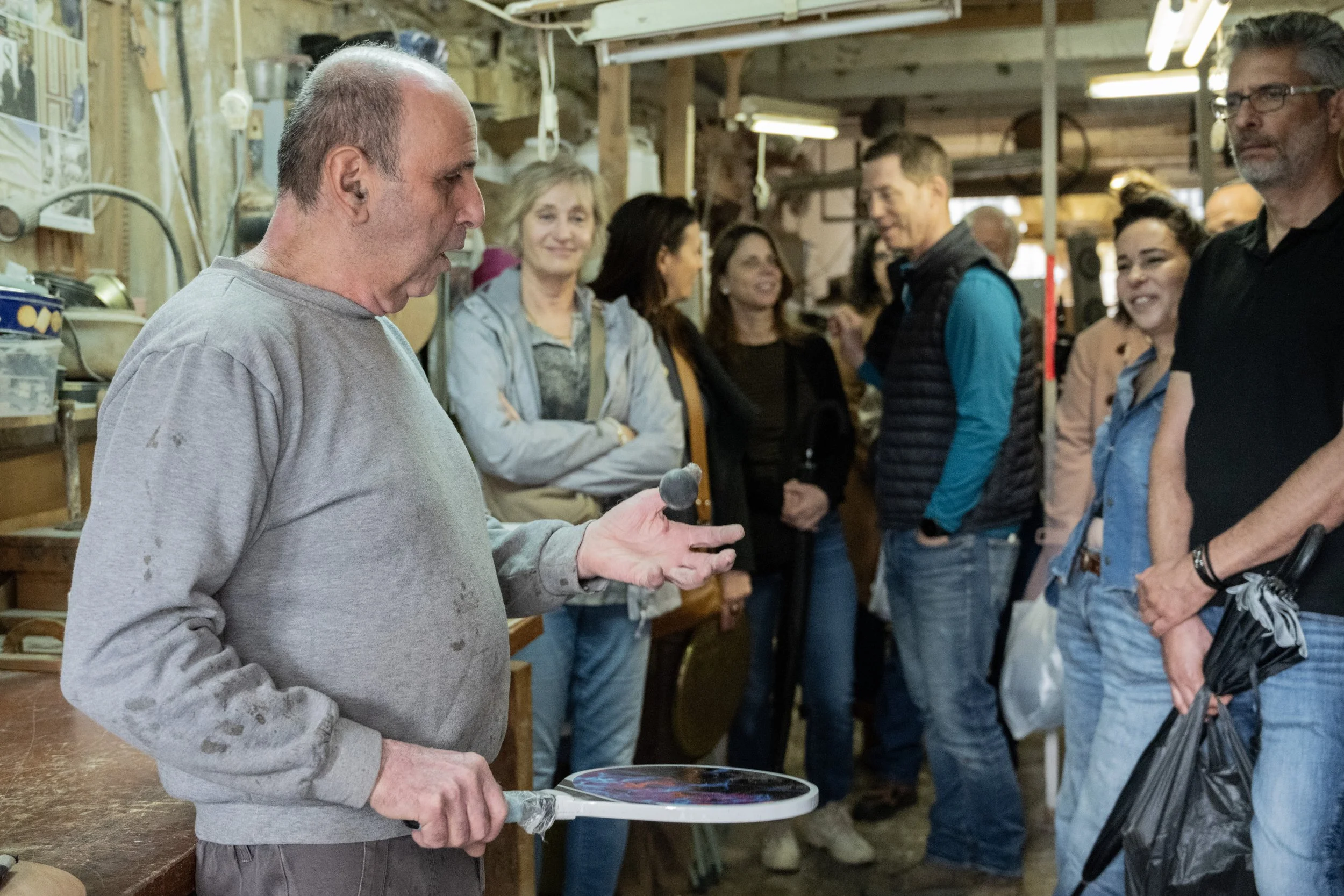
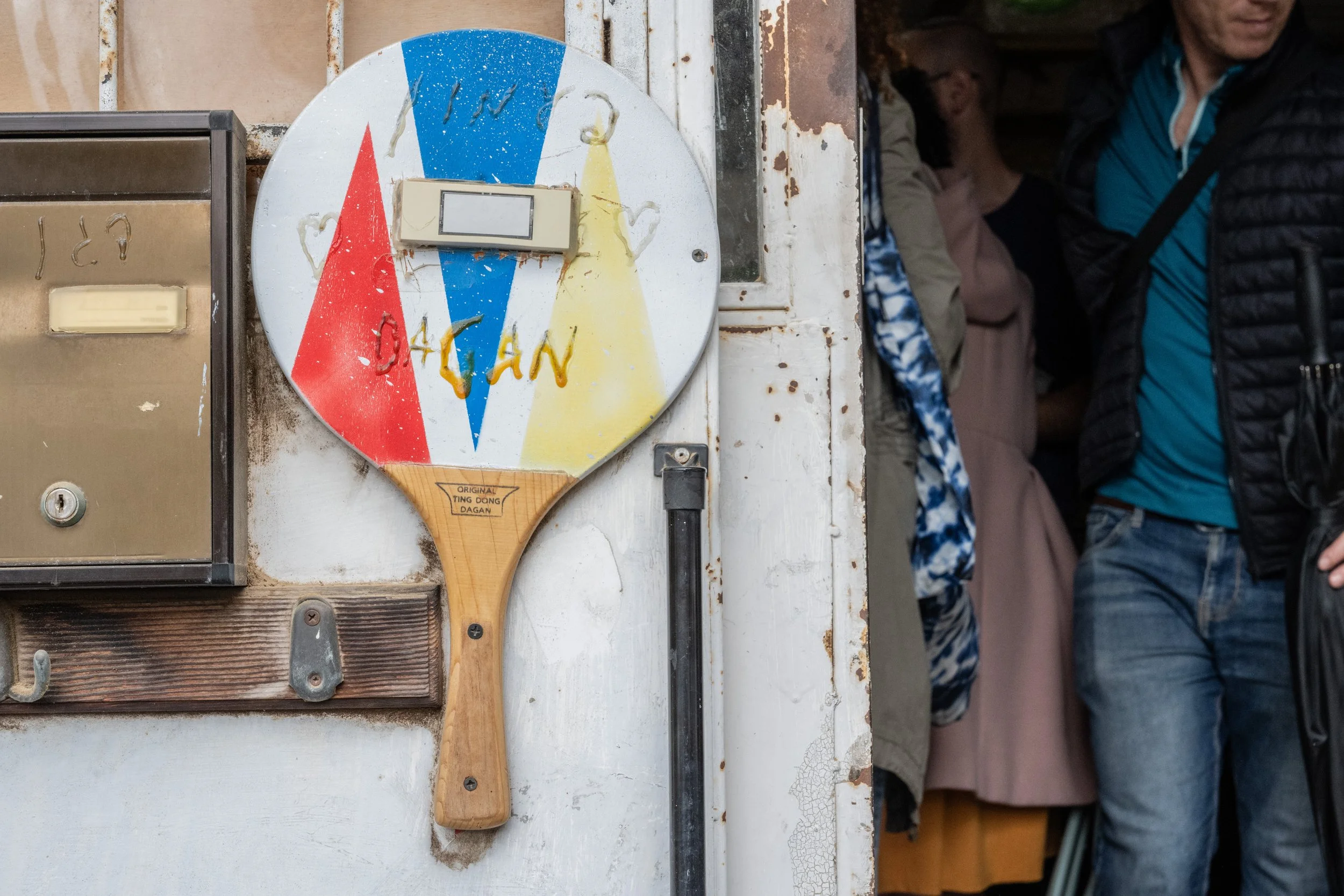
No Israeli needs an explanation about the place matkot hold in our culture. Those beach paddles are part of who we are, for better and for worse.
But watching Haim Dagan at work is something else entirely.
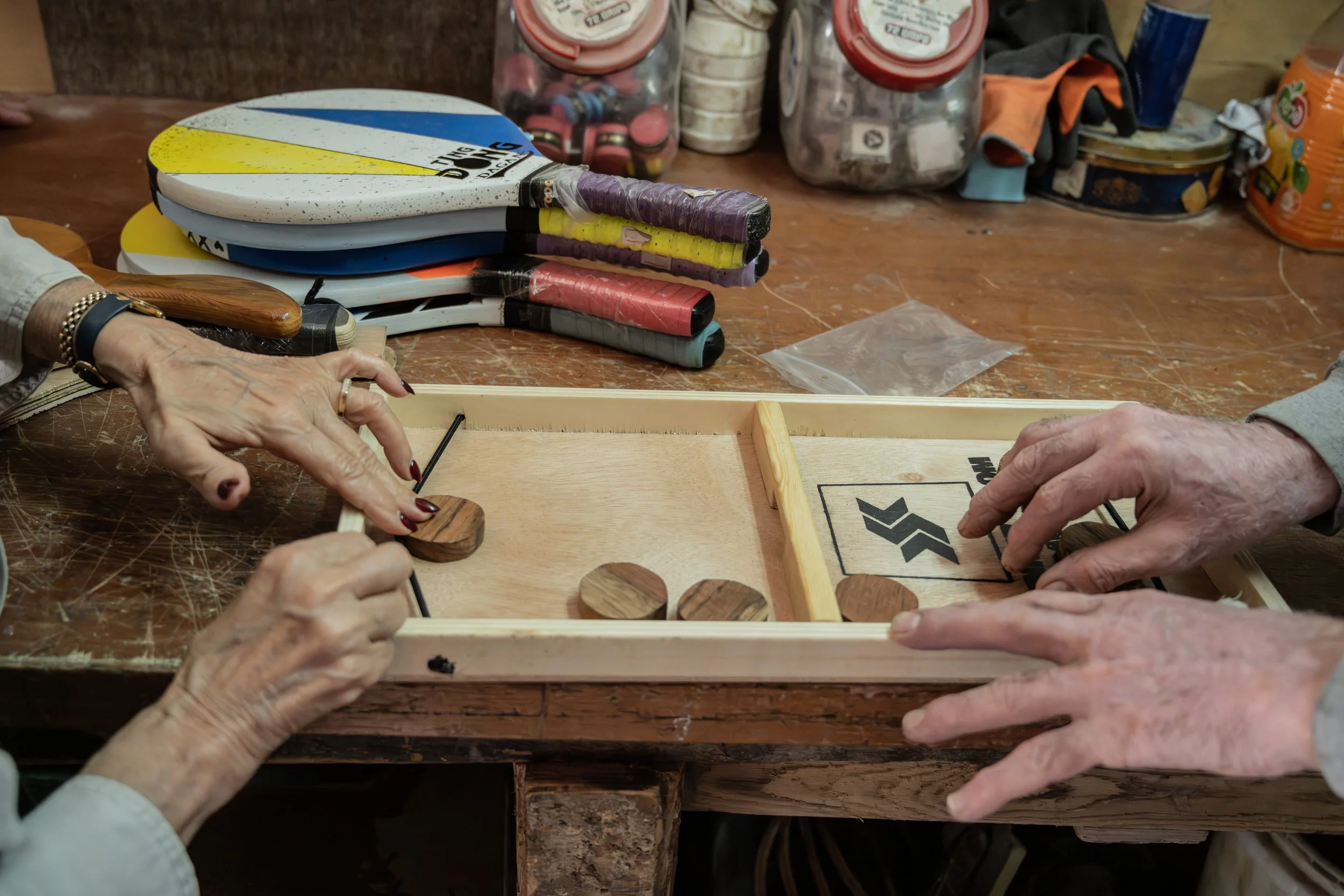
He holds each paddle as if it were a musical instrument. He checks the balance. Sands the wood. Listens to the sound. The familiar clack that always amused and annoyed me a little becomes something different.
Here is a man who turned a typically noisy Israeli soundtrack into an intricate craft.
And the beautiful part? He works with his son.
Two people. One generation and the next. Creating together something that is so local, so insistent on not disappearing.
Meanwhile, Tel Aviv keeps talking
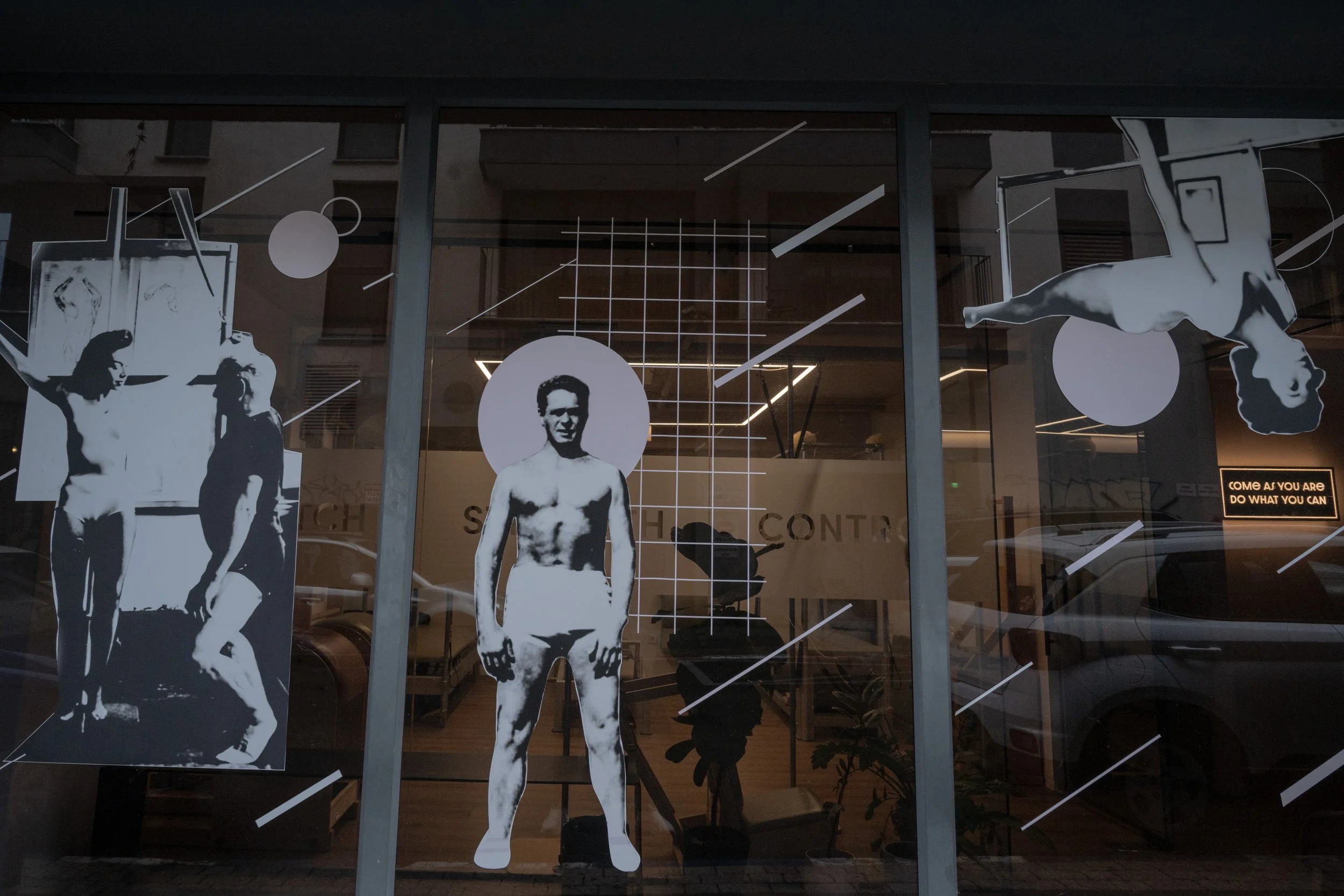
Between one craft and the next we walk through streets that change at every corner. One looks frozen in the 1950s. Right next to it stands a brand-new glass tower.
We stop in a co-working space that is all twenty-first century. Then someone brings out a bowl of pumpkin soup that tastes homemade. The kind of flavor that cannot be uploaded to an app.
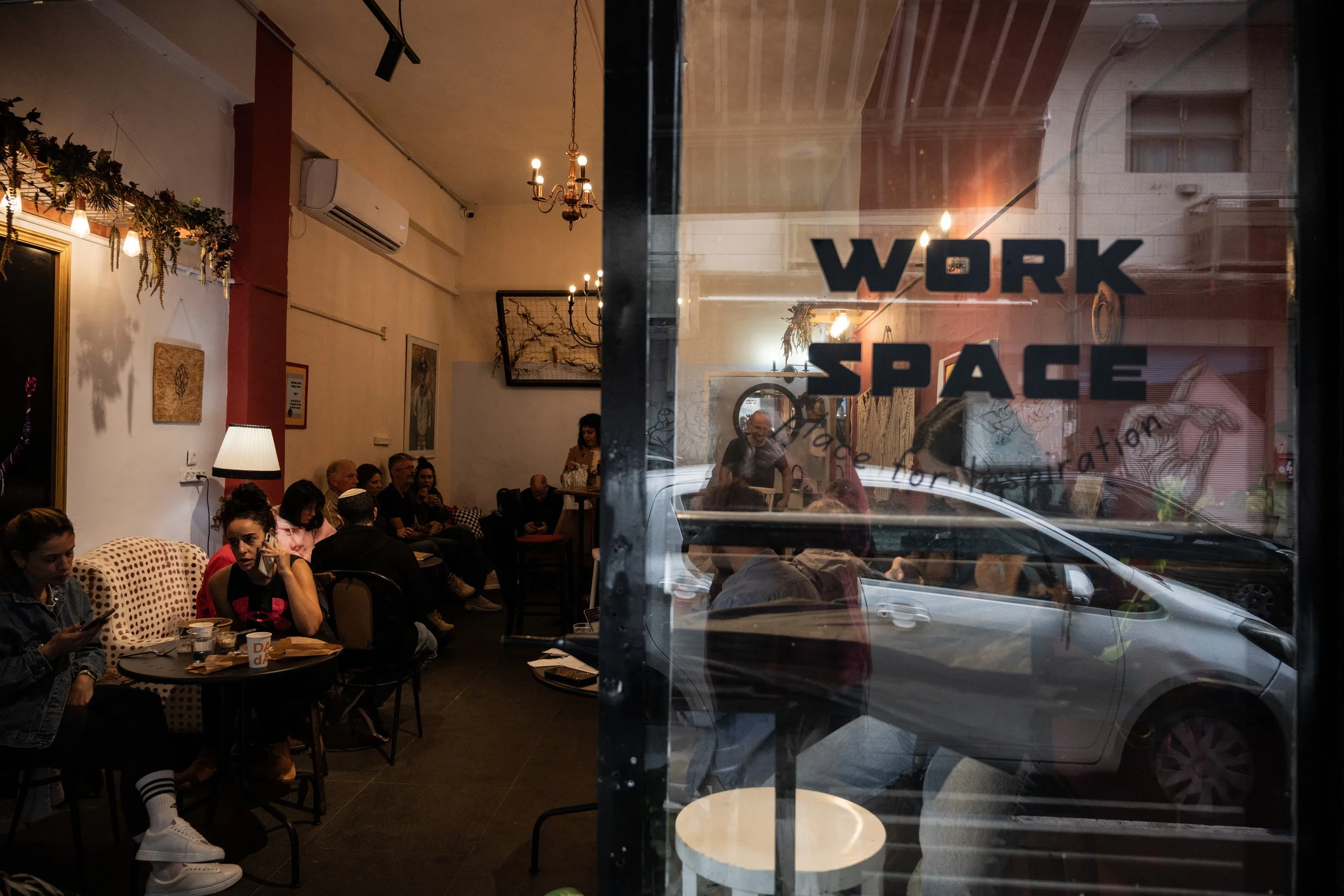
The whole city feels like a conversation. Between old and new. Between speed and stopping. Between digital and physical.
Exactly there, I find the heart of the story. The simple fact that people get up early, come into this city and pay money to watch crafts that once seemed obvious and unremarkable is proof of something deeper in our memory. We are changing. But something inside us wants to keep. To hold on.
So what is actually disappearing?
I joined the tour to understand what is vanishing from the world. I left with the feeling that it has not vanished and has not gone extinct. It is just hiding.
Inside a bookbinder’s studio. Inside a slowly made tile. Inside a hamsa that slowly takes on a turquoise blue. Inside a paddle hitting the air in a steady rhythm.
What is really disappearing is our ability to see. And it takes effort to bring that ability back.
On one Tel Aviv day, between towers and old houses, between pumpkin soup and the sound of matkot, I found it again.